When the world is burning, can therapy stay neutral?
Why healing needs both context and community
When the news hurts more than your week
In the last months, many people have come to therapy not just with “work stress” or “relationship problems”, but with a tight chest every time they open the news. They talk about doom‑scrolling through images of war, racist violence, crises in their home countries or economic collapse, then trying to switch off and go back to emails, parenting or exams.
Some are directly affected by conflict and displacement. Others are students far from home, second‑generation kids, professionals in big cities, or people who have never left their country but still feel the impact of global events in their bodies, sleep and relationships.
As Psychotherapist and Journalist Matt Hussey has put it, the spaces where we show up, relationships, conversations, therapy, are not separate from the world; they are reflections of it. If the world outside feels like it’s burning, it will show up inside the therapy room too. And if we want to help people heal, therapists have to be willing to understand what is making them sick and talk about it.
Was therapy ever truly neutral?
For a long time, many Western therapy models suggested that clinicians should keep politics, religion and social issues outside the room and focus on the individual psyche. Neutrality and a “blank screen” stance were presented as ethical ways to avoid imposing the therapist’s views.
But this version of neutrality was never developed in a vacuum. It emerged in societies shaped by capitalist work cultures, where “normal” was already defined by particular groups. When distress is treated as purely personal, panic, burnout, depression, without acknowledging war, racism, poverty, violence or displacement, clients can be left with an unintended message: the problem is you, not the conditions you’re surviving.
Recognising this means allowing clients to name the forces that are hurting them, and taking those forces seriously as part of the story of their mental health, whatever their beliefs or position on a specific issue might be.
When silence supports healing, and when it harms
Silence is one of the most powerful tools in therapy. Thoughtful quiet can deepen emotional processing, allow feelings to emerge, and give clients space to find language for experiences that have never been spoken out loud. Sometimes “let’s just sit with what you’re feeling in your body for a moment” is exactly what is needed.
But silence is not always neutral. For people and communities who are used to being "boxed", ignored, or disbelieved, a therapist’s silence about racism, war or political violence can feel like more of the same. A client might wonder: Do they not know? Do they not care? Is it unsafe to bring this up? In those moments, silence can be esperienced as abandonment rather than support.
The real question is: what does this person, in this session, need right now, witnessing, language, gentle questions, or quiet? Sometimes that will mean naming what they are referring to; sometimes it will mean staying with the sensations underneath.
The limits of purely individual healing
Most dominant therapy models and ethics codes were developed in Western, individual‑oriented societies. They centre ideas like autonomy, personal boundaries and self‑regulation. These are important and often life‑changing, but they only tell part of the story.
If we only ask “What happened in your childhood?” and never “What is happening in your country, your community, your workplace, your newsfeed?”, we risk treating collective trauma as if it were a private malfunction. People may internalise systemic problems as personal failure: “I just can’t cope”, instead of “this situation would overwhelm most nervous systems.”
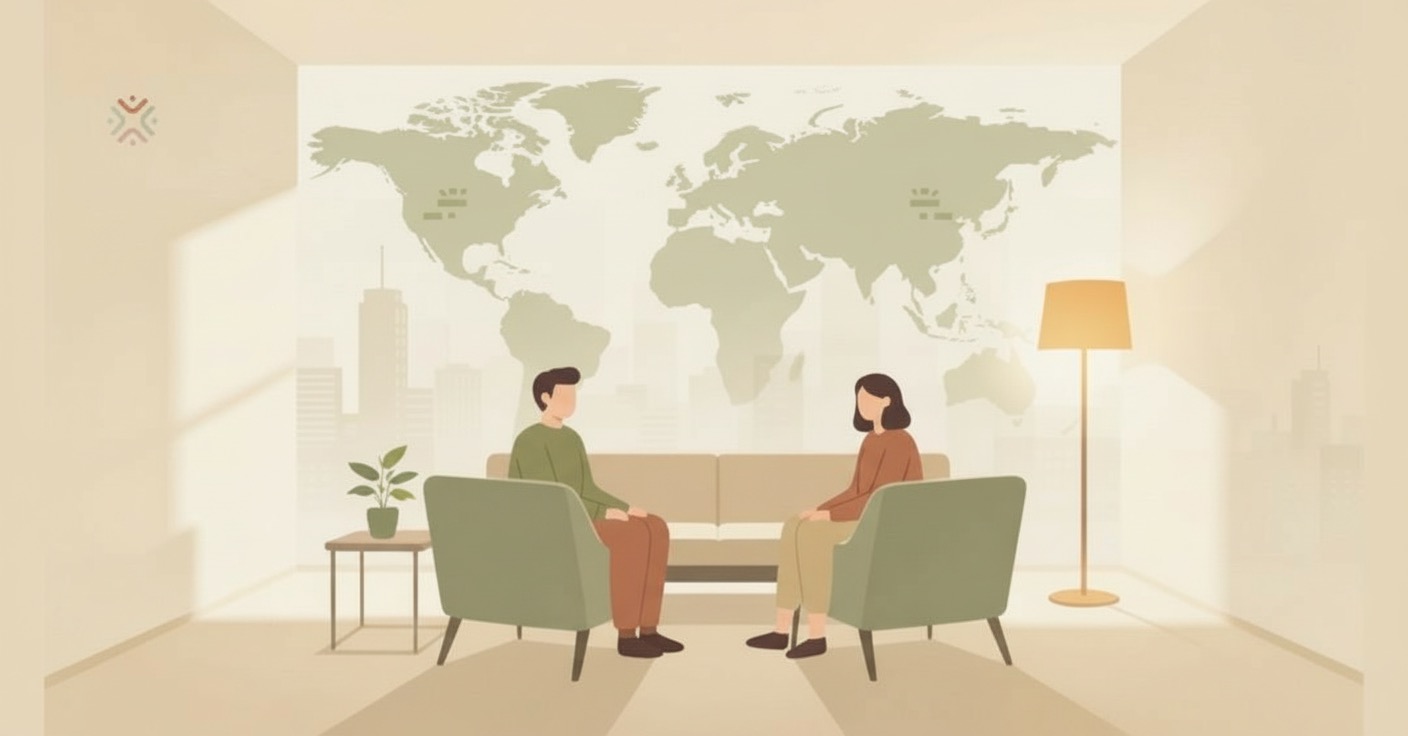
For many people Thera serves, across the MENA region, the wider Global South, and diaspora communities in Europe and beyond, distress is often shaped as much by conditions around them as by cultural dynamics. That can include living through or witnessing war, racism and Islamophobia, colourism and casteism, unstable economies, or constant pressure to adapt to a culture that doesn’t see you.
For many Arabs and Muslims living in the MENA region, including in relatively stable and economically comfortable Gulf countries, there is also the less evident, constant strain of watching their faith and part of the world framed with suspicion. People describe a mix of pride and deep loyalty to their countries, and at the same time a sense that global narratives often paint their region as dangerous or in need of control. Research on Islamophobia and discrimination shows that living with this ongoing “othering” is linked with increased psychological distress, fear and hypervigilance among Muslims, even when they are not directly experiencing war or displacement.
This is often true whether you grew up in the Middle East, Africa or South Asia, whether you are a second‑generation kid in London or Toronto, a Black or brown professional in a mostly white workplace, a TCK who has moved every few years, or someone who has never migrated but still feels the weight of global events. When therapy only focuses on individual coping and “protecting your peace”, it can start to feel like being taught to stay calm in a burning house.
What research tells us about community and collective healing
Across different regions affected by mass violence and structural injustice, researchers have tested healing models that go beyond the individual 50‑minute session. These approaches combine psychological support with collective rituals, peer groups and community‑based care.
In post‑conflict settings, community‑based social healing programmes that bring neighbours together for facilitated dialogue, storytelling and shared rituals have been associated with reductions in symptoms of depression, anxiety and post‑traumatic stress, alongside increased trust and social functioning. Group interventions and lay‑counsellor programmes in low and middle‑income countries show that mental health support can be effectively delivered through community networks, especially when they build on local cultural and spiritual practices.
Research on collective and mass trauma highlights that people’s recovery after wars, pandemics or political violence is strongly linked to social cohesion, shared meaning‑making and a sense of collective power, not just to whether they attend individual therapy. Taken together, these findings suggest that healing is strongest when it includes community, shared stories and material support alongside individual work, not instead of it.
What this looks like in a therapy room
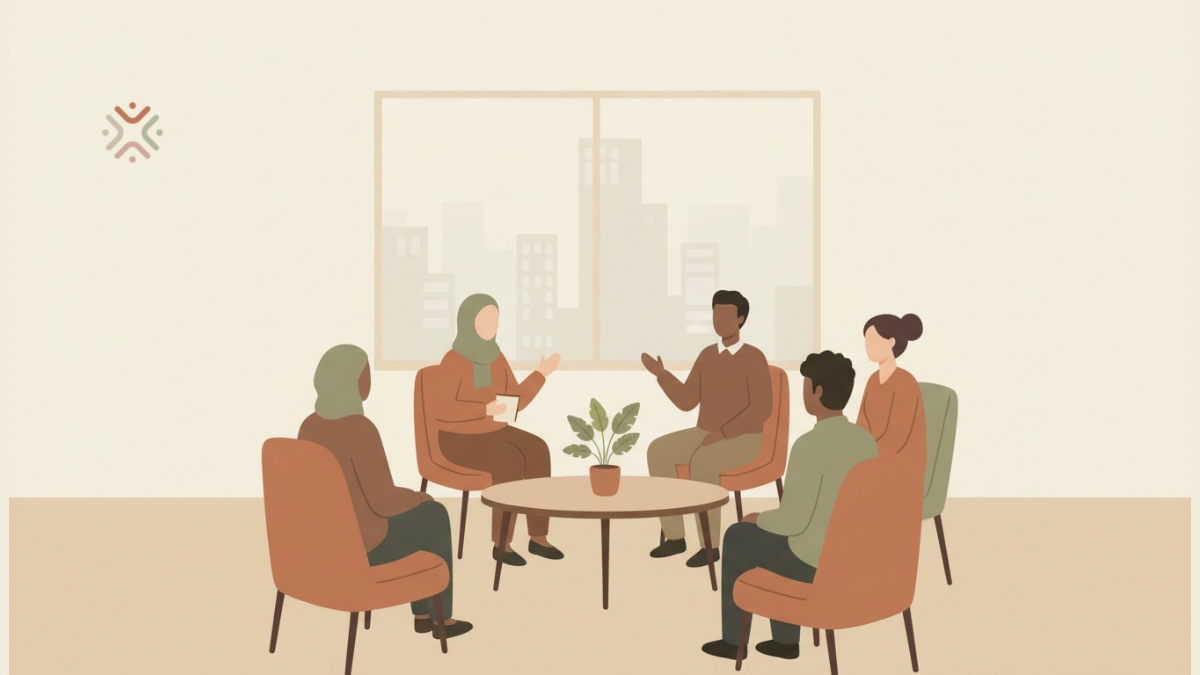
So what does it mean, in practice, for therapy to hold both context and community? It can look like:
• Curiosity about context: Instead of focusing only on childhood, family history or internal patterns, the therapist might ask: “What’s been happening in your community or in the news that feels connected to how you’re feeling?” or “How is what’s happening in your wider world feeling in your body this week?”
• Naming patterns without prescribing positions: It is possible to say “Many people are feeling grief, anger or numbness about what’s happening in X; how is that touching you?” without telling clients what they should believe or who they should support. The focus stays on their experience and values.
• Supporting both agency and limits: A client may feel helpless in the face of global injustice or corruption. Therapy can help explore small actions that are within reach, community care, conversations, donations, advocacy, prayer, boundary‑setting, while also respecting the limits of their energy, money and safety.
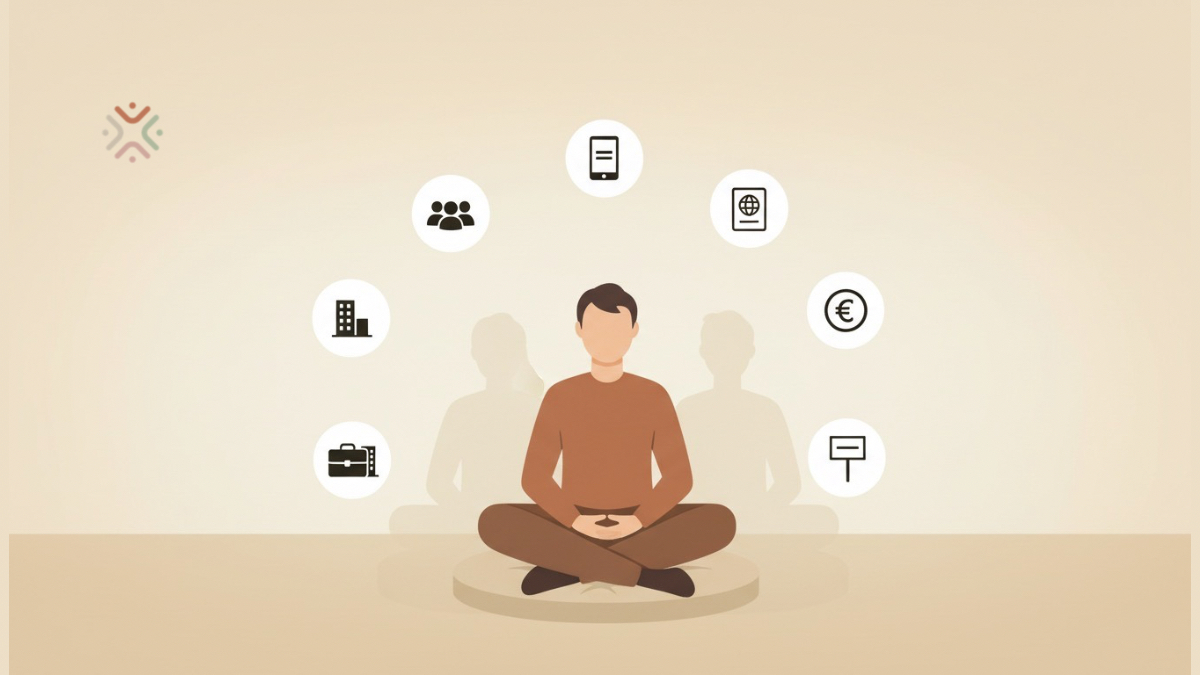
• Integrating body and nervous system: When someone is living with chronic stress from discrimination, war, family separation or economic insecurity, their nervous system is working overtime. Therapy can offer grounding, regulation and pacing, so that they are not pouring endlessly from a body in survival mode.
• Valuing community alongside the therapist: Instead of acting as the only container, the therapist might ask: “Who else in your community, can you talk to about this without needing to explain everything from the beginning?” or “What does collective care look like to you?” Friends, cousins, online communities, neighbours, faith spaces and cultural rituals can all be part of the plan.
For Thera’s communities, this might mean explicitly making space to talk about events in Palestine, Sudan, Congo, Kashmir, Iran, the United States, Ukraine, Russia, Europe etc, or elsewhere; about uprisings and crackdowns; about racism and Islamophobia in European universities or workplaces; about pressure to send money home or guilt about not doing so; about having family in different time zones and realities. It also means recognising when clients still carry the weight of politics in their bodies and relationships.
You don’t have to choose between your history and your healing
If you’ve ever felt that you had to leave your politics, your concern for justice or your newsfeed outside the therapy room to be a “good client”, it makes sense if therapy feels "too small" or "not right".
Your anxiety or sadness might not only be about your to‑do list. It might also be about watching your homeland under attack, sitting between cultures that misunderstand each other, walking through a city where you are always “the foreigner”, or carrying stories your parents and grandparents never had space to tell. That is your nervous system responding to very real conditions.
At Thera, we don’t believe you should have to choose between talking about your feelings and talking about the systems that shape them. You can find a therapist who udnerstands your context and holds space for both. We see healing as both personal and collective: making room for grief, anger, numbness and hope in your body; reconnecting with community and tradition as sources of strength; and using evidence‑based clinical tools to help you survive and grow in a world that is on fire.
Whether you are in the MENA region, a Muslim or Arab who is tired of feeling like your community is always under suspicion, a second‑generation kid or a recent migrant, BIPOC, or a TCK who isn’t sure where “home” is, you deserve therapy where your full reality is welcome, including the parts that are political, historical and shared with millions of others.
Nour Saleh
Mental Health Writer
Nour is a health journalist and content strategist passionate about making therapy more approachable. Her writing blends research with compassion, helping readers better understand mental health in everyday life.
Category