For some people of color, workplace stress is not only about workload, deadlines or performance expectations. It can also come from repeated comments, assumptions, jokes, exclusions or “small” moments that leave you feeling unseen, stereotyped or unsafe.
These experiences are often called microaggressions. They may seem minor to others, but when they happen again and again, they can become emotionally exhausting.
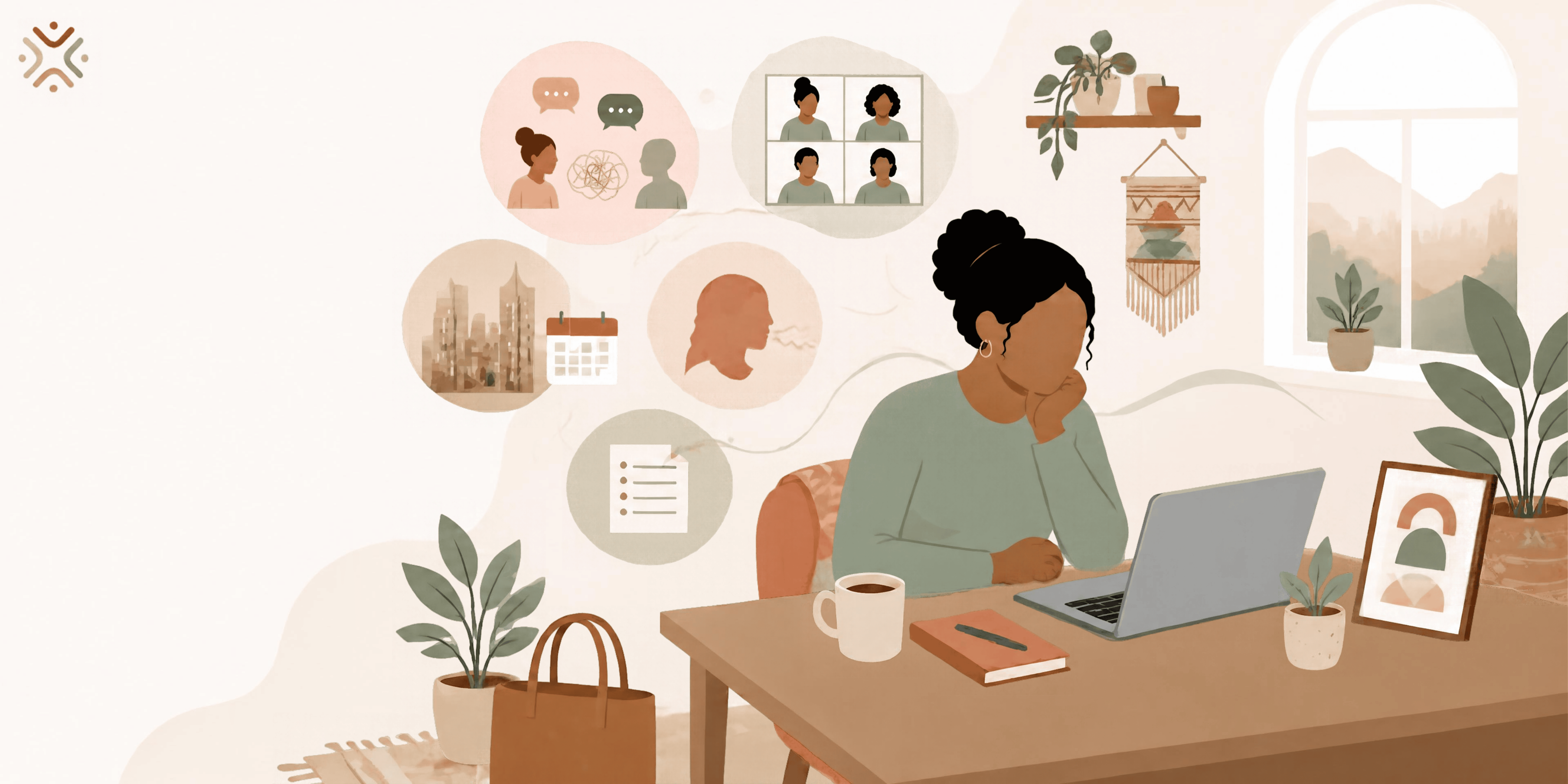
A colleague may mispronounce your name repeatedly after being corrected. A manager may seem surprised by your competence. Someone may ask where you are “really from.” A coworker may joke about your culture, hair, accent, food or background. You may be mistaken for another person of color, interrupted more often, excluded from informal networks or expected to explain race and diversity issues for everyone else.
People who experience racial or ethnic bias may carry these moments quietly while continuing to work and meet professional expectations. Experiences differ across individuals and workplaces; race, ethnicity, nationality and immigration status are not interchangeable.
Online therapy can offer a private space to process the emotional impact of workplace microaggressions, rebuild self-trust and decide what kind of boundaries, support or next steps may be needed.
What are workplace microaggressions?
Workplace microaggressions are everyday comments, behaviours or assumptions that communicate bias, disrespect or exclusion toward someone’s race, ethnicity, culture, language, religion, appearance or background.
They are not always openly hostile. They may be framed as curiosity, humour, compliments or “just a misunderstanding.” This is part of what makes them difficult to address.
A person may leave the interaction wondering: Was that racist? Did they mean it that way? Am I overreacting? Should I say something? Will speaking up make things worse?
The uncertainty itself can become stressful.
Comments that sound small but feel loaded
Microaggressions often sound small when described in isolation. But the emotional meaning is shaped by context, repetition and history.
Examples may include:
“Your English is so good.”
“You are so articulate.”
“Where are you really from?”
“I do not see color.”
“You are not like the others.”
“Can I touch your hair?”
“That name is too hard to say.”
“You are being too sensitive.”
“I was only joking.”
These comments are not automatically evidence of racial bias in every interaction. Their meaning depends on context, including stereotypes, how someone is treated compared with colleagues, and whether a pattern repeats. A therapist can help you explore both the impact and any uncertainty without dismissing your experience.
Online therapy can help you name the emotional impact without needing to prove that your reaction is valid.
Being mistaken, overlooked or underestimated
Not all microaggressions are spoken.
You may be mistaken for another person from a similar background. You may be assumed to be less senior than you are. You may be left out of informal conversations where relationships and opportunities are built. Your ideas may be ignored until someone else repeats them. Your emotions may be judged more harshly than others’.
These patterns can make you feel invisible and exposed at the same time.
You may feel invisible because your individuality is not recognised. You may feel exposed because your identity is constantly noticed.
This can affect confidence, belonging and your ability to relax at work.
If being one of few people from your background is part of your experience, it may help to read more about racial stress at work.
When jokes, curiosity or compliments become exhausting
Many workplace microaggressions are defended as harmless.
Someone may say they were only curious. They may say it was a joke. They may say they meant it as a compliment. They may expect you to reassure them, educate them or make them feel better.
This can create another burden. Not only do you experience the comment, but you may also have to manage the other person’s reaction if you name it.
You may decide to stay quiet because speaking up feels too risky. Or you may explain calmly while feeling angry, embarrassed or tired inside.
Over time, this emotional labour can become draining.
How can microaggressions affect mental health?
Microaggressions can affect mental health because they are often repeated, ambiguous and difficult to resolve. A single comment may pass quickly. But repeated experiences can shape how safe you feel in your workplace.
You may become more alert, more guarded or more self-critical. You may start preparing for bias before it happens. You may feel tense around certain colleagues or meetings. You may struggle to switch off after work.
This is not weakness. It is a response to repeated social stress.
Stress from constantly deciding whether to respond
One exhausting part of microaggressions is deciding what to do in the moment.
Should I say something?
Should I let it go?
Will they understand?
Will I be labelled difficult?
Will this affect my reputation?
Will HR take it seriously?
Will I have to explain everything again?
These decisions often happen quickly, while you are also trying to stay composed.
If you respond, there may be consequences. If you stay silent, there may also be consequences. You may carry the frustration home and replay the moment later.
Online therapy can help you explore these moments with more care. It can support you in understanding your options without blaming yourself for how you responded.
Anxiety, anger, numbness or self-doubt
Microaggressions can create many emotional responses.
You may feel anxious before work. You may feel angry after certain conversations. You may feel numb because reacting every time would be too much. You may begin doubting your own perception because others keep minimising what happened.
Self-doubt is common.
You may think:
“Maybe I misunderstood.”
“Maybe I am making it too big.”
“Maybe this happens to everyone.”
“Maybe I should be tougher.”
But if something repeatedly leaves you feeling small, tense or unsafe, it matters.
If these experiences leave you questioning yourself after success or feedback, it may connect with imposter feelings in BIPOC professionals.
Burnout from repeated emotional labour
Microaggressions can contribute to burnout because they add invisible work to the visible job.
You may be doing your tasks while also monitoring your tone, explaining your identity, managing bias, protecting your reputation, educating others or deciding whether to report something.
This emotional labour can build up.
You may start feeling tired before the workday begins. You may dread certain meetings. You may feel disconnected from work you once cared about. You may become irritable, withdrawn or emotionally flat.
If work stress, identity pressure and exhaustion are already affecting your life, it may help to read more about burnout in BIPOC communities.
Why are microaggressions so hard to talk about?
Microaggressions can be difficult to discuss because they often involve ambiguity. The person who caused harm may deny intent. Other people may not notice the pattern. The person affected may worry about being seen as sensitive, negative or unprofessional.
This can make the emotional impact harder to validate.
You may feel hurt, but also unsure whether you are “allowed” to be hurt.
Intent and impact are not the same
Many people defend microaggressions by focusing on intent.
“I did not mean it that way.”
“I was trying to be nice.”
“I was just curious.”
“It was only a joke.”
Intent matters, but it is not the whole story. A comment can still cause harm even if the person did not intend to hurt you.
Therapy can help you hold this distinction. You do not need to prove that someone had bad intentions for your emotional response to matter.
This can be especially important if you have been repeatedly encouraged to minimise your own discomfort for the sake of keeping peace.
The pressure to stay professional
People of color are often expected to respond to microaggressions with calm, patience and emotional control.
You may feel pressure to be educational but not angry, firm but not intimidating, honest but not emotional, hurt but not too hurt.
This is an unfair standard.
When professionalism requires you to hide the impact of bias, it can become a form of self-protection rather than genuine ease.
If you often edit your tone, reactions or identity to fit workplace expectations, it may help to explore the emotional cost of code-switching..
When workplaces minimise the problem
Some workplaces respond to microaggressions by treating them as personality conflicts, communication issues or misunderstandings.
This can be harmful because it removes the larger context: race, culture, power, bias and belonging.
If the workplace does not recognise the pattern, the person affected may feel isolated. They may begin to wonder whether support is even possible.
Online therapy cannot fix a workplace culture on its own, but it can help you process what is happening, protect your wellbeing and think through what support or documentation may be needed.
How can online therapy support people of color experiencing microaggressions?
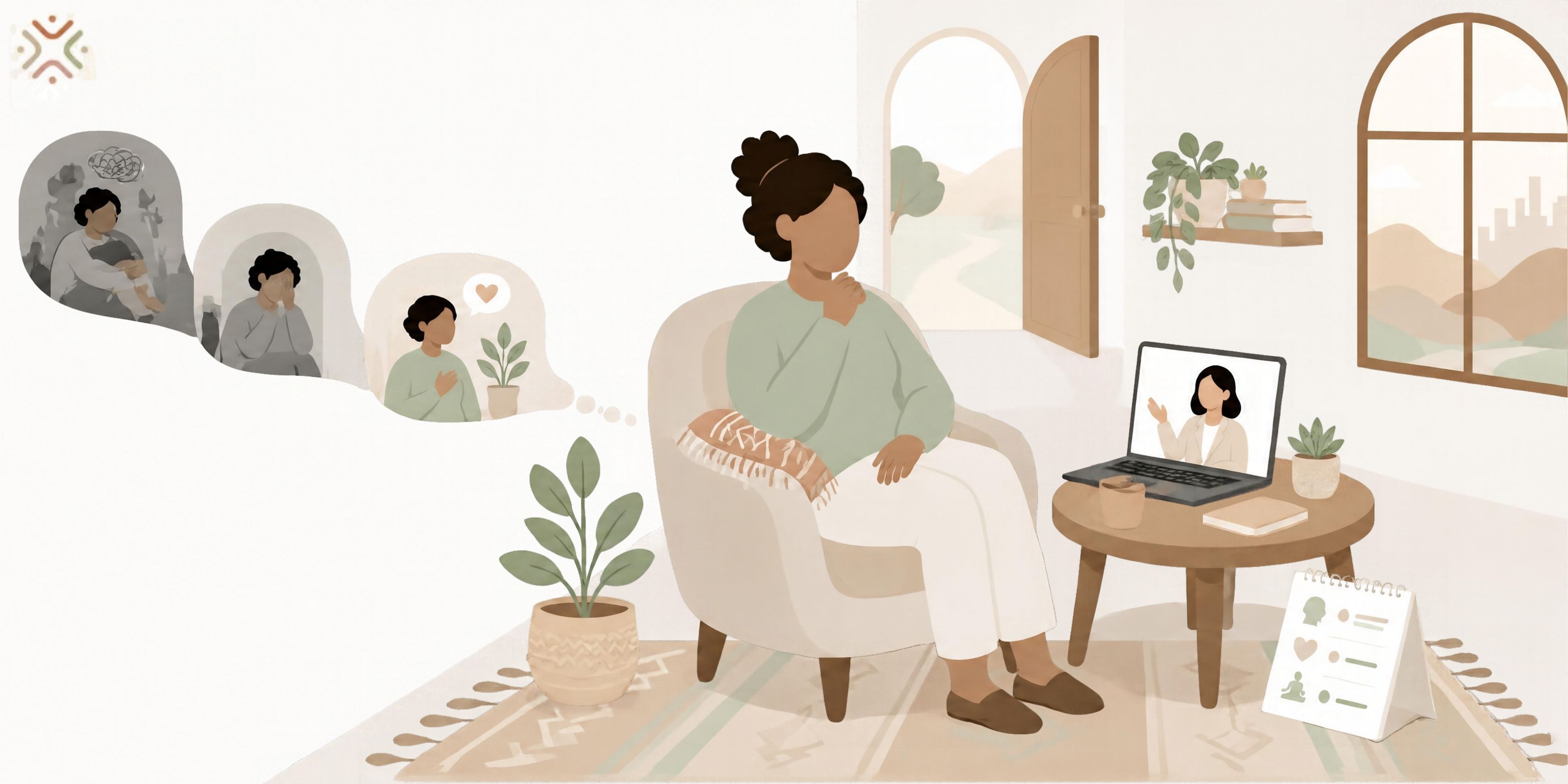
Online therapy can offer space to discuss workplace microaggressions and their impact. Before starting, ask your therapist to explain confidentiality and its limits, how online sessions and records are protected, and whether they can provide care where you are located.
A culturally sensitive therapist should understand that race, culture, language, migration history, appearance, faith, class and identity can shape workplace stress. These are not side details. They may be central to your emotional experience.
Naming what happened without minimising it
Sometimes the first step is simply naming the experience.
You may need space to say:
“That comment hurt.”
“I felt embarrassed.”
“I felt angry but could not show it.”
“I do not know if I should report this.”
“I am tired of explaining.”
“I feel like I cannot relax at work.”
Therapy can help you make sense of these reactions. You do not need to dismiss your own experience because someone else sees the moment as small.
Naming harm does not mean you are dramatic. It means you are paying attention to your emotional reality.
Rebuilding self-trust after repeated invalidation
Microaggressions can weaken self-trust because they are often followed by denial or minimisation.
If people keep telling you that something was harmless, you may begin to question your own perception. You may become disconnected from your body’s signals: tension, discomfort, anger, sadness or fear.
Online therapy can help rebuild that trust.
A therapist may help you notice what you felt, what happened, what patterns are present and what choices are available. This can make it easier to respond from clarity rather than panic or self-doubt.
If privacy is important because you do not feel safe discussing these experiences locally, it may help to read more about confidential support for BIPOC communities.
Exploring boundaries, coping and next steps
Therapy can support practical reflection.
You might explore whether to address a comment directly, document a pattern, seek support from a trusted colleague, involve HR, set a boundary, reduce emotional labour or consider whether the workplace is sustainable.
The answer will not be the same for everyone. Safety, power, job security, immigration status, financial needs and workplace culture all matter.
Online therapy can help you think through these choices in a way that respects both your emotional wellbeing and your real-world circumstances.
For support with stress, anxiety, burnout or workplace pressure, online individual therapy can offer a private place to begin.
What if the workplace also needs to change?
Microaggressions are not only an individual issue. Workplaces are responsible for creating cultures where people are respected, protected and able to do their work without repeated bias.
This means employee wellbeing cannot only focus on resilience, productivity or self-care. It must also include equity, psychological safety, accountability and culturally responsive support.
Employee wellbeing should include psychological safety
A workplace may offer wellness benefits and still fail to address the stress caused by bias.
People of color need more than encouragement to manage stress. They need environments where microaggressions are taken seriously, feedback systems are fair and leadership understands that inclusion is not only about representation.
If employees do not feel safe naming harm, wellbeing initiatives may feel superficial.
For organisations supporting diverse teams, Thera’s employee wellbeing support may be relevant.
You should not have to educate everyone alone
Many people of color are expected to educate colleagues about racism, culture, microaggressions and inclusion, often without recognition or compensation.
This can become exhausting.
You may care about change, but that does not mean you should carry the entire responsibility for creating it.
Online therapy can help you decide when education feels aligned with your values and when it becomes emotional labour that harms your wellbeing.
Leaving may not be the only answer, but staying should not require self-erasure
Sometimes support helps someone navigate a workplace with more clarity. Sometimes it helps them set boundaries. Sometimes it helps them recognise that a workplace is not safe or sustainable.
There is no single correct answer.
Therapy can help you ask:
What do I need to feel safer here?
What patterns keep repeating?
What support exists?
What am I being asked to tolerate?
What would change need to look like?
What is this costing me?
These questions can help you make decisions with more self-trust.
What the research says
Research has linked reported racial microaggressions with psychological distress, including anxiety and depressive symptoms. However, the evidence has limitations: much of the research reviewed relied on self-report, and many studies involved students rather than employees. These findings do not establish that every ambiguous interaction reflects racial bias or that microaggressions alone caused an individual’s symptoms (Wong et al., 2014). This review also does not establish the effectiveness of online therapy specifically for workplace microaggressions. Therapy may offer support with distress and decisions about coping or next steps, but it cannot substitute for addressing discriminatory workplace practices.
You deserve support that does not minimise your experience
If workplace microaggressions are affecting your sleep, mood, confidence, focus or sense of safety, support may help.
You do not have to prove that every comment was intentional. You do not have to wait until you are burned out. You do not have to carry the emotional cost alone.
Online therapy can help you understand what you are feeling, rebuild trust in your perception and decide what boundaries or support you need next.
You can explore more articles on identity, culture and mental health on the Thera blog.
If you want to ask questions before starting, you can book a free discovery call and explore whether online therapy feels right for you.
If you are still thinking about an interaction after work or are unsure how to respond, you can talk it through in therapy without having to decide beforehand what to call it.













 Previous article
