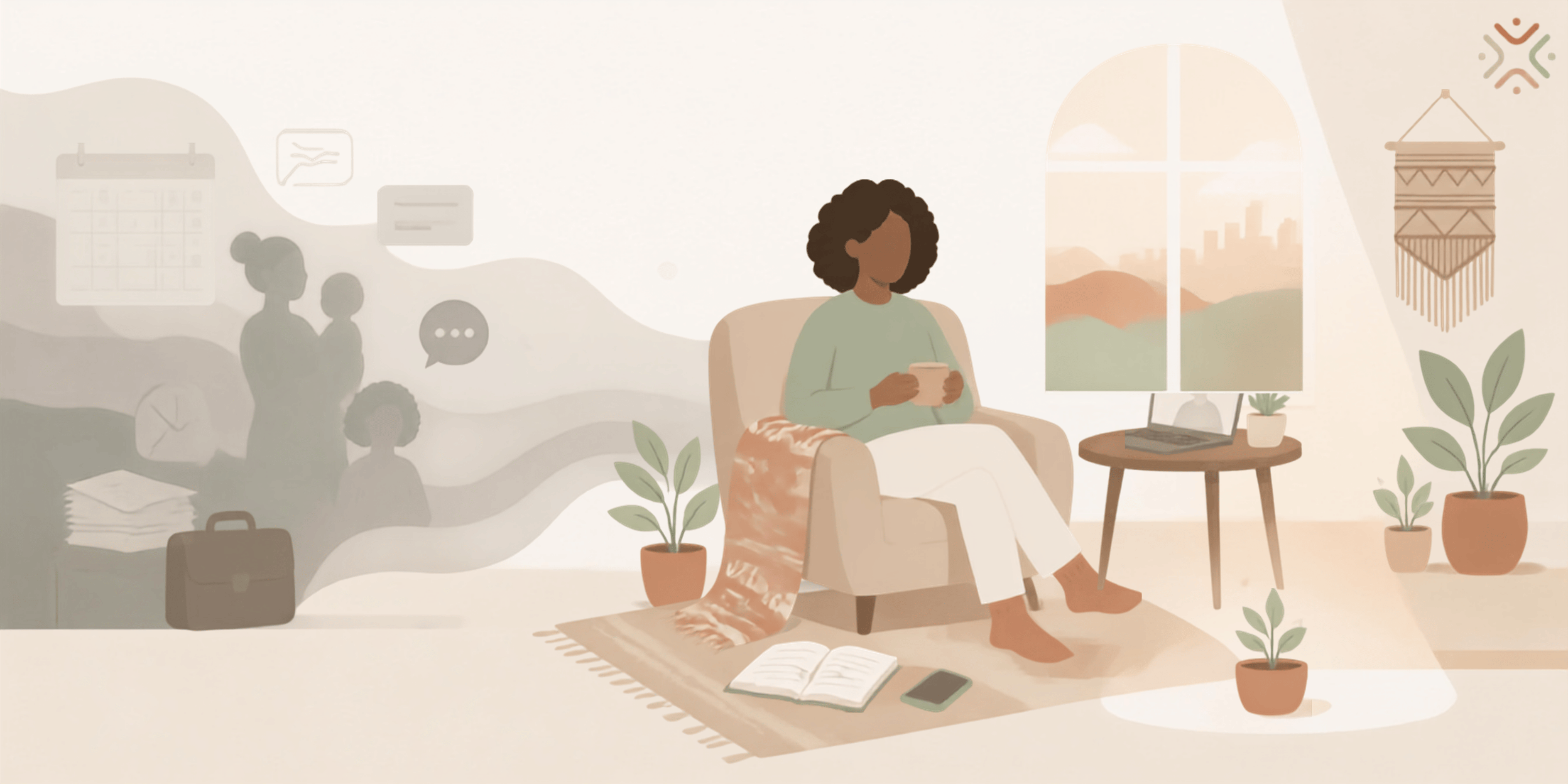
Burnout can happen when you have been carrying too much for too long. For some people from BIPOC, immigrant, diaspora, racialised and culturally diverse communities, that pressure can come from many directions at once: work, family expectations, financial responsibility, caregiving, racism, migration stress, community roles and the need to keep functioning even when you feel empty inside.
You may be the reliable one. The strong one. The one who answers messages, helps relatives, meets deadlines, supports parents, manages children, studies, works or shows up for everyone else. From the outside, you may look capable. Inside, you may feel exhausted, detached and unsure how much longer you can keep going.
Online therapy can offer a private, flexible space to understand what drained you, rebuild boundaries and reconnect with yourself without shame. Burnout recovery is not about becoming less responsible. It is about learning how to live with responsibility in a way that does not slowly erase you.
What can burnout look like in everyday life?
Burnout is commonly used to describe severe exhaustion and detachment after prolonged stress. In the World Health Organisation’s classification, “burn-out” refers specifically to chronic workplace stress that has not been successfully managed, rather than a medical diagnosis. People may also use the word more broadly to describe overload from caregiving, family demands, financial pressure or other life stressors.
Ongoing exhaustion can have many possible causes, including depression, anxiety, trauma, sleep difficulties, physical-health conditions, medication effects and chronic stress. A healthcare or mental-health professional can help you consider what may be contributing.
You may still be doing everything expected of you. You may still go to work, care for family, answer emails, cook, study, attend appointments or support others. But underneath, something feels different.
You may feel like you are moving through life with less patience, less energy and less connection to the things that used to matter.
Exhaustion that does not improve with usual rest
Persistent exhaustion that does not improve with a person’s usual sleep, weekends or short breaks can be a sign that more support or assessment is needed. If tiredness is new, severe, persistent, or accompanied by symptoms such as unexplained weight change, fever, pain, breathlessness, fainting, significant sleep changes or low mood, speak with a healthcare professional. Do not assume it is burnout.
You may sleep and still wake up heavy. You may take a day off and spend it feeling guilty or numb. You may have a quiet evening and still feel unable to recover.
This kind of exhaustion can be physical, emotional and mental. You may feel present in your body but absent inside yourself. You may struggle to focus, make decisions or respond to simple tasks.
For people who are used to pushing through, this can be confusing. You may think, “I rested, so why am I still tired?”A short break may not be enough when the sources of pressure remain unchanged. Depending on what is contributing, support may involve practical changes at work or home, rest, medical assessment, workplace adjustments, clearer boundaries, social support or psychological therapy.
Feeling detached from work, family or things that used to matter
Burnout can make you feel distant from parts of life that once felt meaningful.
You may feel detached from work, even if you once cared deeply about it. You may become irritable with family members, even though you love them. You may feel less motivated to socialise, cook, pray, exercise, create, study or take care of yourself.
For people from culturally diverse communities, this detachment may create guilt. If family, faith, community or achievement are important values, feeling disconnected from them can feel frightening.
But emotional exhaustion does not mean you have stopped caring. It may mean you have been caring without enough support for too long.
If this numbness starts to look like low mood, emptiness or functioning while feeling disconnected inside, it may also help to read about high-functioning depression in culturally diverse communities.
Functioning on the outside while feeling empty inside
Many burned-out people do not collapse dramatically. They keep going.
They reply to messages. They meet deadlines. They care for children. They support parents. They attend family events. They smile when needed. They manage responsibilities because stopping does not feel like an option.
Because they appear capable, others may not realise they are struggling.
This hidden burnout can feel lonely. You may think, “If I’m still functioning, maybe it’s not that serious.” But functioning does not always mean you are well. Sometimes it means you have become very skilled at surviving.
Online therapy can help you speak honestly about what life feels like beneath the surface.
Why may BIPOC people ignore burnout for too long?
Burnout and chronic overload can affect anyone. Some people from BIPOC, immigrant and diaspora backgrounds may face additional pressures, including racism, discrimination, migration-related stress, financial responsibility, caregiving, workplace inequity or concern about being misunderstood by services. These experiences vary widely between people, families, workplaces and communities.
Values such as endurance, sacrifice, family loyalty, achievement and emotional strength can be meaningful in many families and communities. For some people, however, these values can become difficult when they are experienced as pressure to ignore exhaustion or never ask for help. When constant endurance leaves little room for rest, support or recovery, it may affect wellbeing over time.
Feeling responsible for everyone
Many people from immigrant or culturally close families feel responsible for more than themselves.
You may support parents, siblings, children, a partner, extended family, work teams or community needs. You may translate documents, help with money, manage appointments, give emotional support or become the person everyone relies on.
You may feel that stopping would disappoint people or create problems for others.
Online therapy can help you examine these responsibilities realistically. Which responsibilities are truly yours? Which ones can be shared? Which ones come from love, and which ones come from fear or guilt?
This does not mean abandoning people. It means learning how to care without disappearing.
Confusing rest with laziness or selfishness
Some people feel guilty when they rest because they have learned to connect worth with productivity, service or sacrifice.
Rest may feel lazy. Saying no may feel selfish. Taking time for yourself may feel indulgent when others have worked hard or struggled more.
This can be especially strong in families where survival required constant effort. If your parents or grandparents had few choices, you may feel guilty for needing support when you have more opportunities.
But rest is not the opposite of responsibility. Rest can be what allows responsibility to continue in a healthier way.
When family expectations become difficult to balance with your own wellbeing, it may help to explore how boundaries can exist alongside love and respect.
Feeling guilty when emotional connection becomes difficult
Burnout can affect your ability to feel present in relationships, community life, spiritual practices, work or daily routines. You may feel disconnected from things that used to give you meaning.
This can create guilt. You may think, “What is wrong with me?” or “Why can’t I feel grateful?” or “Why am I irritated when people need me?”
Emotional exhaustion can make connection harder. It does not define your character, values or love for others.
Online therapy can help you understand the difference between losing your values and being too depleted to feel connected to them right now.
How can online therapy help with burnout recovery?
Burnout recovery is not usually a quick reset. It often involves understanding what drained you, changing patterns and building support that can last.
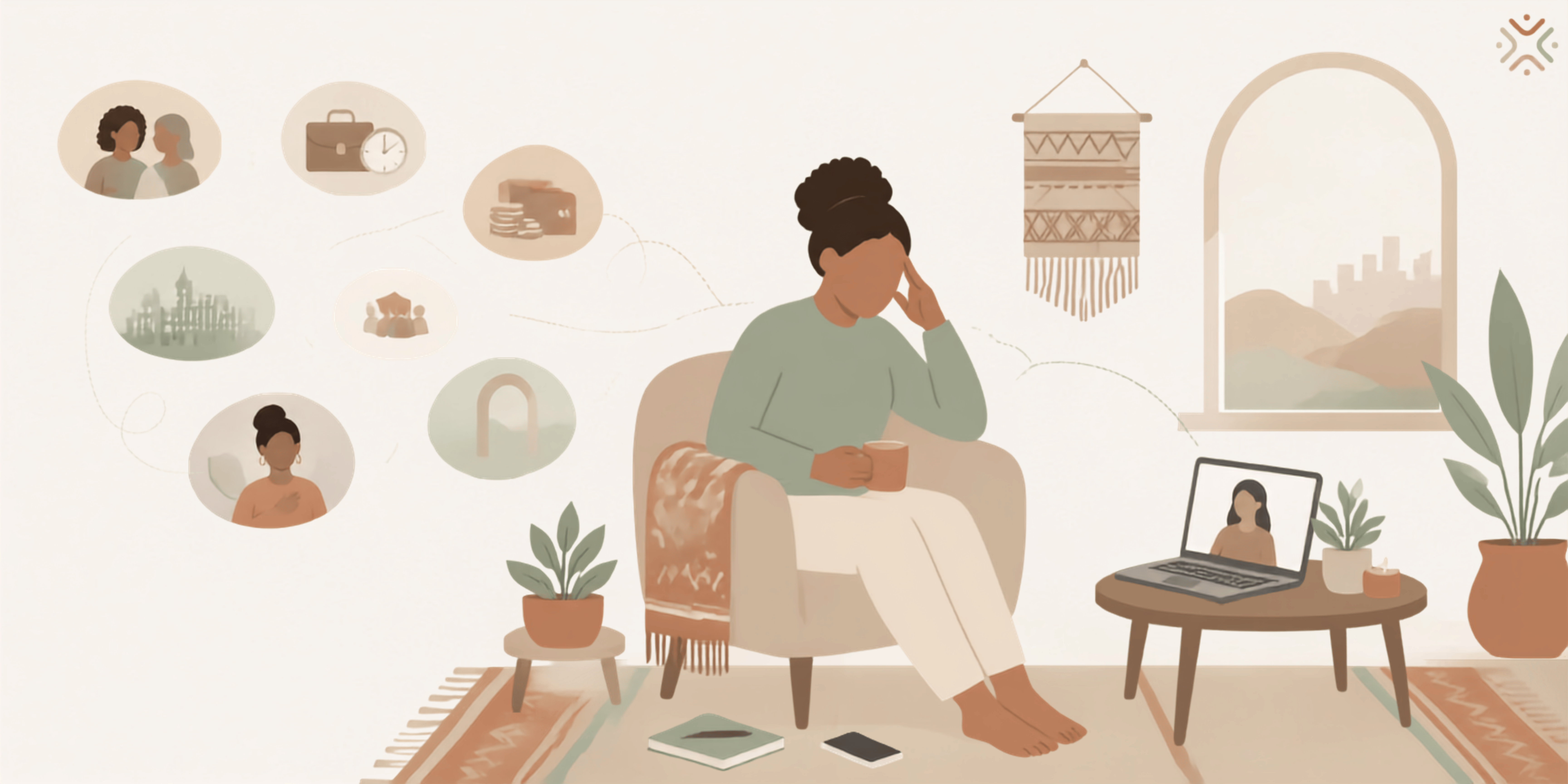
Online therapy can help you look at burnout with more honesty and less self-blame. You can explore work pressure, family expectations, perfectionism, people-pleasing, racism, financial stress, caregiving and emotional suppression in one space.
This can be especially helpful if your life already feels full and attending in-person appointments feels difficult.
Understanding what drained you
Burnout often develops gradually. You may not notice it at first because each individual demand seems manageable.
One extra task. One more favour. One more deadline. One more family obligation. One more message to answer. One more moment of staying quiet to avoid conflict.
Over time, these demands can build up.
Online therapy can help you identify patterns such as overwork, perfectionism, lack of support, unresolved stress, racial stress, family pressure or the belief that your needs should always come last.
Awareness matters because burnout often comes with self-blame. You may think you are weak, lazy or ungrateful. Therapy can help you see the wider pattern instead of blaming yourself for finally feeling depleted.
If you are not sure whether your emotional exhaustion is serious enough for support, it may help to reflect on when emotional struggles become too heavy to carry alone.
Rebuilding boundaries and sustainable routines
Burnout recovery often requires practical changes.
This may include looking at workload, sleep, rest, family expectations, emotional availability, screen time, caregiving responsibilities and the amount of invisible labour you carry.
Boundaries may feel uncomfortable at first, especially if you are used to overgiving. You may worry that people will think you are selfish, cold or disrespectful.
A boundary might sound like:
“I can help, but not tonight.”
“I need time to rest before I answer.”
“I cannot take on another task this week.”
“I want to support you, but I also need support.”
“I need one evening without family or work responsibilities.”
Online therapy can help you practise boundaries in a way that fits your values and family context. The goal is not to become harsh or disconnected. The goal is to create a life where care is possible without constant depletion.
For work-related burnout, support may also include looking at workplace stress and wellbeing more directly. Thera’s employee wellbeing support may be relevant for organisations that want to support mental health at work.
Reconnecting with values instead of constant pressure
Burnout can make life feel like obligation without meaning.
You may be doing the right things but feeling far away from why they matter. Work may feel like survival. Family care may feel like pressure. Personal goals may feel impossible. Even rest may feel like another task.
Online therapy can help you reconnect with what matters beneath the pressure.
What kind of relationships do you want?
What does responsibility mean when it includes your wellbeing too?
What parts of your culture feel nourishing, and what parts feel heavy?
What would a more sustainable rhythm look like?
What do you want your life to feel like, not just look like?
This process can be slow, but it can help you return to yourself with more compassion.
If burnout is connected to identity, belonging or feeling split between cultural expectations, it may also help to explore how living between cultures affects mental health.
What the research says
Burnout is commonly linked with chronic stress, especially when pressure has not been successfully managed over time. Guidance from health organisations describes burnout and work-related stress as affecting energy, emotional distance, motivation and daily functioning. Research and clinical guidance also suggest that culture, discrimination, family context and access to culturally responsive care can shape how people experience stress and seek support. This is why online therapy for burnout should look at the whole person, including work, family, identity, culture and support systems.
Why does healing from burnout take more than a weekend off?
A weekend off can help, but burnout usually needs more than a short break.
If you return to the same pressures, the same expectations and the same lack of support, the exhaustion may return too. Recovery may involve repeated changes in routines, workload, boundaries, relationships, workplace conditions and support systems. What is realistic will depend on a person’s financial situation, safety, caregiving responsibilities, health and level of control over their environment.
This can feel frustrating, especially if you want to feel better quickly. But burnout recovery is not about one dramatic fix. It is about learning how to live differently enough that your body and mind can begin to trust rest again.
Recovery is a process, not a quick reset
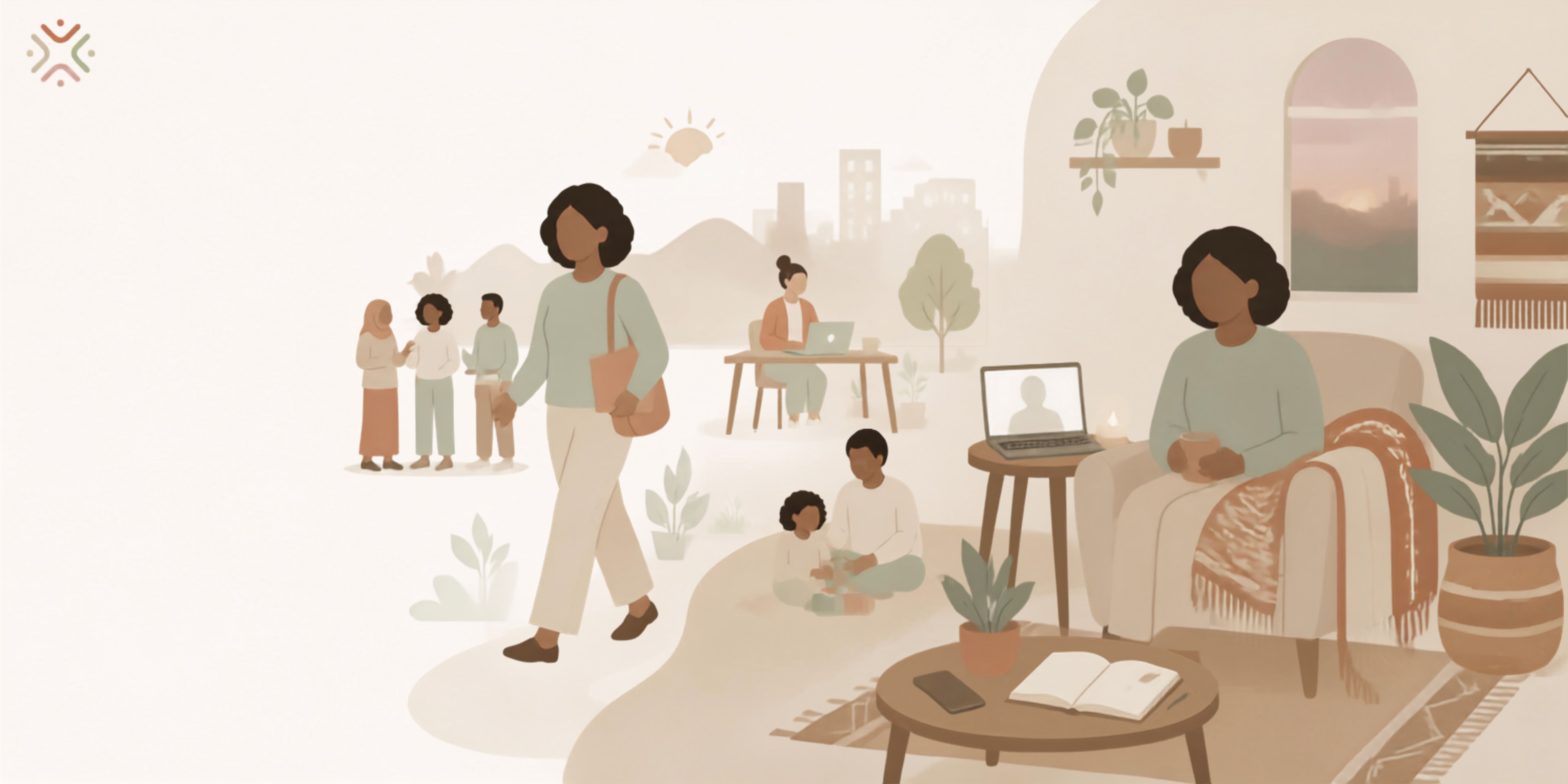
Burnout recovery may involve small, repeated steps.
You may need time to rebuild energy, reconnect with emotions, repair sleep, reduce overcommitment and learn to notice early signs of overload. You may also need time to grieve the version of yourself that could keep going without stopping.
Online therapy can help you stay consistent during this process. It can give you space to reflect, adjust and keep returning to what supports long-term wellbeing.
For some people, individual therapy can be a helpful place to work through stress, burnout, guilt and emotional patterns in a structured way.
How can online therapy fit when life already feels full?
One reason people delay therapy is that they feel they have no time left for themselves.
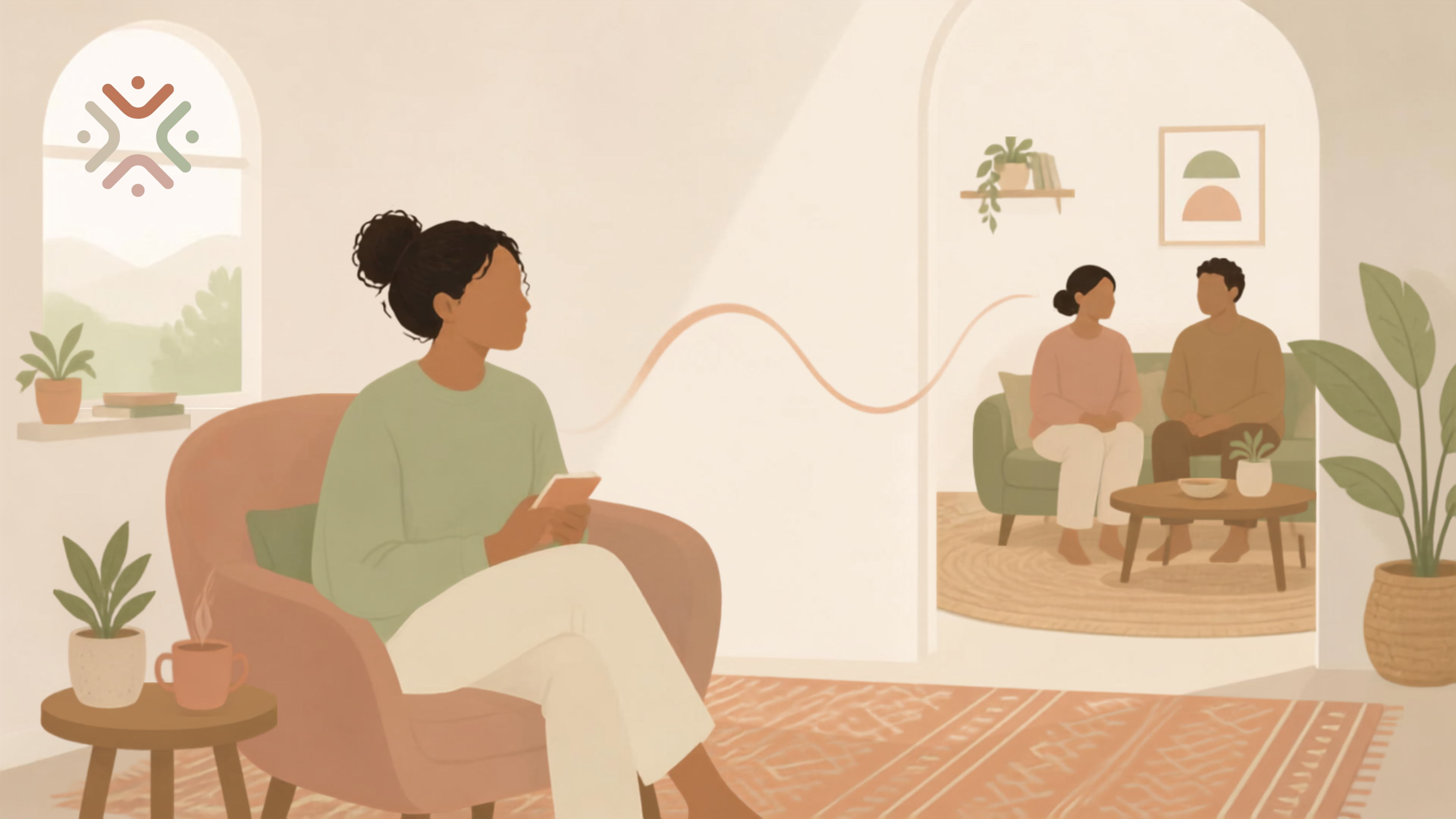
Online therapy can make support more accessible when you are balancing work, parenting, caregiving, family commitments, study or time zones. You do not have to travel to an appointment or explain your absence in the same way.
Privacy can also matter. If you come from a close-knit family or community, you may prefer support that feels discreet and separate from your local environment. When privacy is important, online therapy may feel more manageable for some people. It is not automatically private, however: privacy depends on a secure service, a space where you cannot be overheard, use of a personal device where possible, and whether anyone else can access your account or screen. Online therapy may not be the right format for every situation. If you are in crisis, unable to stay safe, or need urgent medical or mental-health assessment, use local emergency, crisis or healthcare services.
You can explore more articles on identity, culture and emotional wellbeing on the Thera blog. You can also browse Thera’s therapist directory to look for support that feels aligned with your needs.
If life feels unsustainable, you do not have to wait until everything falls apart. You can book a free discovery call and ask questions about online therapy before deciding what support feels right for you.
Returning to yourself after burnout does not mean abandoning your responsibilities. It means remembering that you are a person too, not only a worker, caregiver, achiever, problem-solver or source of strength for everyone else.
















 Previous article
