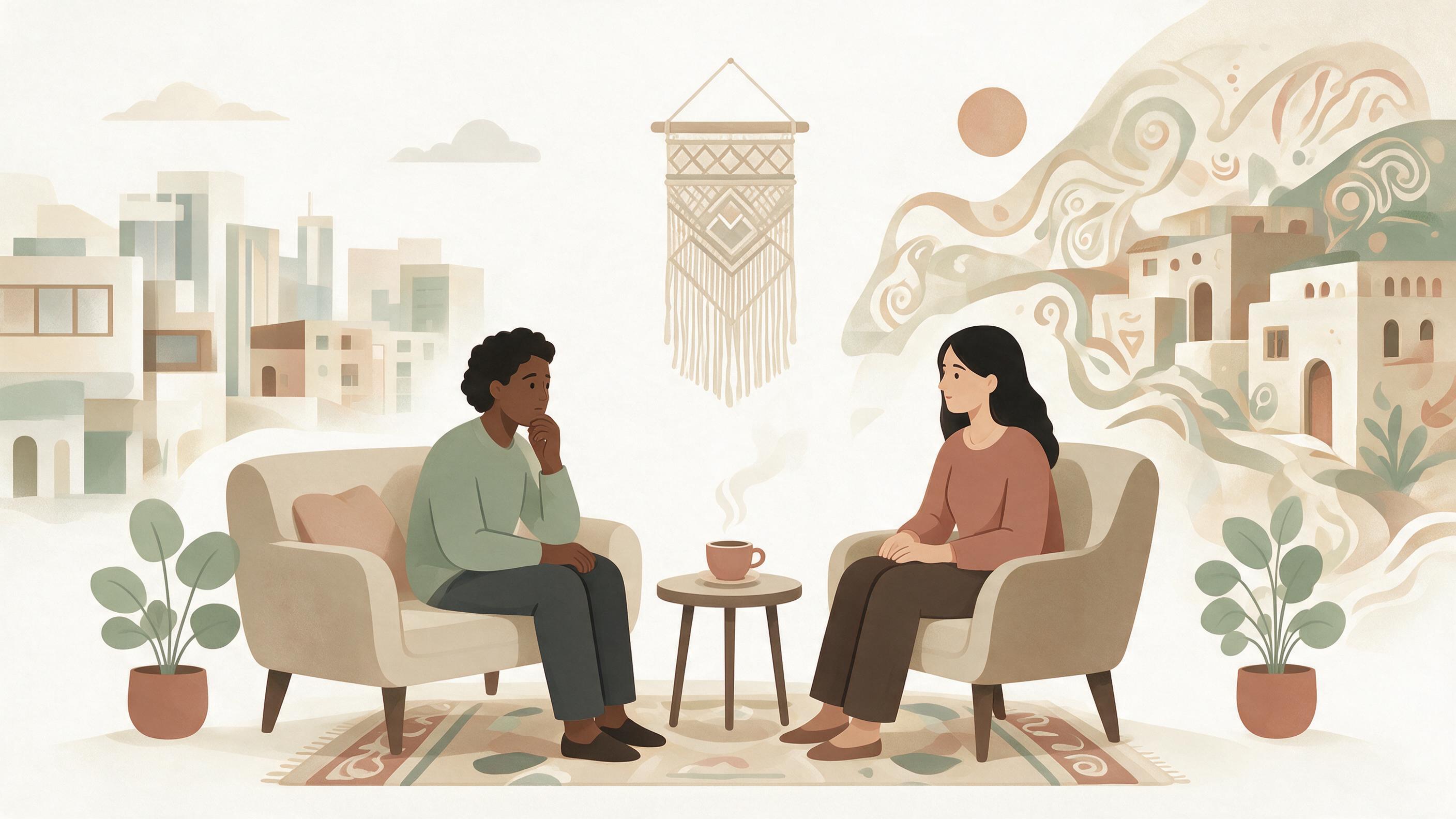
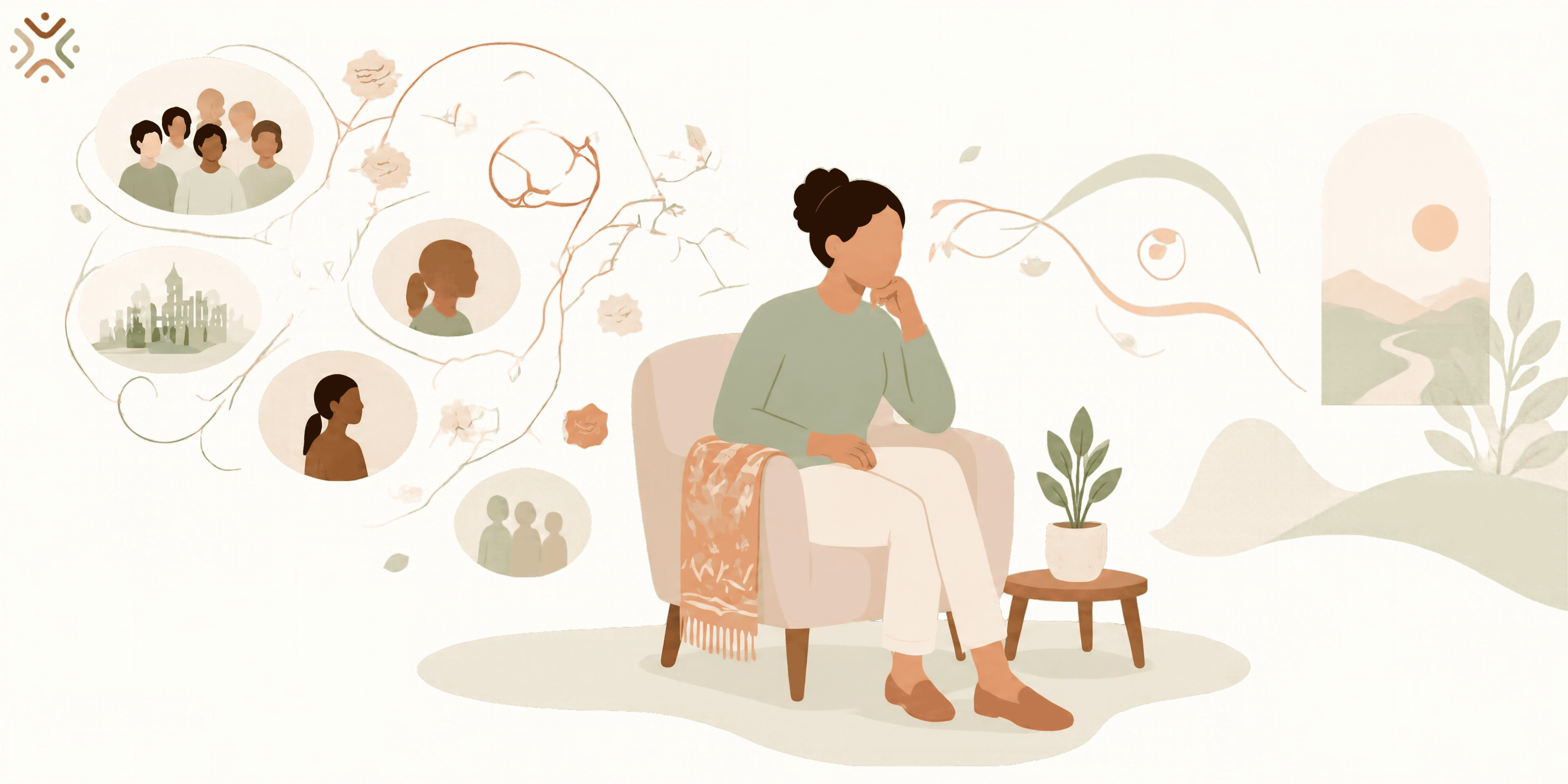
For some people from immigrant, diaspora, mixed-race and culturally diverse backgrounds, identity may be shaped by more than one world. You may carry your family’s culture, language, values and sacrifices while also being shaped by the country, school, workplace or community around you.
This can be meaningful and rich. It can also be emotionally tiring.
Some Black, Arab, South Asian, African, Persian, Asian, Latinx, Middle Eastern, Indigenous and mixed-background people may. know what it is like to feel “too much” in one space and “not enough” in another. You may feel pressure to adapt, explain yourself, hide parts of your identity or prove that you belong.
Online therapy can offer a private, accessible space to explore these experiences with someone who understands that culture, race, migration, family expectations and belonging are not side issues. They can be central to mental health. Not everyone with these identities will relate to all of these experiences, and that is okay. This article is for people who recognise themselves in some of these tensions and want a space to explore them.
What does it feel like to live between cultures?
Living between cultures can mean moving through different expectations every day. At home, you may be expected to speak, behave, dress or decide in a certain way. At work or school, you may feel pressure to blend in, be easy to understand or avoid being seen as “different.”
Sometimes, this flexibility is a strength. It may help you understand people, adapt quickly and move between different communities.
But when adaptation becomes constant, it can become exhausting. You may start to wonder which version of yourself is real. The respectful family version? The professional version? The version who avoids conflict? The version who wants more freedom? The version who feels tired of explaining?
Online therapy can help you slow down and ask: Where am I adapting because it feels meaningful, and where am I adapting because I do not feel safe being myself?
Feeling “too much” in one space and “not enough” in another
One painful part of living between cultures is feeling judged differently depending on where you are.
In some spaces, you may feel “too ethnic,” “too traditional,” “too religious,” “too emotional,” “too loud” or “too different.” You may feel pressure to explain your name, food, accent, family structure, cultural values or appearance.
In other spaces, you may feel “not cultural enough,” “not fluent enough,” “not respectful enough,” “not traditional enough” or “too Western.” You may be compared to relatives, corrected by elders or made to feel disconnected from a culture you still care about.
This can create a quiet kind of loneliness. You may belong to many worlds, but not feel fully at ease in any of them.
For example, someone may feel confident at work but tense during family gatherings. Another person may feel accepted by friends but judged in community spaces. Someone else may feel proud of their background and still feel hurt by the expectations attached to it.
These experiences can affect identity, confidence and emotional safety.
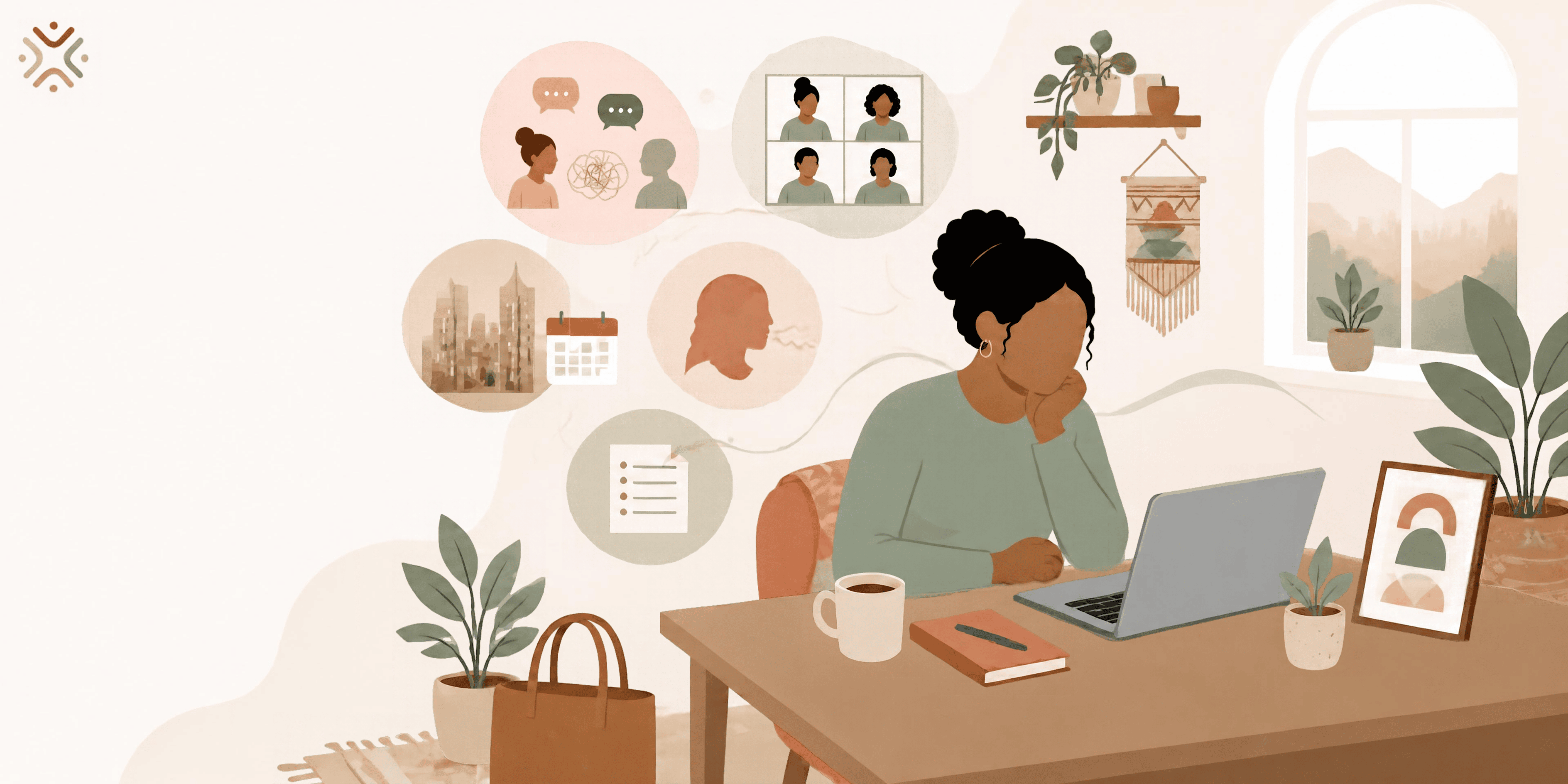
Code-switching between family, work, school and community
Many people from culturally diverse backgrounds become skilled at code-switching. You may change your language, tone, humour, clothing, opinions or body language depending on who is around.
This can be useful. It can help you stay safe, avoid conflict and connect with different people.
But if you are always adjusting, you may rarely feel able to rest. You may feel like you are performing a version of yourself that others can accept. Over time, this can lead to anxiety, resentment or emotional numbness.
In online therapy, you can talk about the cost of code-switching without being told that you are “overthinking” or being too sensitive. You can explore what parts of adaptation protect you; and what parts leave you feeling disconnected from yourself.
Longing for belonging but feeling misunderstood
Belonging is not only about being included. It is about feeling understood without having to translate every part of yourself.
For people navigating multicultural identity, this can affect friendships, family relationships, dating, marriage, parenting, career choices and emotional expression. You may want closeness, but feel that every space asks you to hide something.
With family, you may hide sadness, doubts, boundaries or personal choices. With colleagues or friends, you may hide family responsibilities, cultural pressure or experiences of racism and discrimination. In community spaces, you may hide parts of your identity that feel too complicated to explain.
Online therapy can help you explore belonging without forcing yourself into one simple category. You do not have to become less connected to your culture, less independent, less family-oriented or less emotionally honest in order to be whole.
Why can identity struggles affect mental health?
Identity struggles are sometimes dismissed as confusion, rebellion or a normal part of growing up. But living with constant internal tension can affect mental health in real ways.
When you repeatedly feel that parts of you are unacceptable in different spaces, you may begin to monitor yourself all the time. You may overthink your choices, avoid difficult conversations, feel guilty for wanting change or become anxious about disappointing others.
This can contribute to stress, low mood, emotional exhaustion, self-doubt, people-pleasing and relationship difficulties.
Why do ordinary decisions feel so overwhelming?
Even everyday decisions can feel loaded when they involve culture, family expectations or belonging.
What should I wear? What career should I choose? Should I move away? Who can I date? What kind of relationship do I want with my family? How much should I explain? How much should I hide?
For someone outside your context, these may look like simple personal decisions. For you, they may carry layers of meaning.
A decision about work may also feel like a decision about family sacrifice. A decision about a relationship may feel connected to community judgment. A decision about moving away may bring up guilt, loyalty and fear of being seen as selfish.
Online therapy can help slow the process down so decisions are not made only from fear, guilt or pressure. It can help you notice what you genuinely value and what you have learned to fear.
How do family expectations shape identity?
Many people from immigrant, diaspora or minority backgrounds feel torn between loyalty to family and their own emotional needs. This does not mean they reject their family. Often, the opposite is true. They care deeply about their parents, elders, siblings and community.
But love does not remove the need for boundaries. Gratitude does not mean you must ignore your own pain. Respect does not mean you must say yes to everything.
A person may honour their family and still need to make different choices about career, marriage, parenting, money, emotional expression or where to live.
When family expectations become difficult to carry, it may help to explore how personal boundaries can exist alongside love and responsibility.
What if I feel ashamed of becoming “too Western” or “too traditional”?
Labels can hurt from both sides.
Someone may be called “too Western” for wanting independence, therapy, emotional openness or a different approach to relationships. Someone else may be called “too traditional” for valuing family closeness, cultural continuity, faith or community.
These labels can create shame because they reduce a complex person to one judgment. They suggest that identity must be a fixed position: modern or traditional, loyal or free, independent or family-oriented.
Real life is more nuanced.
You may want personal choice and family connection. You may love your culture and still need distance from certain expectations. You may value tradition and still want emotional freedom. You may be changing and still remain connected to where you come from.
Online therapy can help make room for that complexity.
What the research says about culture and mental health
Research and clinical guidance increasingly recognise that culture, racism, migration, discrimination and family context can shape mental health. Research on minority stress and acculturation also suggests that navigating racism, discrimination and conflicting cultural expectations can increase risk of anxiety, depression and other mental health concerns, especially when support is limited (American Psychological Association; World Health Organization). People from racialised and minority backgrounds may face extra barriers to support, including stigma, lack of culturally responsive care and fear of being misunderstood. Culturally sensitive therapy aims to understand the whole person, not just symptoms in isolation. This means identity, family, community, migration history and lived experience can all be part of the conversation. While therapy cannot remove systemic racism or social pressures, it can help people find safer ways to cope, make decisions and care for their mental health within these realities.
How can online therapy help with identity and belonging?
Culturally sensitive online therapy can offer a space to explore identity without pressure to choose one side.
This can be especially important when local support does not fully understand your background, migration story, family structure or cultural context. You may have tried to explain your experience before and felt misunderstood. You may have been told you are exaggerating, being ungrateful or making things too complicated.
Online therapy gives you space to speak more honestly, especially if privacy, distance or local stigma make in-person support harder.
Can therapy help me understand my story without choosing only one side?
A helpful therapist should not pressure you to erase one part of yourself to protect another. Therapy is not about choosing between culture and individuality, family and freedom, tradition and personal growth.
Instead, it can help you understand how different parts of your story fit together. Your family history, migration experience, language, culture, racial identity, education, relationships and personal values all matter.
They may sometimes feel in conflict, but they do not have to be treated as separate lives.
For example, someone may realise that they want to stay close to their family, but not repeat every family pattern. Another person may discover that their need for independence is not a rejection of culture, but a way to protect their mental health. Someone else may begin to understand that belonging does not require self-erasure.
This kind of work can help you build a more integrated identity; one where you are allowed to be shaped by more than one world.
Can online therapy help me make choices with less fear?
Identity conflict often leads to fear-based decisions. You may say yes because you are afraid of disappointing your parents. You may say no because you are afraid of being controlled. You may avoid making decisions because every option seems to carry guilt.
Online therapy can help separate fear from intuition, family pressure from personal values and shame from genuine concern.
The goal is not rebellion. The goal is clarity.
When you understand what truly matters to you, decisions can become less reactive. You may still choose family closeness, cultural traditions or community connection; but those choices can come from self-awareness rather than fear.
If guilt, doubt or inner conflict keep shaping important decisions, it may help to look more closely at how cultural values and mental health interact.
Can I talk about racism, culture and belonging in therapy?
Yes. For many people of color, culture is not a side issue. Racism, discrimination, migration, family expectations, language, belonging, intergenerational pressure and community judgment can all affect mental health.
A culturally aware therapist should not treat these topics as distractions from the “real” problem. Often, they are part of the problem.
You should be able to talk about racial stress, family honour, cultural loneliness, pressure to succeed, code-switching, stereotypes, identity confusion or feeling unseen without needing to educate the therapist from the beginning.
Therapy can also work alongside other forms of support. Family, community, spirituality, friendship and cultural connection may all matter. Therapy does not have to replace them. It can become one part of a wider support syste.
Can belonging begin with self-understanding?
Belonging is often imagined as finding the perfect place, group or community. Sometimes that happens. But belonging can also begin with becoming more at home with yourself.
When you understand your own story more clearly, you may feel less pressure to perform a version of yourself that keeps everyone else comfortable. You may begin to notice which spaces nourish you, which spaces require too much self-erasure and which relationships allow honesty.
Online therapy can support this process by giving you a private space to explore identity, culture and belonging without rushing toward simple answers.
Am I allowed to be complex?
Yes. You do not need to fit one simple label to be whole.
You can be BIPOC, multicultural, uncertain, evolving, family-oriented, independent, traditional, questioning and still worthy of support.
You are allowed to have mixed feelings. You are allowed to love your family and need boundaries. You are allowed to value your culture and still name what has hurt you. You are allowed to change without betraying where you come from.
This complexity is not a failure. It is part of being human.
How can online therapy connect me with support beyond my local environment?
Not everyone can find culturally aware support nearby. Some people live in places where their identity is misunderstood. Others are surrounded by community but do not feel safe speaking openly because of privacy, reputation or fear of judgment.
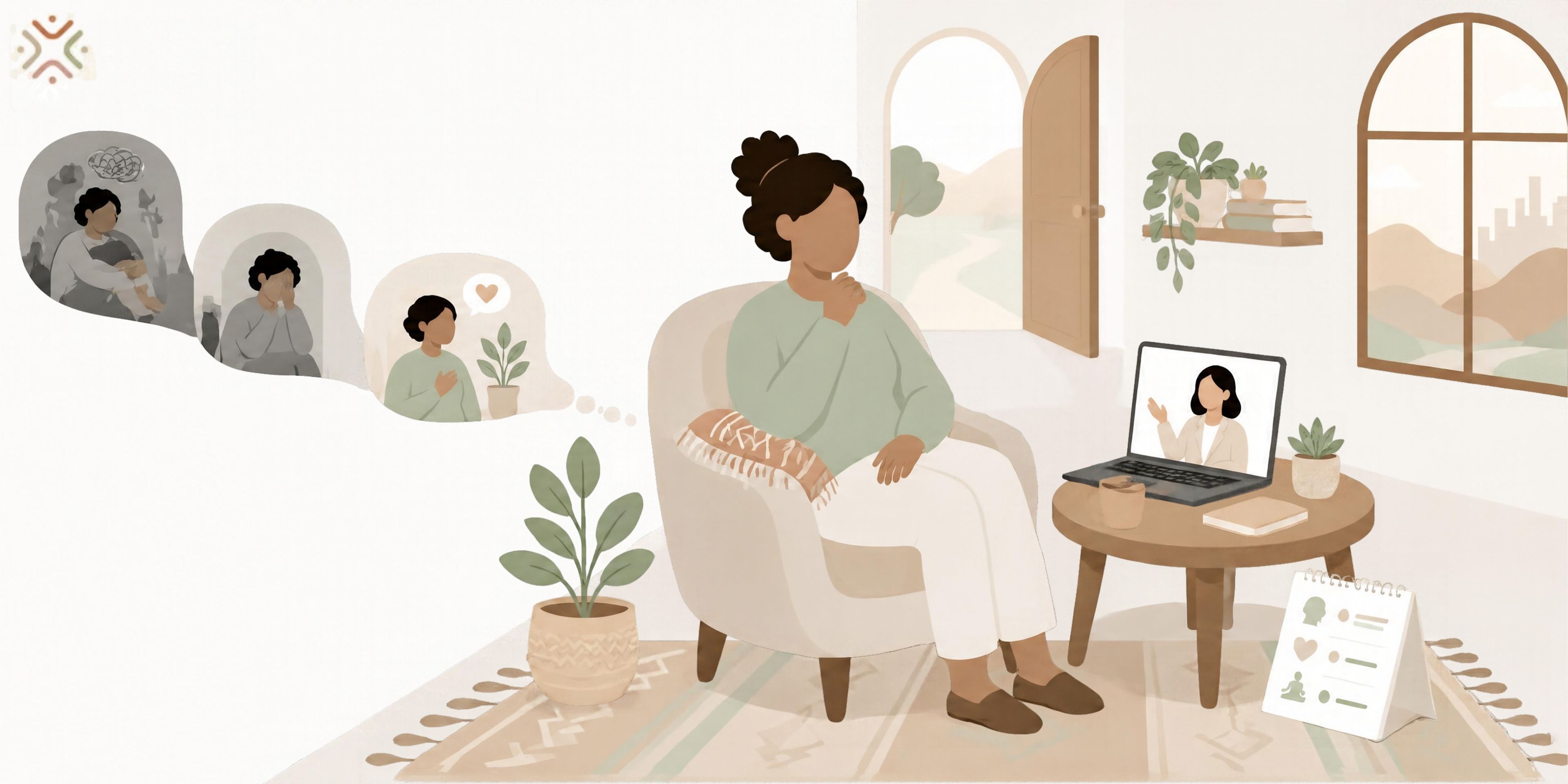
Online therapy can make support more accessible beyond your immediate environment. It can help you connect with someone who understands diaspora, migration, multicultural identity and the emotional weight of belonging to more than one world.
For people who feel unseen locally, privacy can make therapy feel safer and more possible.
If you are ready to explore support, you can book a free discovery call to ask questions before starting therapy.
You do not have to choose between every part of yourself. With the right support, identity can become less about proving where you belong and more about understanding who you are.












 Previous article
