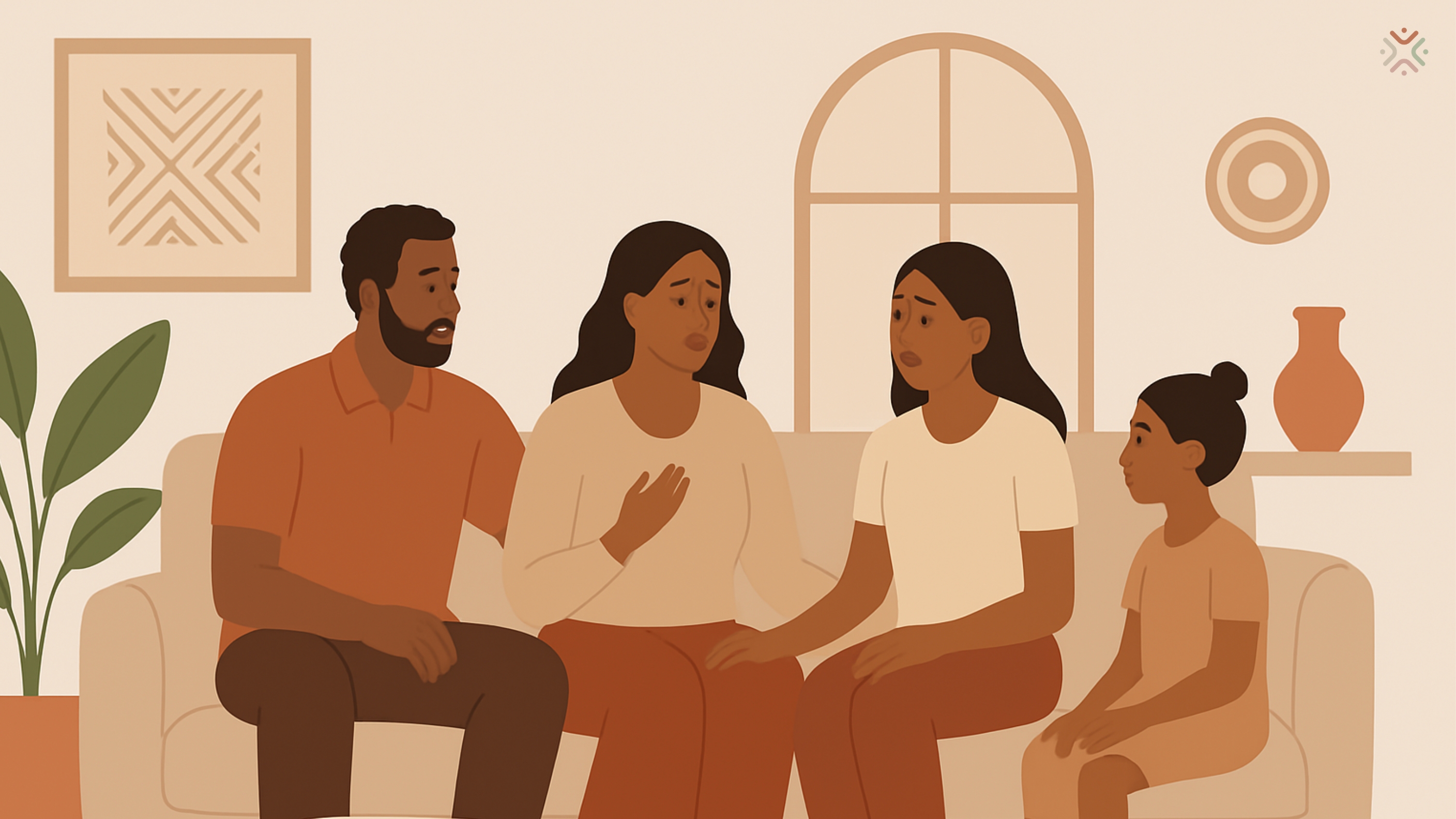
Family can be one of the deepest sources of love, identity and belonging. It can also be one of the most complicated places to express your needs.
For many people of color, immigrant families, racialized communities and multicultural households, family closeness is shaped by sacrifice, duty, respect, survival and collective responsibility. You may feel proud of your family’s strength and still feel overwhelmed by what is expected of you. Experiences differ widely within and across families, cultures and generations. This article speaks to people who recognise these patterns in their own lives.
Boundaries can feel especially difficult when you have been taught to prioritise family, protect reputation, avoid conflict or be grateful for everything your parents or elders have done. You may worry that saying no makes you selfish, disrespectful, ungrateful or too “Westernised.”
But healthy boundaries are not the opposite of love. They can be a way to protect relationships from resentment, burnout and emotional distance.
Why boundaries can feel complicated in BIPOC families
Boundaries are often discussed as if they are simple: just say no, protect your peace, walk away. But for many clients from culturally diverse families, it is rarely that straightforward.
Respect does not mean having no needs
Respect for parents, elders, partners or relatives matters in many families. It can reflect love, gratitude and cultural values. But respect does not mean complete self-erasure.
You can care deeply about your family and still need rest. You can honour your parents and still have limits. You can be a loving daughter, son, sibling, partner or caregiver without becoming responsible for everyone’s emotions.
Imagine someone who answers every family call, handles every document, translates every appointment and says yes to every request. They may look helpful from the outside, but inside they feel exhausted and invisible. Their problem is not a lack of love. It is that love has become impossible to sustain without limits.
This is where a culturally sensitive therapist can help, because boundary work often needs cultural nuance.
When family love comes with pressure
Love and pressure can exist at the same time. A parent may genuinely want the best for their child, while still putting pressure on them around career, marriage, children, education, caregiving, finances or religion. A relative may care deeply, while still making comments that feel controlling or critical.
In immigrant and diaspora families, pressure may also be tied to sacrifice. Parents may have worked extremely hard, moved countries, faced racism, lost status or given up comfort so their children could have more opportunities. Because of this, children may feel they owe success, obedience or emotional availability.
Therapy does not need to demonise the family. Instead, it can help clients understand what is happening: Where is love present? Where is pressure becoming harmful? Which expectations are realistic, and which are too heavy to carry?
Culturally sensitive therapy also avoids assuming that independence, distance or confrontation are the only healthy outcomes. It can help you consider safety, practical dependence, caregiving responsibilities and the kind of relationship you hope to have with your family.
The fear of being seen as selfish or disrespectful
Many people avoid boundaries because they fear being labelled selfish, cold, disobedient, ungrateful or disconnected from their culture.
A young adult may want to move out but fear being seen as abandoning the family. A woman may want more space in her marriage but worry she will be called difficult. A caregiver may need rest but feel guilty for not being available to aging parents.
This fear can keep people in patterns of overgiving. They keep saying yes, but resentment grows quietly. They remain physically present, but emotionally shut down.
Boundaries are not about rejecting family. They are about making relationships more honest and sustainable.
Signs that family expectations are affecting your mental health
Family pressure can become so normal that you do not notice how much it is affecting you. Sometimes the signs appear in your body, mood, relationships or daily decisions.
Constant guilt after saying no
Feeling guilty after setting a limit is common, especially if you were raised to prioritise others. But constant guilt may be a sign that boundaries feel unsafe or unfamiliar.
You may say no to a request, then spend hours replaying the conversation. You may apologise repeatedly, explain too much or eventually give in just to feel less uncomfortable.
Guilt does not always mean you did something wrong. Sometimes it means you are doing something new.
This connects closely with gratitude and emotional pain, especially when guilt is tied to family sacrifice.
Anxiety before family conversations
If you feel anxious before speaking with family, your body may be preparing for criticism, conflict or emotional pressure.
You may rehearse conversations, predict reactions, avoid calls, delay visits or feel tense before family gatherings. You might worry about being questioned about marriage, career, money, children, appearance, lifestyle or choices your family does not understand.
For example, someone may sit in their car before visiting relatives, taking deep breaths because they know the conversation will turn to why they are not married yet, why they changed careers or why they are “different” now.
Anxiety does not mean you do not love your family. It may mean your nervous system has learned that family contact can be emotionally demanding.
Resentment, emotional shutdown or burnout
When people ignore their limits for too long, emotional pressure rarely disappears. It often shows up as resentment, exhaustion or distance from the people they still care about. Someone may stop answering messages, become irritable, avoid family gatherings or feel numb around relatives they once felt close to.
This can be easily misunderstood. Family members may see the withdrawal and think the person has become cold, selfish or uncaring. But underneath, they may be experiencing emotional burnout after years of saying yes when they needed rest, privacy or support.
Boundary work can help prevent love from turning into resentment. It gives people a way to stay connected without losing themselves in everyone else’s needs.
How therapy helps you build respectful boundaries
Therapy does not remove all family conflict. It does not make difficult conversations easy overnight. But it can help you understand your needs, prepare your words and stay grounded when emotions become intense.
Understanding what you are responsible for, and what you are not
A key part of boundary work is learning the difference between caring for people and carrying everything for them.
You may be responsible for speaking respectfully. You are not responsible for preventing every family member’s disappointment or carrying every emotional response to your choices. You may choose to help family where you can. You are not responsible for meeting every expectation at the cost of your mental health.
For many clients from immigrant or minority backgrounds, this distinction can feel uncomfortable. Family responsibility may be deeply meaningful. Therapy can help you keep what is meaningful while questioning what has become harmful.
Practicing difficult conversations
Boundaries often fail not because people do not need them, but because they do not know how to communicate them.
Therapy can help you practise difficult conversations before they happen. This may include choosing simple language, anticipating reactions, managing guilt and staying calm when someone becomes upset.
These are examples, not rules: the safest and most appropriate wording will depend on your relationship, culture, practical circumstances and emotional safety.
For example:
“I care about you, but I cannot discuss this tonight.”
“I understand this matters to you, but I need time to make my own decision.”
“I want to help, but I cannot be available every day.”
“I respect your opinion, and I also need you to respect my choice.”
These sentences may sound simple, but for someone raised to avoid conflict, they can feel powerful and frightening.
Holding boundaries without attacking your family
Boundaries do not need to be aggressive. They do not have to involve blame, insults or emotional distance. In many families, especially close or culturally traditional ones, the way a boundary is communicated matters almost as much as the boundary itself.
Respectful firmness is possible. You can speak calmly, explain briefly and avoid turning every limit into a long debate. You do not have to convince everyone that your boundary is valid before you are allowed to keep it.
A culturally sensitive therapist can help you find language that fits your values, family structure and emotional safety. This can be especially helpful when you are trying to set limits with parents who may not fully understand mental health, therapy or the emotional impact of family pressure.
Finding balance between duty, love and self-respect
The goal of boundaries is not to become detached from family. For many people, the goal is to stay connected in a healthier way.
Boundaries can protect relationships
Without boundaries, love can become resentment. Help can become obligation. Care can become exhaustion. Silence can become emotional distance.
Healthy limits can reduce conflict because they make expectations clearer. They can help family members understand what you can offer and what is too much. They can also help you show up with more honesty instead of hidden anger.
A boundary might feel uncomfortable at first, especially if your family is not used to it. But discomfort is not always a sign that something is wrong. Sometimes it is part of changing an old pattern.
You can honour family and still care for your mental health
You do not have to choose between loving your family and caring for yourself. You do not have to reject your culture to have needs. You do not have to become harsh to stop overgiving.
For people of color, immigrant families and culturally diverse communities, boundary work often requires both courage and tenderness. It means asking: How can I honour where I come from without disappearing inside everyone else’s expectations?
Therapy can help you find language, choices and limits that protect your wellbeing while respecting what matters to you.
You are allowed to love your family and still need space. You are allowed to be grateful and still feel tired. You are allowed to care deeply and still say no.
Healthy boundaries do not mean losing respect. They can be one of the ways respect becomes mutual.




















 Previous article
