Separation can change routines, home life, finances, communication and family roles. Depending on the family, decisions may also involve extended relatives, language, faith, migration circumstances or community expectations. These factors should be explored individually, not presumed from identity. BIPOC refers to Black, Indigenous and people of color; it is not interchangeable with immigrant, diaspora or internationally mobile families. Neither racial identity nor cultural background determines how a family experiences separation.
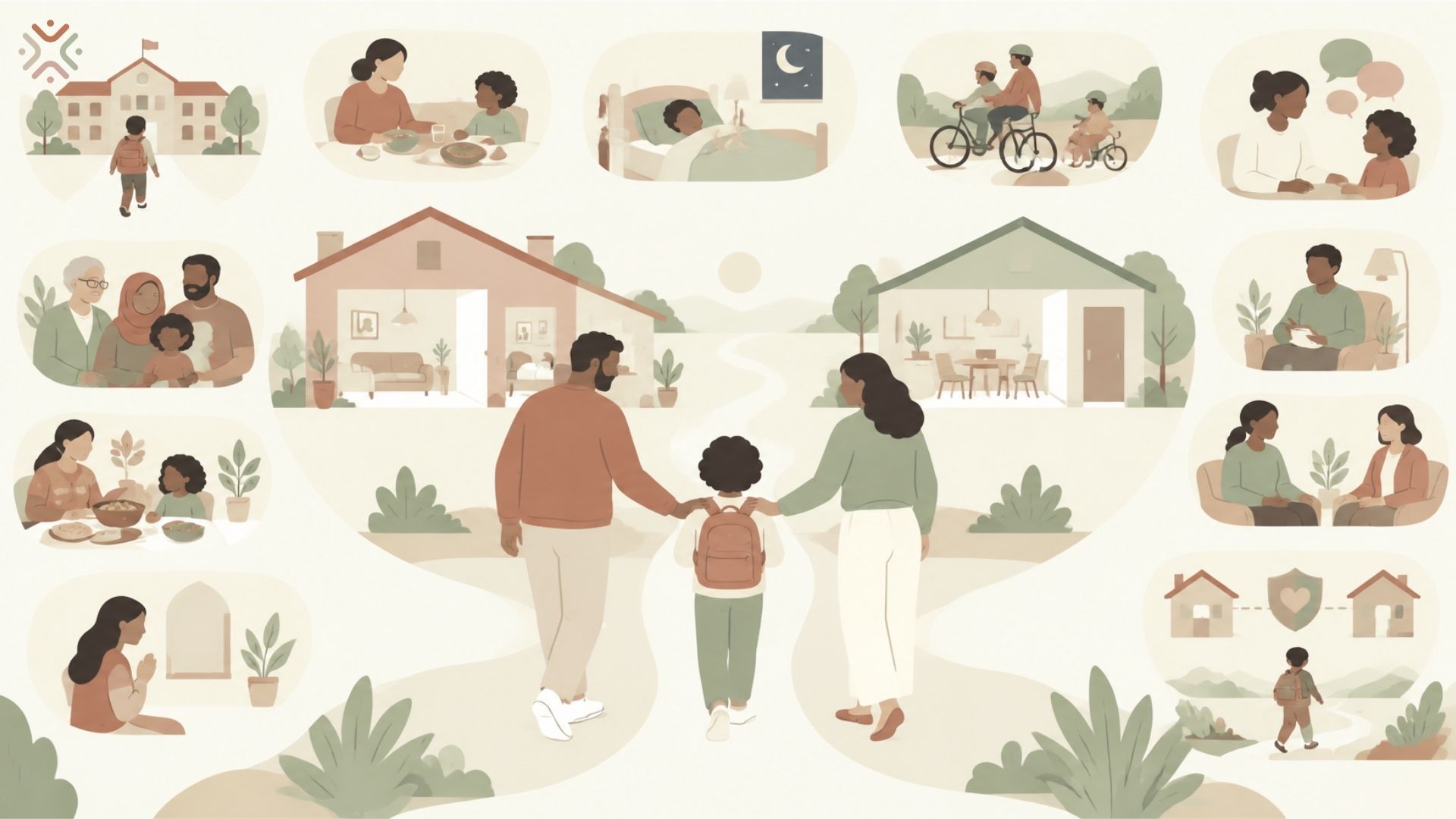
Co-parenting after separation is rarely simple. You may be trying to manage grief, anger, guilt or exhaustion while also making practical decisions about school, schedules, holidays, family visits, money, discipline, communication and your child’s emotional needs.
Online therapy may help parents process emotions, consider communication and clarify boundaries after separation. Joint sessions are not appropriate for every family. Where there is abuse, coercive control, fear of retaliation or a child-safety concern, seek specialist individual and safeguarding support before arranging joint sessions. Therapy should not pressure parents to reconcile, communicate directly or share parenting in a particular way.
A therapist can help with the emotional aspects of parenting arrangements, but therapy is not legal advice, mediation or a child-custody assessment. Questions about contact, residence, travel, relocation or existing court orders require appropriately qualified advice in the relevant jurisdiction.
The goal is not to become perfect co-parents overnight. The goal is to create more safety, consistency and emotional clarity for everyone involved, especially children.
Why co-parenting after separation can feel complicated
Separation is not only a legal or practical change. It is also an emotional transition. Even when separation is the right decision, it can bring grief, relief, fear, guilt, anger and uncertainty.
Parents may need to learn how to communicate differently, make decisions separately and protect children from adult conflict. This can be especially difficult when the emotional history between parents is still raw.
Grief, anger and practical decisions happening together
After separation, practical questions often arrive before emotions have settled.
• Who will the child stay with?
• How will school pickups work?
• What happens during holidays?
• How will money be discussed?
• Who speaks to teachers, doctors or relatives?
• What happens when one parent starts dating?
• How much should the child know?
These decisions may need to be made while both parents are still hurt, angry or exhausted.
This can make communication tense. A small scheduling message may trigger old pain. A conversation about homework may become a conversation about trust. A disagreement about bedtime may carry the weight of years of relationship conflict.
Online therapy can help parents slow down these moments. It can support emotional regulation so parenting decisions are not driven only by hurt or defensiveness.
Children, family opinions and community pressure
Where relatives or community members are closely involved in family life, separation may not feel private. Parents may receive opinions from relatives, elders, community members or family friends.
Some people may encourage reconciliation. Others may take sides. Some may shame the parent who left. Others may criticise how children are being raised after separation.
This can make co-parenting harder.
A parent may feel that every decision is being watched. They may worry about how the separation affects family reputation, children’s future, cultural belonging or community acceptance. They may feel pressure to explain, defend or hide parts of the situation.
Online therapy can provide a private space to separate what belongs to the co-parenting relationship from what belongs to wider family or community pressure.
When communication keeps reopening wounds
Co-parenting requires communication, but communication may be painful after separation.
Every message can feel loaded. A delayed reply may feel disrespectful. A change in plans may feel like control. A parenting difference may feel like criticism. A child’s comment about the other household may trigger fear or jealousy.
When emotional pain is still fresh, co-parenting conversations can quickly become arguments.
Online therapy can help parents build communication that is more structured and less reactive. It can support questions like:
• What needs to be communicated?
• What does not need to be discussed?
• What tone helps reduce conflict?
• What boundaries protect the children?
• What topics are better handled in writing?
• When is direct conversation useful, and when does it escalate harm?
This kind of clarity can reduce stress for parents and children.
Challenges in culturally diverse and immigrant families
Co-parenting after separation can be shaped by culture, family systems, migration, language, religion, gender roles and expectations around parenting.
These factors do not create problems automatically. Many families draw strength from culture, faith and extended family. But when parents separate, differences in values or family involvement can become more visible.
Extended family involvement
Where extended relatives or close family friends are involved in children’s lives, they may play an important role. Grandparents, aunts, uncles, cousins and close family friends may provide care, advice, emotional support, cultural connection and practical help.
After separation, this support can be valuable. It can help children feel connected and loved.
But extended family involvement can also become complicated.
Relatives may take sides. They may criticise one parent. They may pass messages through the child. They may pressure parents to follow certain cultural or family expectations. They may question decisions about discipline, holidays, language, faith or new relationships.
Online therapy can help parents think through what role extended family should play. It can support boundaries that protect children while still respecting the importance of wider family connection.
Different views on parenting, discipline and privacy
Parents may have different beliefs about how children should be raised.
One parent may value strict routines. Another may value flexibility. One may believe children should be protected from adult information. Another may believe children should understand what happened. One may prioritise cultural traditions. Another may want to adapt to a new environment.
These differences may have existed during the relationship, but separation can make them sharper.
In culturally diverse families, parenting differences may also involve:
• language and heritage language;
• religious or cultural practices;
• food, clothing or celebrations;
• gender expectations;
• respect for elders;
• sleepovers and social activities;
• school choices;
• discipline and independence;
• relationships with extended family.
Online family therapy can help parents discuss these differences with more structure. The aim is not to erase cultural values, but to create a co-parenting approach that supports the child’s emotional safety and development.
Fear of judgment after separation
Separation can carry stigma in some families and communities. A parent may fear being judged as selfish, disloyal, irresponsible or unable to keep the family together.
This can make it harder to ask for help.
Someone may stay silent about emotional struggles because they do not want to confirm other people’s judgments. Another person may hide conflict from relatives, school or friends. A parent may feel ashamed for needing therapy or support.
Shame can isolate people at the exact moment they need care.
Online therapy can make support easier to access because it offers privacy and flexibility. A parent can speak honestly without needing to manage the reactions of family or community members.
How separation can affect children
Children can respond to separation in many ways. Some may be sad, angry or confused. Some may seem fine at first and struggle later. Some may feel relief if the home environment was tense or unsafe. Some may worry that the separation was their fault.
Children do not need perfect parents. But they do need emotional safety, consistency and reassurance where possible.
Children may feel caught between parents
One of the hardest experiences for children after separation is feeling caught in the middle.
They may feel they have to choose sides. They may avoid saying positive things about one parent in front of the other. They may become messengers between households. They may worry about upsetting adults. They may feel responsible for keeping peace.
This can be emotionally difficult.
Co-parenting support can help parents avoid placing children in adult roles. It can support clearer boundaries, such as not asking children to carry messages, not criticising the other parent in front of them and not using children as emotional support.
If a child’s distress persists, worsens or interferes with sleep, school, relationships or everyday functioning, seek advice from a paediatrician, GP or appropriately qualified child mental health professional. A child’s need for assessment should be considered separately from the parents’ participation in therapy.
Stability and consistency matter
After separation, children often benefit from predictable routines and clear communication.
This does not mean both homes must be identical. But children usually need to know what to expect: where they will sleep, who will pick them up, what happens on school days, how holidays work and whether both parents are still available to them.
Consistency can help children feel safer during change.
This may be difficult if parents disagree, live far apart or have different schedules. Online therapy can help parents think through what is realistic, what needs structure and where flexibility is possible without creating confusion.
Children need room for their own feelings and relationships
Children should not be pressured to choose sides, demonstrate affection or conceal difficult feelings about either parent. Where relationships are safe, adults can support a child’s connection with each parent. Where there are concerns about harm, safety assessment takes priority over expectations about contact or affection.
A child should not have to manage adult pain by hiding affection, excitement or sadness.
This can be challenging when one parent feels hurt, betrayed or angry. Online therapy can help parents process those emotions separately so children do not have to carry them.
A parent does not need to deny their pain. But children need room to have their own relationship with each parent where it is safe and appropriate.
How online therapy can support co-parenting
Online therapy can support co-parenting in several ways. Some parents may attend together to improve communication and reduce conflict. Others may seek individual therapy to process grief, anger, guilt or anxiety.
In culturally diverse families, therapy can also help parents think through family expectations, cultural identity, extended family involvement and children’s emotional needs.
Before starting, clarify who the therapist’s clients are, who will attend, the goals of the work, confidentiality limits, record access and how information from separate meetings will be handled. If a child will participate, the practitioner must establish the consent or legal authority required, explain confidentiality in an age-appropriate way and consider the child’s views and developmental needs. Online care also depends on privacy, suitability and the practitioner’s eligibility to work where each participant is physically located.
Managing emotional reactions before communication
Co-parenting often requires communication when emotions are still intense.
A message from the other parent may trigger anger. A change in schedule may trigger fear. A disagreement may bring back old relationship pain.
Online therapy can help parents recognise these reactions before responding. It can support skills for pausing, grounding, writing clearer messages and separating past relationship pain from present parenting decisions.
This does not mean ignoring harm or pretending everything is fine. It means responding in ways that protect your child and your own wellbeing.
Creating boundaries around children and family involvement
Boundaries are essential in co-parenting.
Parents may need boundaries around communication, schedules, finances, new partners, extended family, school decisions, social media, holidays and what children are told.
Where relatives are involved in care or decision-making, boundaries may also be needed with them. This can feel difficult if elders or family members expect involvement in decisions.
Online therapy can help parents create boundaries that are respectful but clear. For example:
• Children should not carry adult messages.
• Relatives should not criticise either parent in front of the child.
• Parenting decisions should not be debated through the child.
• Children should not be burdened with adult disputes or graphic details, but they should receive truthful, age-appropriate explanations and be free to describe anything that worries or harms them.
• Family traditions can be honoured without using them to pressure the child.
Boundaries are not about punishment. They are about emotional safety.
Supporting children through family change
Children may need help making sense of the separation in a way that is honest, age-appropriate and emotionally safe.
Parents may need support with what to say, what not to say and how to respond when children ask difficult questions.
The aim is not to remove every difficult feeling. It is to help children know that their feelings are allowed, that the separation is not their fault and that the adults are working to keep them safe.
When co-parenting is high-conflict or unsafe
Not every separated couple can co-parent closely. In some situations, frequent communication may increase conflict or emotional harm.
If there has been abuse, coercive control, threats, intimidation, unsafe behaviour or serious emotional harm, safety comes first. In these situations, legal advice, safeguarding support, crisis support or specialised services may be needed.
Therapy should never pressure someone into close co-parenting when it is unsafe.
Structured arrangements require individual assessment
Some separated parents use structured arrangements with limited direct communication, sometimes called parallel parenting. This should not be presented as a general solution to abuse or coercive control: reducing contact between adults does not, by itself, establish that a child or parent is safe.
Where there are concerns about violence, stalking, coercive control or child abuse, seek specialist domestic abuse, safeguarding and legal advice about appropriate arrangements. Therapy cannot determine custody or contact, replace a formal risk assessment or authorise changes to court orders.
Conflict and abuse are not interchangeable. Protective actions by one parent should not automatically be described as poor cooperation or shared responsibility for conflict.
Children should not become messengers or mediators
In high-conflict situations, children may be pulled into adult conflict without anyone intending harm.
They may be asked to pass messages, report on the other parent, keep secrets or reassure adults. This can increase stress and confusion.
A key part of co-parenting support is protecting children from adult roles. They should not have to manage communication, loyalty or emotional repair between parents.
Keeping children out of adult disputes does not mean discouraging disclosures. If a child reports harm, listen calmly, take the concern seriously and seek appropriate safeguarding advice. Avoid repeated or leading questions, and do not promise secrecy when information may need to be shared to protect them.
Urgent support may be needed
If there is any risk of harm, abuse, threats, self-harm, child safety concerns or severe emotional distress, urgent support is important. This may include emergency services, crisis lines, child protection services, legal support or domestic abuse services depending on the situation and location.
Online therapy can support emotional processing and planning, but crisis and safety needs require immediate, appropriate help.
What the research says
A systematic review of 11 studies found associations between post-separation coparenting and children’s mental health. Greater coparental conflict was associated with more behavioural problems and symptoms of anxiety, depression and somatisation, while supportive dimensions of coparenting were associated with better outcomes (Lamela & Figueiredo, 2016).
These findings do not establish that closer cooperation is appropriate or safe in every family, or that online therapy specifically produces these outcomes. Paediatric guidance recommends developmentally appropriate explanations, attention to children’s reactions and professional referral where needed (Cohen et al., 2016). Neither source establishes a single pattern for BIPOC, immigrant or culturally diverse families. Support should consider safety, the child’s needs and the family’s actual circumstances.
Co-parenting does not require emotional perfection
You do not have to feel calm all the time to be a caring parent. You do not have to agree on everything to reduce harm. You do not have to solve every family conflict immediately to support your child.
Co-parenting after separation is a process. It may involve grief, repair, boundaries, mistakes, conversations and learning new ways to communicate.
Focus on safety, consistency and repair
Instead of aiming for perfect co-parenting, it may help to focus on a few steady priorities:
• Is the child safe?
• Are adult conflicts kept away from the child as much as possible?
• Are routines as clear as they can be?
• Do children know the separation is not their fault?
• Can parents repair after mistakes?
• Are boundaries protecting emotional wellbeing?
Small changes can matter.
Online therapy can help families find steadier ground
Online therapy can provide space for parents and families to process what has changed and build healthier patterns.
You can explore more articles on identity, family and emotional wellbeing on the
Thera blog.
If you are unsure whether joint sessions are appropriate, start by asking about an individual consultation, safety screening and the practitioner’s experience with post-separation parenting. Clarify the service’s role before involving the other parent or a child.













 Previous article
