Some people who are struggling with depression do not look like they are falling apart. They go to work. They study. They answer messages. They care for children, help parents, attend family events and smile when others ask how they are.
From the outside, they seem fine. Inside, they may feel empty, numb, exhausted or quietly hopeless.
This is sometimes described as high-functioning depression. It is not about diagnosing yourself from an article. It is about recognising a common experience: continuing to function while feeling emotionally low, disconnected or overwhelmed in private.
For people of color, immigrant families, racialized communities and culturally diverse clients, hidden depression can be shaped by stigma, family expectations, racism, survival pressure, religious or cultural guilt and the belief that emotional pain should be handled quietly.
What high-functioning depression can look like: when depression may be less visible from the outside
“High-functioning depression” is a common informal phrase, not a formal clinical diagnosis. People sometimes use it to describe continuing to meet responsibilities while feeling low, numb, exhausted, disconnected or hopeless in private.
Outward productivity does not tell us how serious someone’s distress is. Some people with depression keep working or caring for others; others find these tasks difficult. Only a qualified professional can assess whether someone’s experiences may meet criteria for depression or whether another mental-health, physical-health or life issue could be involved.
If low mood, loss of interest, exhaustion, hopelessness or other distressing changes are lasting, recurring or affecting daily life, it is worth speaking with a qualified healthcare or mental-health professional.
Continuing to function while feeling emotionally unwell
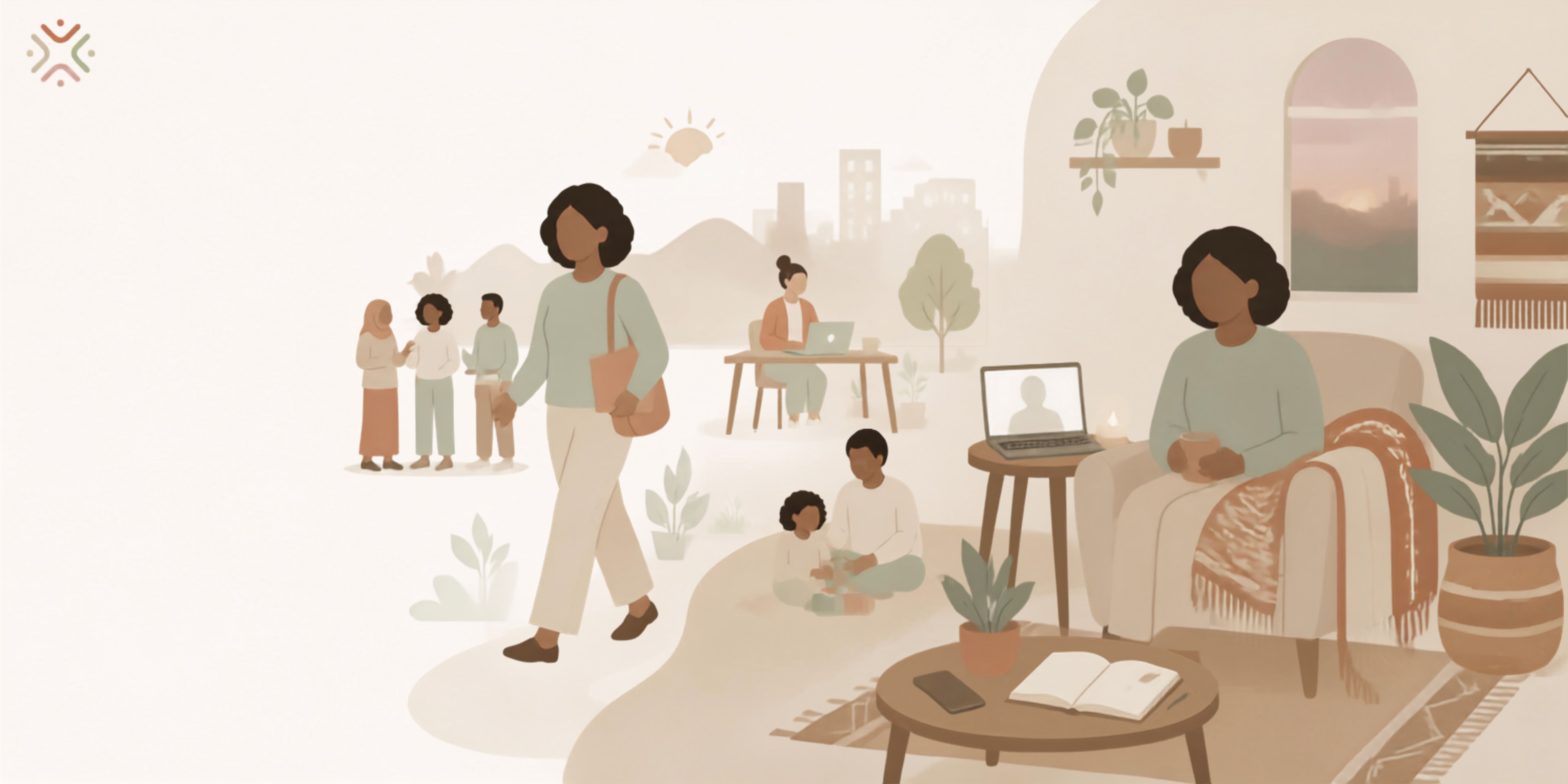
Someone may smile at work, attend family gatherings and respond politely to everyone around them, then go home and feel completely drained. They may laugh at the right moments, post online, keep commitments and still feel as if they are moving through life without really being present.
Imagine a young woman from an immigrant family who is praised for being responsible and successful. She helps her parents, supports younger siblings and performs well at work. Everyone says, “You’re doing so well.” But at night, she lies awake feeling empty and wonders why success does not feel like relief.
Hidden pain is still real, even when no one sees it.
This is why BIPOC women’s mental health is closely connected to conversations about depression, duty and emotional exhaustion.
Exhaustion, numbness and loss of motivation
Depression does not always appear as constant crying. For some people, it looks like emotional tiredness, lack of joy, irritability, difficulty starting tasks or feeling detached from life.
You may still do what needs to be done, but everything feels heavier than before. A simple email feels difficult. A conversation feels draining. A family obligation feels impossible, even if you go anyway.
Some people describe it as running on autopilot. They are not fully breaking down, but they are not fully living either.
These experiences do not mean someone is lazy, ungrateful or lacking discipline. They can occur with depression, burnout, anxiety, grief, chronic stress, trauma, sleep problems, physical-health conditions or other difficulties. A qualified professional can help someone understand what may be contributing.
Why others may not notice
People often assume someone is okay if they are productive, polite, successful or helpful. In many families and communities, emotional pain may be hidden behind humour, duty, prayer, achievement or the phrase “I’m just tired.”
In some Black, brown, immigrant and culturally diverse families, experiences of survival, migration, racism, financial strain or stigma may make emotional vulnerability feel more difficult to express. Where earlier generations had limited access to mental-health language or services, younger relatives may also feel pressure to stay silent. Experiences vary widely across individuals, families, communities and generations.
This invisibility can make depression feel even lonelier. The person may think, “No one would believe me if I told them how bad I feel.”
Why depression is often hidden in BIPOC communities
Depression can be hidden for many reasons: stigma, fear of judgment, cultural silence, family pressure or misunderstandings about what mental health struggles mean.
Pressure to be grateful and strong
Gratitude and strength can be beautiful values. Many people from marginalised, immigrant or culturally diverse communities grow up hearing stories of sacrifice, survival and resilience. These stories can create pride, connection and a sense of responsibility toward family.
But gratitude can also be misused to silence pain.
A person may think, “My parents sacrificed so much, so I have no right to feel sad.” Or, “Other people have it worse, so I should stop complaining.” They may feel guilty for feeling low when they have education, work, housing, family support or opportunities previous generations did not have.
Gratitude and sadness can exist at the same time. You can appreciate what you have and still need help. When gratitude starts to silence emotional pain, it may become harder to admit what you are truly carrying.
Fear of worrying or disappointing family
Some people hide depression because they do not want to burden their parents, partner, children or community. They may worry that their family will panic, dismiss them, blame themselves or respond with advice that makes them feel worse.
A young adult may avoid telling their parents because they fear hearing, “Why are you depressed? We gave you everything.” A parent may hide their low mood because they do not want children to see them struggling. A man may stay silent because he has been taught that emotional pain makes him weak.
Hiding pain may protect others temporarily, but it often deepens isolation.
When depression is mistaken for laziness or weakness
Depression can affect energy, motivation, concentration and hope. But in some families, these signs are mistaken for laziness, poor discipline, weak faith or lack of gratitude.
Someone may be told to work harder, pray more, stop being dramatic or remember that life is difficult for everyone. These responses may be intended to encourage strength, but they can increase shame.
Mental health struggles are not a moral failure. A person can be responsible, loving, faithful, hardworking and still experience depression.
The more depression is misunderstood, the more likely people are to suffer quietly.
How therapy supports people who are silently struggling
Therapy gives people a space to speak honestly about what they may be hiding from everyone else. It can help turn private confusion into something understandable and workable.
Naming what you feel without shame
Many people arrive in therapy unsure how to describe what is happening. They may say, “I’m not really sad, I just feel empty,” or “I’m functioning, so maybe it’s not that serious.”
A therapist can help put words to sadness, numbness, guilt, anger, grief, loneliness or exhaustion. Naming emotions can reduce self-blame. It helps people understand that what they feel has meaning.
For clients from racialised or culturally diverse backgrounds, this process may also include naming the pressures around them: racism, family expectations, migration stress, code-switching, caregiving, financial duty or community judgment.
A culturally sensitive therapist can help explore these layers without reducing the person’s culture to a problem.
Rebuilding routines, connection and self-compassion
Therapy is not about forcing positivity. It is not about pretending everything is fine. It is about slowly rebuilding emotional capacity.
This may include small steps around sleep, daily structure, movement, relationships, rest and communication. It may involve noticing patterns of overworking, people-pleasing, isolation or self-criticism.
For example, someone who feels numb may begin by identifying one small activity that reconnects them with their body or values: a walk, a meal with a trusted friend, a creative practice, a boundary around work or a more honest conversation.
Recovery is usually gradual. Small steps still matter.
Exploring culture, faith and emotional pain together
For many clients, depression is not separate from culture, family or faith. They may feel guilty for being sad. They may worry that emotional numbness means they are ungrateful or spiritually disconnected. They may feel ashamed because their community expects them to stay strong.
Therapy can make space for these questions. A culturally sensitive therapist should not judge your background or dismiss your values. They can help you explore how culture, spirituality, family and mental health interact in your life.
You do not need to hide the parts of yourself that matter most.
When to reach out for support
You do not need to wait until you cannot function at all. If sadness, numbness or exhaustion keeps returning, support may help.
You do not need to wait until everything falls apart
Many people delay therapy because they think they are still coping. But “coping” is not the same as feeling well.
If you are constantly tired, emotionally numb, disconnected from people you love or unable to enjoy things that once mattered, it may be time to seek support.
Seeking support earlier may help you understand what is happening, identify practical options and reduce the sense of carrying it alone. Reaching out is not dramatic. It can be a thoughtful and responsible step.
This is especially relevant if you are wondering if you need therapy.
Therapy can be a private first step
Online or flexible support may feel more manageable because you can speak from a familiar environment, avoid a public waiting room and choose a time that fits your life. Online therapy is not automatically private, however: privacy also depends on a secure service, a private space, use of headphones where helpful, and whether other people can access your device or overhear you.
For people worried about family misunderstanding or community judgment, therapy can offer a private place to begin. Online or flexible support may feel easier because you can speak from a familiar environment, avoid a public waiting room and choose a time that fits your life.
Privacy matters when you have spent years performing strength.
You deserve a space where you do not have to smile through pain, minimise your feelings or prove that your struggle is serious enough.
You can look fine and still deserve support
'High-functioning depression' can be hard to recognise because life continues on the outside. But if your inner world feels heavy, empty or disconnected, that matters.
You are not weak for struggling. You are not ungrateful for feeling low. You are not failing your family, culture or community by needing help.
You deserve support before you collapse. You deserve to be heard even if you are still functioning. And you deserve care that understands the full context of your life, not just what people see in public.
Depression can look different from person to person. A professional assessment may also consider sleep, physical health, medication or substance use, grief, anxiety, trauma, neurodivergence and current life stressors. You do not need to work out the right label alone before asking for support.
If you are thinking about suicide, have thoughts of harming yourself or someone else, feel unable to stay safe, or are in immediate danger, contact local emergency services or a crisis service right away. If possible, tell a trusted person and avoid being alone while you seek help. Your safety matters first.











 Previous article
