Many people ask themselves the same question for weeks, months or even years: “Do I really need therapy?”
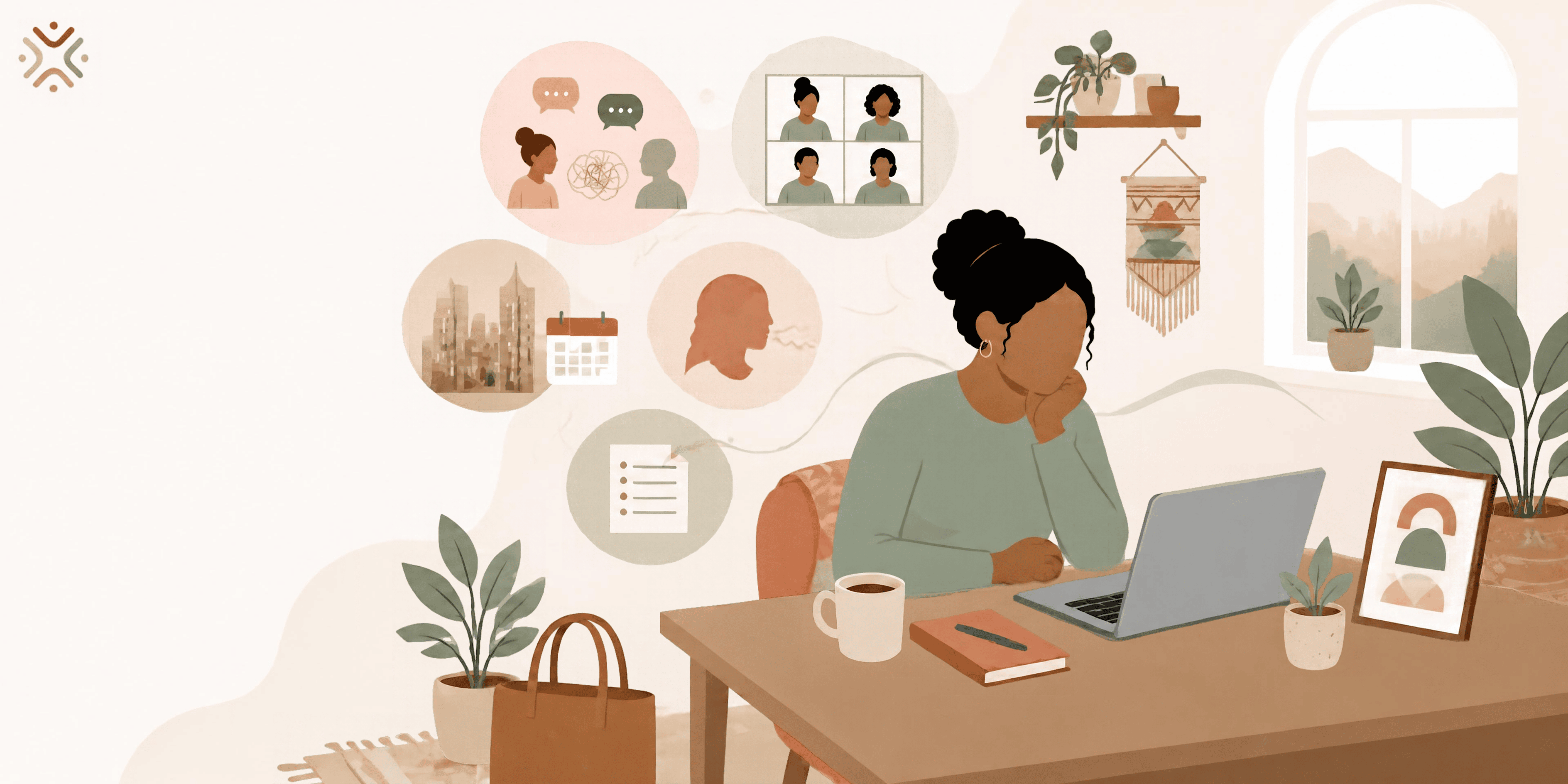
Maybe you are still going to work, caring for your family, answering messages and keeping up with responsibilities. Maybe you tell yourself that your struggles are not serious enough. Maybe you compare your pain to what your parents, grandparents or community have survived and decide you should simply be stronger.
For BIPOC people, people of color, immigrant and diaspora communities, racialised groups and those from culturally diverse families, this hesitation can be even stronger. Mental health may not be openly discussed. Therapy may feel unfamiliar, difficult to discuss or even shameful. You may worry that asking for support means you are weak, ungrateful or turning away from your family’s values.
But online therapy is not only for crisis moments. It can be a private space to understand what you are carrying before it becomes too heavy to manage alone.
Why many people delay therapy even when they are struggling
It is common to wait before asking for help. Many people minimise their pain, hope it will pass or tell themselves that they should be able to cope alone.
For people from culturally diverse or immigrant backgrounds, this delay may also be shaped by family values, stigma, community judgment, mistrust of mental health services or the belief that emotional pain should stay private.
“Other people have it worse than me”
Comparison is one of the most common reasons people dismiss their own suffering.
You may think:
“My parents went through more.”
“Other people have real trauma.”
“I have a job and a home, so I shouldn’t complain.”
“My family sacrificed too much for me to struggle.”
This can be especially familiar in families shaped by migration, racism, poverty, conflict or sacrifice. When previous generations had to survive extreme hardship, your emotional pain may feel small by comparison.
But pain does not need to be the worst possible pain to deserve care.
Imagine someone who is exhausted every day, cannot sleep properly and feels anxious before every family call, but keeps saying, “At least I’m not going through what my parents went through.” Their gratitude may be real, but so is their distress.
Therapy does not ask you to prove that your pain is severe enough. It gives you space to understand why it is there and how it is affecting your life.
If gratitude has started to silence your emotional needs, it may help to explore how this pattern can develop in BIPOC families.
“I should be able to handle this with patience”
Many people value patience, resilience, spirituality, family loyalty or emotional discipline. These values can be real sources of strength. They can help people endure hardship, stay grounded and keep moving through difficult seasons.
But patience does not have to mean suffering in silence. Resilience does not mean refusing support. Being strong does not mean pretending you are fine when your body, mind or relationships are showing signs of strain.
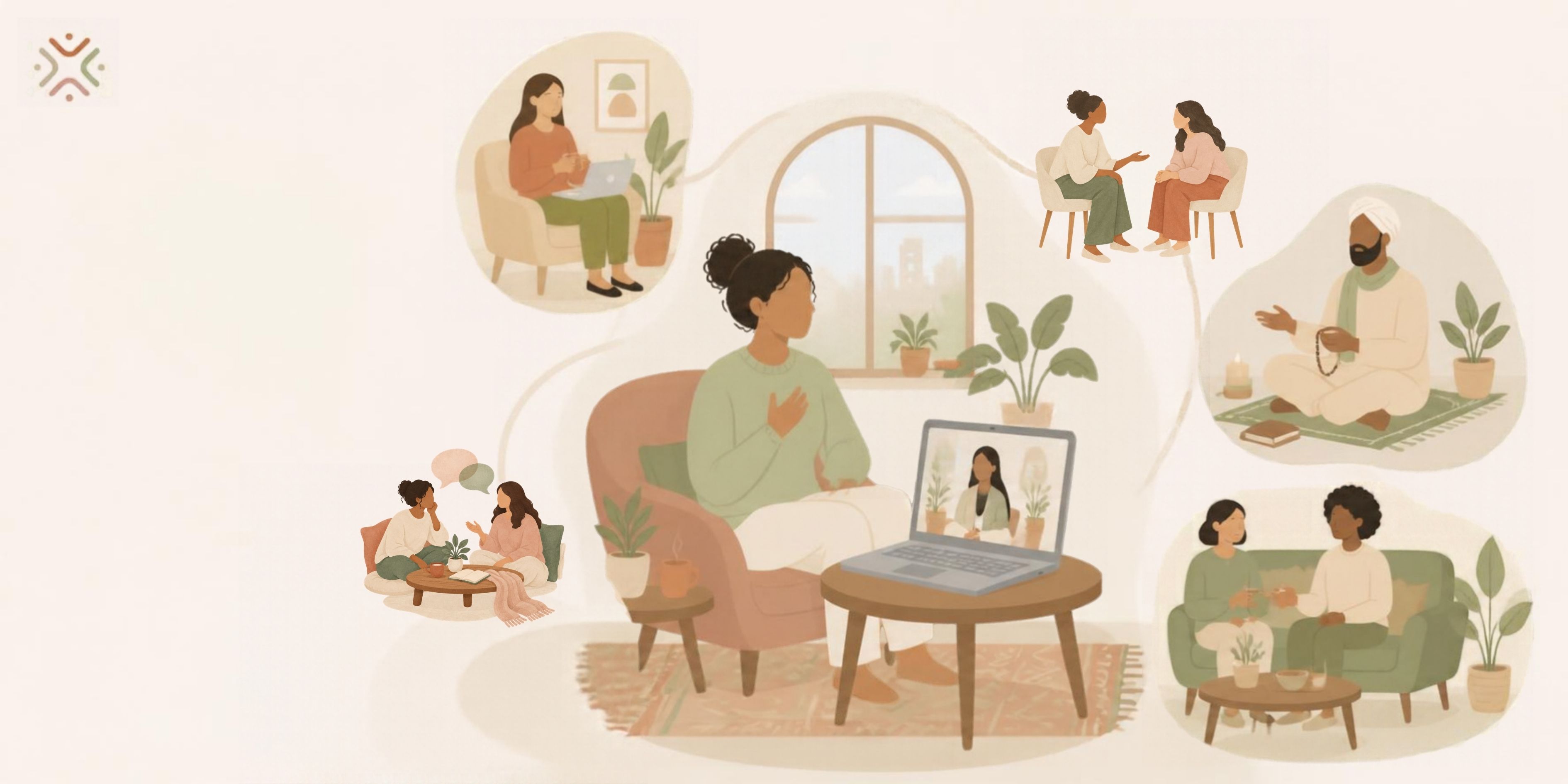
Therapy can become one part of a wider support system that may also include community, trusted relationships, spiritual care, rest and practical help. It is not a replacement for your values. It can help you live them in a healthier, more sustainable way.
If you are unsure whether therapy can exist alongside family, culture or spirituality, it may help to look at how different forms of support can work together.
Fear of being judged, labelled or misunderstood
Some people avoid therapy because they fear what others might think. They may worry about being called dramatic, weak, selfish, unstable or ungrateful.
In close families or communities, the fear can feel even stronger.
What if someone finds out?
What if my parents think I am blaming them?
What if my partner thinks I am exposing private issues?
What if a therapist does not understand my culture?
What if therapy makes me question things I have been taught to accept?
These fears are real. They are one reason why confidentiality in online therapy matters so much. A safe therapeutic space should protect your privacy and allow you to speak honestly without community pressure.
Signs your emotional struggles may need support
You do not need to diagnose yourself before seeking therapy. A useful question is not “Am I sick enough?” but “Is this affecting my life, relationships or ability to feel like myself?”
Online therapy may be helpful when emotional pain keeps returning, starts changing how you behave or makes everyday life feel harder than it used to.
Your stress is affecting sleep, work or relationships
Stress may need support when it starts interfering with daily functioning.
This might look like trouble sleeping, waking up tense, constant exhaustion, poor concentration, irritability, withdrawing from people or arguing more than usual.
You may still be functioning, but everything feels harder than it used to. Work takes more effort. Small problems feel overwhelming. You snap at people you love. You feel tired even after resting.
For example, a young professional from a racialized or minority background may spend all day appearing calm at work while dealing with microaggressions, family expectations and pressure to succeed. At night, their mind keeps replaying conversations, worrying about mistakes and planning how to avoid judgment.
Therapy can help before things become a crisis. Early support is not excessive; it can be protective.
If work, family and identity pressure are leaving you depleted, it may help to explore what burnout can look like for BIPOC people.
You keep repeating the same painful patterns
Many people come to therapy because they recognise a pattern they cannot change alone.
This may include overthinking, people-pleasing, avoiding conflict, emotional outbursts, shutting down, choosing unhealthy relationships, overworking or saying yes when they want to say no.
These patterns often make sense when you understand where they came from. People-pleasing may have helped you stay safe in a critical family. Overworking may have helped you feel worthy. Avoidance may have protected you from conflict. Silence may have helped you avoid judgment.
But what once helped you survive may now be limiting your life.
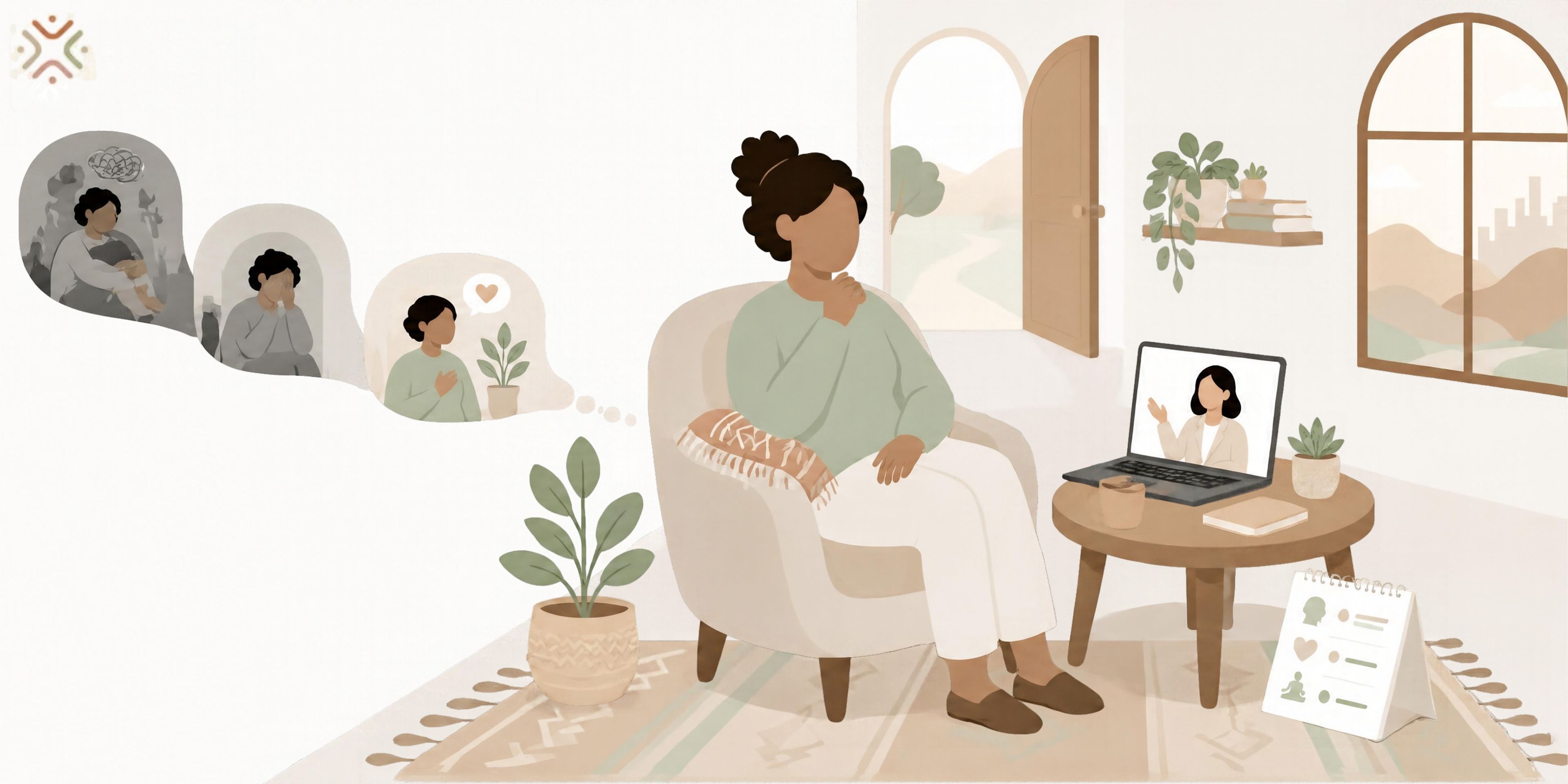
Online therapy can help you understand these patterns without blaming yourself. It can also help you practise new responses with more self-compassion.
If people-pleasing or guilt makes boundaries difficult, this may connect with family expectations and personal boundaries.
You feel alone even around other people
Loneliness is not always about having no one around. Sometimes it is about having people around, but feeling unable to be honest with them.
You may be surrounded by family, friends or community but still feel emotionally alone. You may hide your anxiety because others dismiss mental health. You may avoid talking about depression because people tell you to be grateful. You may keep relationship struggles private because you fear judgment.
This kind of loneliness can be painful because, from the outside, it looks like you have support. Inside, you may feel unseen.
Culturally sensitive online therapy can help when the support around you does not feel safe, private or emotionally available. A therapist who understands family, culture, race, migration or community pressure can make it easier to talk about what you usually hide.
For private support with anxiety, depression, burnout, trauma, family pressure or identity questions, online individual therapy may be a helpful place to begin.
Therapy is not only for crisis moments
Many people believe therapy is only for people at breaking point. In reality, therapy can help with stress, identity, grief, transitions, relationships, self-worth, decision-making and emotional growth.
You do not have to wait until everything collapses. You can seek support when something feels too heavy, too repetitive or too lonely to keep managing on your own.
You do not need to “hit rock bottom”
You do not need to wait until your life falls apart to ask for support. You can seek therapy when stress is increasing, when conflicts repeat, when your emotions feel harder to manage or when you feel disconnected from yourself.
A person might start therapy because they are tired of crying in private. Another might come because they keep avoiding difficult conversations. Someone else might want help understanding why success still feels empty.
These are valid reasons.
Therapy is not only about fixing a crisis. It is also about understanding yourself earlier, before emotional pain becomes more deeply rooted.
If you are not sure whether your struggles count as “serious enough,” the fact that you keep asking may already be worth exploring.
Online therapy can feel like a gentler first step
For many people, the idea of therapy feels uncomfortable at first. You may imagine being analysed, judged or forced to share everything immediately.
In reality, the first step can be much gentler. Online therapy may feel less intimidating because you can attend from a familiar space, avoid a waiting room and choose a time that fits your life.
This can be helpful for people who are busy, private, anxious about being seen locally or unsure how their family would react.
The important thing is to plan for privacy: use headphones, choose a private space where possible, position your screen away from others, use a personal rather than shared device, and turn off nearby smart speakers or recording devices. Give yourself a few minutes before and after the session to settle.
You can browse Thera's therapist directory to look for someone whose approach feels aligned with your identity, values and needs.
The first session is a conversation, not a test
A first therapy session is not an exam. You do not need to explain everything perfectly. You do not need to know exactly what is wrong. You do not need to share the most painful part of your story right away.
The first session is usually about understanding what brings you to therapy, what you are hoping for, what feels difficult and what kind of support may be useful.
A therapist who is a good fit will not rush you. Trust can build gradually.
This is especially important if you are looking for a culturally sensitive online therapist who can understand your identity, values and family context.
Seeking help can be an act of responsibility
Asking for help is often framed as weakness. But in many cases, it is an act of responsibility, toward yourself and the people around you.
Therapy can help you notice patterns earlier, communicate more clearly and care for your mental health before emotional pain becomes harder to manage.
Your mental health affects your relationships
Emotional difficulties that go unsupported can affect how you communicate, parent, work, love, rest and make decisions.
For example, ongoing stress can contribute to irritability, anxiety can make it harder to tolerate uncertainty, depression can lead to withdrawal, shame can make honest communication more difficult, and burnout can contribute to resentment.
Therapy can help you become more aware of these patterns and develop healthier ways to respond. This does not only benefit you. It can also improve how you show up in relationships, family life and work.
If relationship, parenting or family communication are part of what you are carrying, online couples and family therapy may offer a structured space for support.
Strength can include knowing when to ask for support
Many people from marginalised, racialised or immigrant communities are taught to survive, endure and keep going. That strength deserves respect. But survival is not the same as healing.
True strength can also include self-awareness. It can include saying, “I cannot keep carrying this alone.” It can include choosing support before pain becomes unbearable.
You are not weak for needing therapy. You are not ungrateful for struggling. You are not betraying your family, culture or community by wanting a private space to understand yourself.
You deserve support before you break down. You deserve care even if others have suffered too. You deserve to be heard without having to prove that your pain is serious enough.
How to know if online therapy might be right for you
Online therapy may be a good fit if you want private, flexible support and feel ready to explore what has been affecting your wellbeing.
You do not need to have the perfect words. You do not need to be certain about your goals. You can begin with a simple statement: “I have been struggling, and I think I need help understanding why.” Before booking, check that the therapist is licensed, registered or otherwise authorised to work with someone in the place where you will be during sessions. You can also ask how to verify their professional registration and what the emergency plan would be if you need urgent support.
Online therapy may help if you are carrying more than people realise
Many people who seek therapy are still functioning. They work, study, care for others, answer messages and appear fine. But internally, they feel exhausted, anxious, sad, numb or disconnected.
This can be especially common for BIPOC people and those from immigrant or diaspora families who have learned to keep going, stay grateful and avoid burdening others.
Online therapy can help you stop measuring your pain by how well you perform in public.
Online therapy may help if you want culturally sensitive support
You may want a therapist who can make space for your cultural values, race, family history, migration background, language, faith, identity or community pressure.
You may not need someone who shares your exact background. But you do need someone who respects it, takes it seriously and does not reduce your struggles to individual symptoms alone.
Culturally sensitive therapy recognises that mental health is shaped by context.
You can explore more articles on identity, culture and emotional wellbeing on the Thera blog.
Online therapy may help if privacy matters
If privacy is one of your biggest concerns, online therapy may feel more accessible than in-person support. You can attend from a private space and avoid being seen at a local clinic or waiting room.
This can matter for people in close-knit families, small communities or environments where therapy is misunderstood.
If you want to ask questions before choosing a therapist, you can book a free discovery call and explore whether online therapy feels right for you.
What the research says
Research and clinical guidance suggest that culture, race, family systems, migration history, stigma and access barriers can shape whether people seek mental health support. Culturally responsive therapy recognises that distress does not happen outside context, and that trust, privacy and therapist fit can affect whether therapy feels safe enough to use. Research on BIPOC mental health also highlights barriers such as mistrust, stigma, discrimination and lack of culturally appropriate care. In plain language: needing therapy is not a personal failure, and seeking support can be harder when culture, family expectations or past experiences make asking for help feel unsafe.
You do not have to carry everything on your own
You do not need to wait for a crisis before asking for support. You do not need to prove that your pain is severe enough. You do not need to compare your suffering to anyone else’s before taking your wellbeing seriously.
You can be grateful and still need help.
You can be strong and still feel overwhelmed.
You can love your family and still need privacy.
You can be successful and still feel emotionally exhausted.
You can be functioning and still deserve care.
Online therapy can give you space to understand what you are carrying and what kind of support could help.
Support should not require you to erase your culture, minimise your pain or become someone else before being understood. The right therapy space should help you feel safe enough to be honest.













 Previous article
