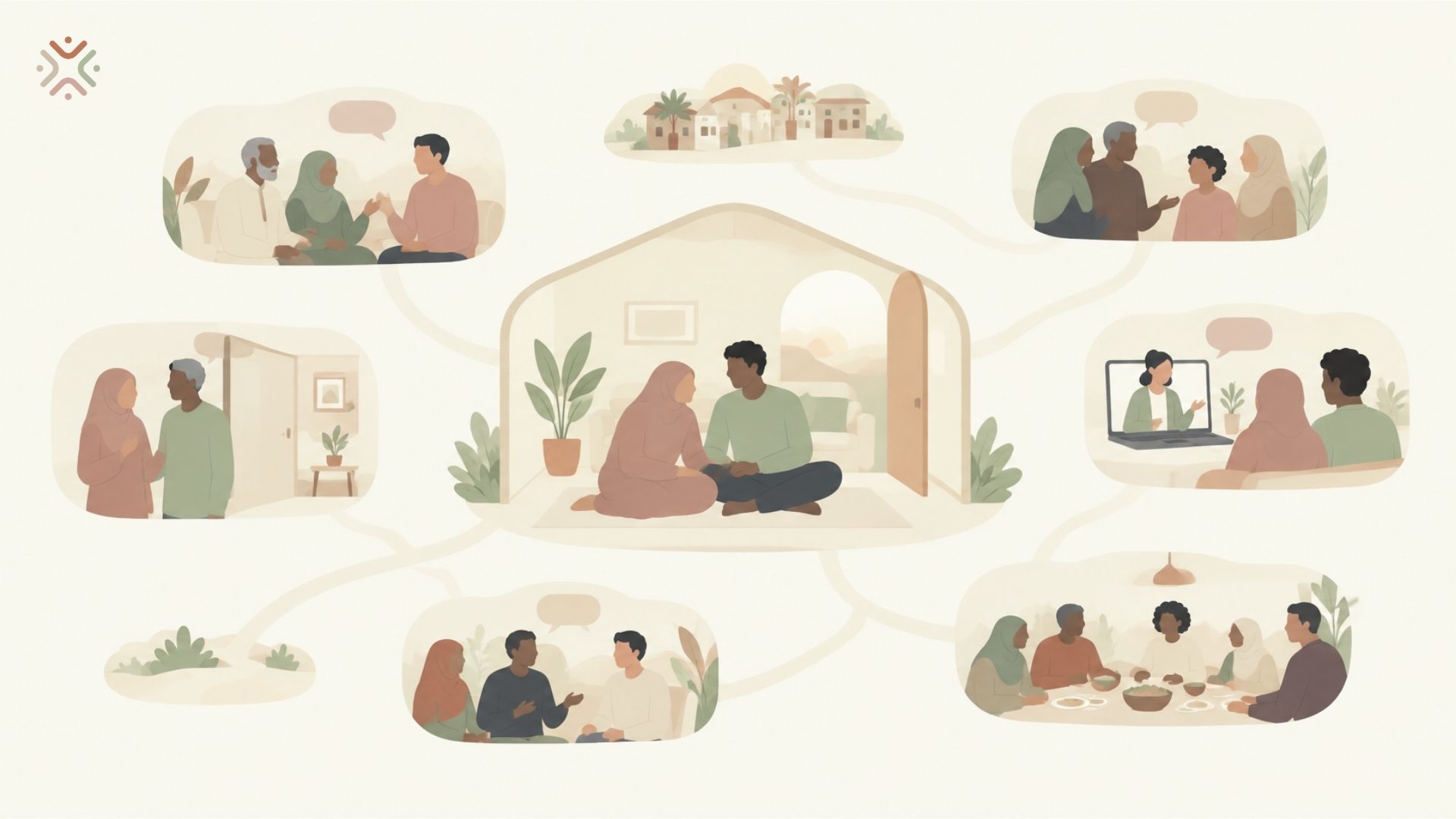
A relationship can feel deeply personal, but it does not always stay private. For some Muslim couples living in Western Europe, including the UK, France, Belgium, Germany, Ireland and Spain, family and community reactions can become part of the relationship itself.
Some Muslim couples may experience pressure from parents, relatives, respected community figures, religious expectations, cultural norms or community visibility. Others may experience strong family support. The nature and intensity of any pressure can differ greatly between individuals, families, communities and countries.
When disagreements arise, they may concern ethnicity, nationality, family background, class, religious practice, language, divorce history, conversion or whether a relationship follows an expected path.
Muslim couples do not share a single culture, family structure or migration history. A Pakistani Muslim couple in the UK, an Algerian-French couple in France, a Turkish-background couple in Germany or a Somali Muslim couple in Ireland may have very different experiences.
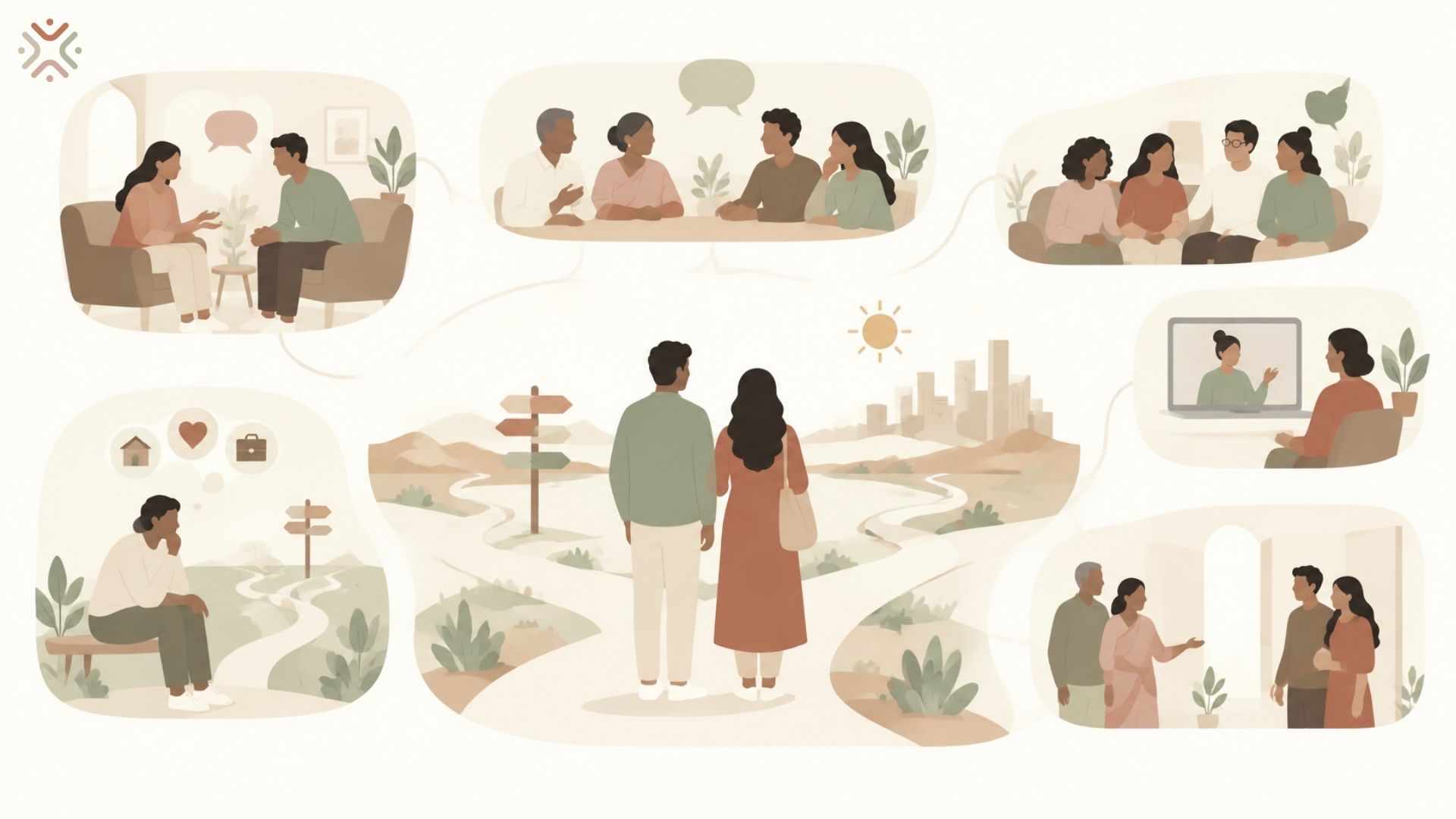
What matters is the specific relationship and its circumstances. How can partners navigate family expectations while protecting their relationship, personal choices and wellbeing?
Culturally sensitive online therapy can provide space to explore these questions without treating faith, family involvement or cultural identity as problems in themselves.
Why community judgment can feel so distressing
Family and community connections can be meaningful sources of belonging, advice and practical support. For some couples, however, disagreement or disapproval may also create stress.
The emotional impact can extend beyond the relationship because questions about a partner may touch identity, faith, family loyalty, social acceptance and future plans.
The relationship may become everyone's business
In some families, relationship decisions involve more than the two partners. Relatives may take an interest in marriage plans, compatibility, religious values or how the relationship will affect connections between families.
This involvement may be welcome when it feels respectful and supportive.
It can become distressing when questions are repeated, private decisions are discussed without permission or one partner feels they must constantly justify the relationship.
Common questions might include:
- Why this person?
- Are they from the same background?
- Do they share our religious values?
- What will their family expect?
- How will future children be raised?
- Will both families get along?
These are not necessarily inappropriate questions. Their impact depends on how they are asked, whether the couple welcomes the discussion and whether their answers are respected.
A conversation that begins as ordinary concern may become difficult when disagreement continues despite clear requests for privacy.
Understanding the difference between concern, pressure and control
Not all family concern is harmful. Parents or relatives may worry about compatibility, financial stability, religious differences, discrimination or the long-term wellbeing of the couple.
These concerns can reflect genuine care.
At times, concern may be experienced as pressure, repeated advice may feel intrusive, or disagreement may become emotionally difficult to manage. In more serious situations, behaviour can become controlling, coercive or abusive.
These experiences should not be treated as interchangeable.
A relative expressing disappointment is different from someone monitoring a person's movements, threatening them or preventing them from making their own decisions.
It may help to consider:
- Which concerns feel constructive?
- Can both partners express disagreement without fear?
- Are private decisions being respected?
- Does family involvement create distress or interfere with daily life?
- Are there signs of intimidation, coercion or retaliation?
The goal is to understand which forms of family involvement feel supportive, which feel intrusive or distressing, and whether there are any signs of coercion, intimidation or risk.
When privacy becomes complicated
Some couples choose to keep parts of their relationship private.
They may delay introductions, avoid discussing disagreements with relatives or prefer not to share details online. Privacy can reflect personal preference, religious values, readiness or practical circumstances.
However, it can also become emotionally difficult when partners have different expectations.
One person may want more openness, while the other worries about conflict with family members. Someone may feel hidden, even when their partner's intentions are not dismissive.
The distinction between privacy and secrecy often depends on whether both partners understand the reasons behind the decision and can discuss its impact freely.
For people concerned about confidentiality, privacy in online therapy may be an important consideration.
What couples may experience judgment about
Family expectations can concern many aspects of a relationship. These expectations are shaped by individual beliefs and circumstances rather than by one shared Muslim culture.
Intercultural or interethnic relationships
Two partners may share Islam while coming from different ethnic, linguistic or national backgrounds.
For example, one partner may be Arab and the other South Asian. One may have Turkish heritage and the other Black African heritage. One may be Persian, European or from a mixed-background family.
Differences may involve language, wedding customs, family roles, religious traditions or expectations around extended relatives.
Family members may ask:
- Will the families understand each other?
- Which languages will children learn?
- How will religious and cultural celebrations be organised?
- Are the partners prepared for different family expectations?
These conversations can be useful when they encourage mutual understanding.
Problems may arise when differences are treated as automatic incompatibilities or when one partner experiences repeated rejection because of their background.
For intercultural couples, it can be important to distinguish genuine compatibility questions from assumptions, prejudice or pressure.
Different approaches to religious practice
Muslim couples may also differ in how they understand or practise their faith.
One partner may be more observant than the other. Families may have different expectations about prayer, dress, religious education, marriage ceremonies or everyday religious practice.
Some families may share similar beliefs while expressing them differently. Others may include people with secular, interfaith or mixed religious backgrounds.
A partner may feel judged as insufficiently religious or pressured to demonstrate faith in ways that do not reflect their beliefs.
These situations require care because religion can be connected to identity, belonging and deeply held values.
A therapist should not position themselves as an authority on what is religiously correct. Their role is to help people explore how beliefs, expectations and relationship decisions affect their wellbeing.
When guilt becomes persistent or distressing, it may also be useful to understand cultural and religious guilt.
Divorce, remarriage, conversion and mixed-background identities
Some people experience judgment because their relationship does not follow an expected path.
One partner may be divorced, have children from a previous relationship or have converted to Islam. Someone may come from a mixed-faith family or have a different educational, socioeconomic or national background.
A convert may feel that their religious knowledge is questioned. A divorced person may worry about being judged for their relationship history. Someone from a mixed-background family may feel pressured to demonstrate that they belong.
These experiences are not universal, but they can affect confidence, trust and family relationships.
It is important to recognise that a person's relationship history, background or religious journey does not determine their worth or suitability as a partner.
How family or community judgment can affect a relationship
External disapproval does not necessarily damage a relationship. Some couples maintain strong family connections despite disagreements, while others experience ongoing stress.
The impact depends on how people respond to the disagreement, the support available and whether each partner can express their needs.
One partner may feel hidden or unsupported
When relatives disapprove of a relationship, the partner experiencing rejection may wonder whether they will eventually be accepted.
They may feel uncomfortable attending family events or worry that their partner is not acknowledging the impact of hurtful comments.
The other partner may feel torn between maintaining family relationships and responding to their partner's concerns.
Rather than asking who must choose a side, the couple may need to discuss what support means in practice.
That could involve acknowledging hurtful comments, agreeing on what information remains private or deciding together how to approach family gatherings.
For intercultural relationships, family approval and relationship expectations may require additional discussion.
External disagreements can become couple conflicts
A disagreement with a relative may eventually become an argument between partners.
For example, a delayed family introduction might be interpreted as a lack of commitment. Different expectations about a wedding may create conflict over money or religious traditions.
The original issue may become harder to identify when each partner begins reacting to the other's frustration.
It can help to separate three questions:
- What is the family member actually asking or expressing?
- How does each partner feel about that involvement?
- What decisions belong to the couple?
This distinction allows partners to discuss their own needs without assuming that every family disagreement threatens the relationship.
Anxiety, guilt and resentment
Repeated criticism or disagreement can also affect emotional wellbeing.
One partner may feel anxious before family gatherings. Another may feel guilty about disappointing parents. Someone may become resentful when their concerns are repeatedly dismissed.
These feelings deserve attention, but they do not automatically indicate abuse or an unsafe relationship.
The context matters.
Persistent guilt, intrusive involvement or relationship conflict may benefit from individual reflection, clearer communication or professional support.
When cultural values and guilt are contributing to distress, understanding the underlying expectations can be a useful starting point.
How online therapy can support couples under pressure
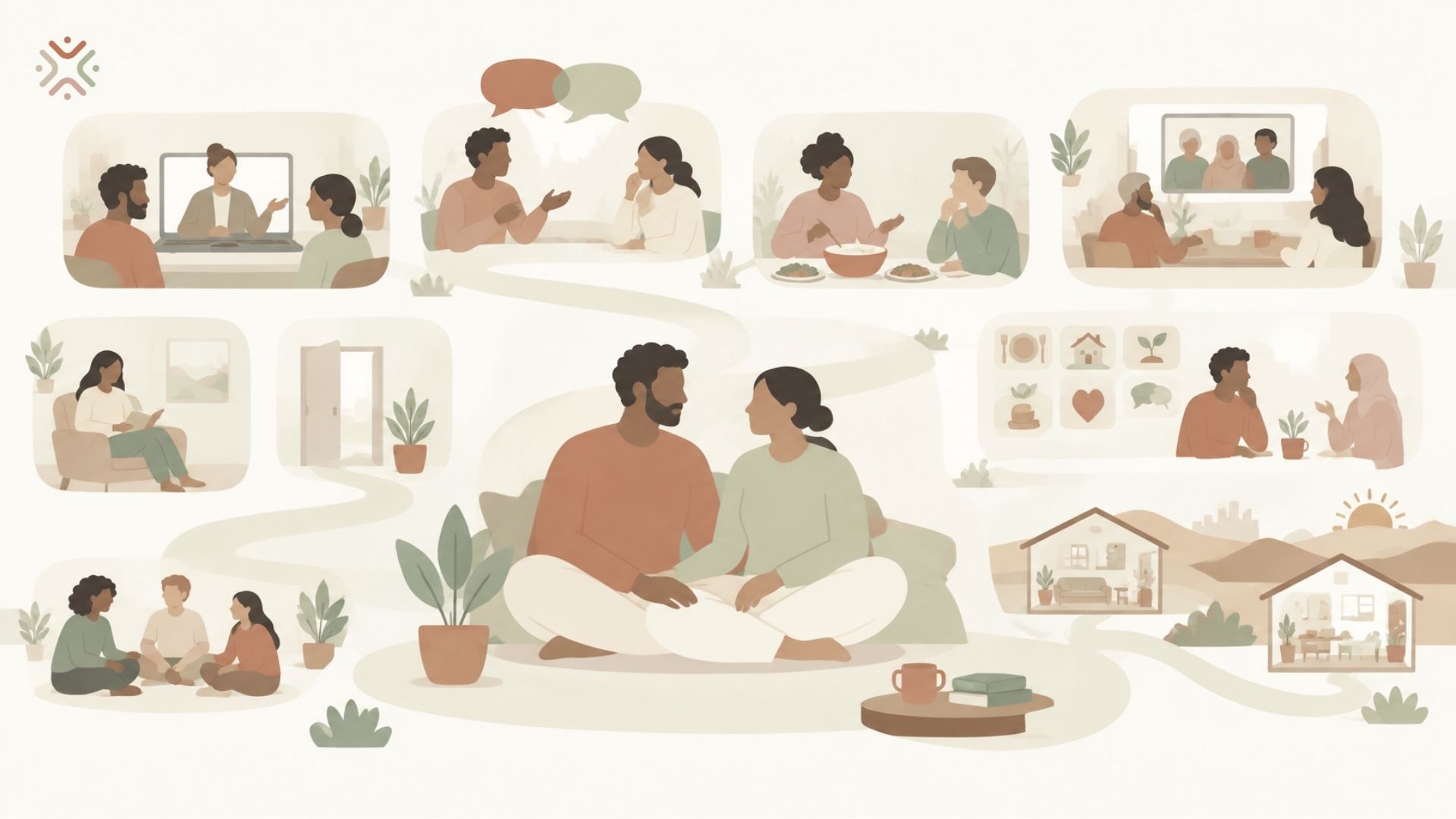
Online therapy can provide a structured setting to discuss relationship concerns, family expectations and personal values.
The appropriate format depends on the couple's circumstances, willingness to participate and safety.
Couples therapy may be helpful when both partners can participate freely and there is no fear, coercive control, violence, intimidation or retaliation for speaking honestly. Individual support may be safer when one person feels overwhelmed, pressured, unsafe, unsure about the relationship, or unable to speak openly in joint sessions.
A therapist should assess these circumstances rather than assuming that joint communication is always the best solution.
Creating space for honest conversations
For some couples, finding time and privacy to discuss family concerns can be difficult.
One partner may be worried about disappointing relatives. The other may be struggling with feelings of rejection. Both may avoid difficult conversations because they fear creating more conflict.
When joint sessions are appropriate, therapy may help partners discuss concerns such as:
- feeling excluded from family decisions;
- differing expectations about marriage;
- uncertainty about religious compatibility;
- disagreements about privacy;
- resentment following repeated criticism;
- difficulties communicating with extended relatives.
The aim is not to persuade either partner to abandon their values. It is to understand the differences and consider realistic ways forward.
Thera offers online couples and family therapy for people seeking support with communication, relationships and family concerns.
Online sessions still require appropriate privacy. A shared home or monitored device may not provide a safe environment for every person.
Setting boundaries with family and community
Boundaries can help couples clarify which decisions they want to make privately and how they would like relatives to participate.
In situations involving ordinary disagreement rather than coercion or danger, respectful language may help.
For example:
- “We are willing to hear concerns, but not insults.”
- “We will not discuss private disagreements with extended family.”
- “We need time to make this decision together.”
- “We want family involvement, but not pressure.”
- “We need conversations about our relationship to remain respectful. If they become hurtful or unsafe, we will pause the conversation and seek support.”
These examples are not scripts that everyone should use.
The right approach depends on the relationship, the family circumstances and whether speaking openly could create additional risk.
Boundaries should not be used as a substitute for safety planning when someone is experiencing intimidation, surveillance or coercion.
For less serious situations, family boundaries without losing respect can provide a useful framework for understanding these conversations.
Recognising when individual support is more appropriate
Not every relationship difficulty needs to be discussed in a joint session.
One partner may want time to explore their feelings before speaking with family members. Another may need support processing anxiety, guilt or uncertainty about continuing the relationship.
Individual therapy allows someone to consider their choices without pressure to reach a shared decision.
It may also be more appropriate when the person is uncertain whether they can speak freely in front of their partner.
Thera's online individual therapy may be relevant for people seeking support with relationship stress, identity or family expectations.
When safety comes first
Not every situation can be resolved through communication, boundaries or relationship counselling.
Family disagreement, intrusive involvement and coercive behaviour should be understood as different situations requiring different responses.
If family or community pressure involves threats, coercive control, surveillance, forced marriage, intimidation, violence or fear of serious harm, safety must come before relationship repair.
These risks can affect people of any religion, ethnicity, gender or family background. They should not be interpreted as characteristics of Muslim families or communities.
Online therapy may support emotional processing, but it is not a replacement for specialist safeguarding services, domestic abuse support, legal advice or emergency assistance.
Pressure is different from danger
Some family pressure is painful but does not involve immediate danger.
For example, relatives may express disappointment, disagree with a relationship or repeatedly offer unwanted advice. Although these experiences can be distressing, they should not automatically be described as coercive control or abuse.
More serious warning signs may include:
- threats directed at either partner;
- pressure to marry or separate against someone's will;
- monitoring phones, messages, location or movement;
- restrictions on leaving home or contacting other people;
- threats of violence, abandonment or immigration-related consequences;
- blackmail, intimidation or threats of public exposure;
- fear that refusing a demand could lead to harm.
Coercive control may involve a pattern of behaviours intended to restrict a person's independence, choices or access to support.
An arranged marriage between freely consenting adults is not the same as a forced marriage. The essential distinction is whether the individuals can make their own decision without coercion. Forced marriage can occur across religious and cultural backgrounds.
If any of these warning signs are present, the priority is obtaining appropriate support and assessing safety rather than trying to have the perfect conversation.
You do not need to disclose a relationship, confront relatives, attend a joint session or make a major decision before you have a safety plan and appropriate support.
Digital safety when seeking help
Online communication is not always private, particularly when someone else has access to your devices or accounts.
If you are worried that someone is monitoring your phone, messages, location, browser history or online appointments, use a safer device where possible and avoid leaving evidence that could increase risk.
Do not use a shared email address or shared device for sensitive communication if doing so could put you in danger.
Remember that private browsing or deleting browser history may not prevent monitoring through spyware, shared accounts or other tracking methods.
If you suspect surveillance, consider contacting a specialist domestic abuse service from a device or location that is not accessible to the person monitoring you.
Avoid making sudden changes to monitored accounts or devices if doing so could alert someone and increase danger. A specialist service can help you consider safer options.
Women's Aid provides additional guidance on covering your tracks online.
Therapy should not force reconciliation
A culturally sensitive therapist should not pressure someone to reconcile with family members, continue a relationship or attend couples therapy when doing so could place them at risk.
In situations involving coercive control, threats or violence, joint sessions may expose someone to additional harm if they cannot speak freely.
Where forced marriage is suspected, UK safeguarding guidance specifically warns against initiating family mediation, reconciliation or counselling involving those responsible for the coercion.
Professional support should prioritise the individual's safety, choices and access to specialist services.
This may involve individual support, risk assessment, safety planning or referral to an appropriate safeguarding organisation.
Where to seek specialist support
For readers in the UK
If you are facing forced marriage or believe someone may be planning to force you into marriage, the UK Forced Marriage Unit provides confidential advice and guidance.
Forced Marriage Unit (FMU)
The unit can provide advice about forced marriage, including situations involving overseas travel or immigration-related concerns. Its availability and remit depend on individual circumstances.
For domestic abuse or coercive control, Women's Aid provides information about recognising abuse and finding appropriate support:
https://www.womensaid.org.uk/information-support/what-is-domestic-abuse/coercive-control/
If you are in immediate danger in the UK, call 999.
For readers elsewhere in Western Europe
If you are in France, Belgium, Germany, Ireland, Spain or another European country, contact an appropriate local domestic abuse service, safeguarding organisation, legal support service or emergency provider.
Support arrangements and legal protections differ between countries, so UK-specific services should not be treated as substitutes for local assistance.
If you are concerned that your communications are being monitored, seek help through a safe and private channel where possible.
What the research says
Research on romantic relationships suggests that approval from family and social networks can be associated with relationship satisfaction, conflict and commitment, although these associations vary across couples and contexts. Studies of partner choice among Muslim migrants and descendants of immigrants in Western Europe also examine the roles of religion, family expectations and social background. However, these findings do not establish that Muslim families are more controlling or disapproving than other families. The relevant clinical distinction is whether a particular couple experiences supportive involvement, distressing disagreement, intrusive pressure or behaviour involving coercion and risk.
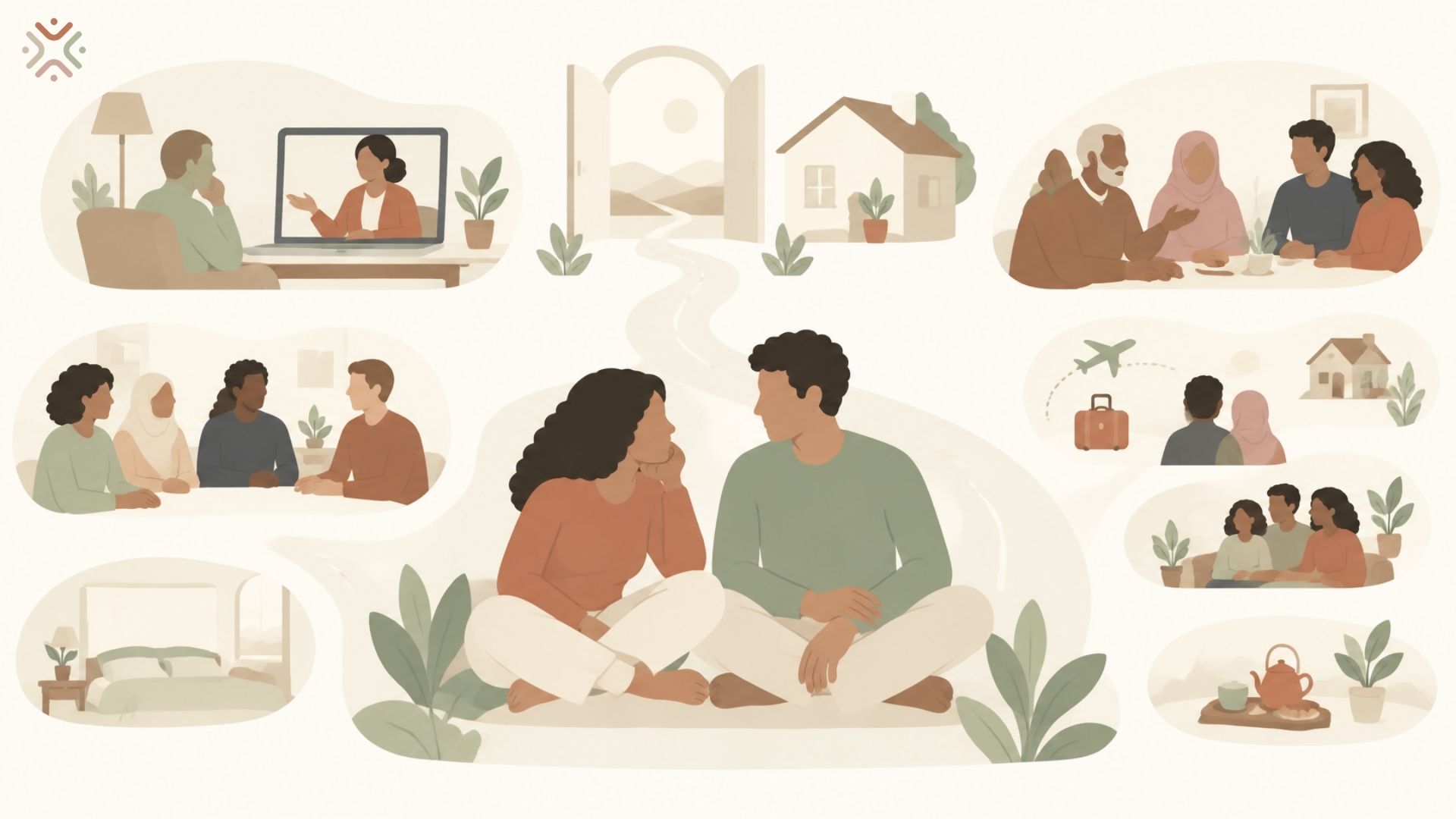
Your relationship deserves space to be understood
Family involvement, faith, cultural values and community connection can be meaningful sources of support.
When disagreements arise, couples may need time to understand different expectations, discuss their needs and decide which boundaries are appropriate.
You do not have to dismiss your family to take your relationship seriously. You do not have to abandon your faith or cultural identity to recognise distress. And you do not have to treat every disagreement as a threat.
At the same time, intimidation, coercion and violence require a different response from ordinary relationship conflict. Safety and freedom of choice must remain priorities.
You can explore more articles on relationships, identity and emotional wellbeing on the Thera blog.
For questions about accessing online therapy, a free discovery call may be a useful starting point when it is safe and private for you to make contact.
Support should respect your values, circumstances and choices without minimising distress or compromising your safety.










 Previous article
