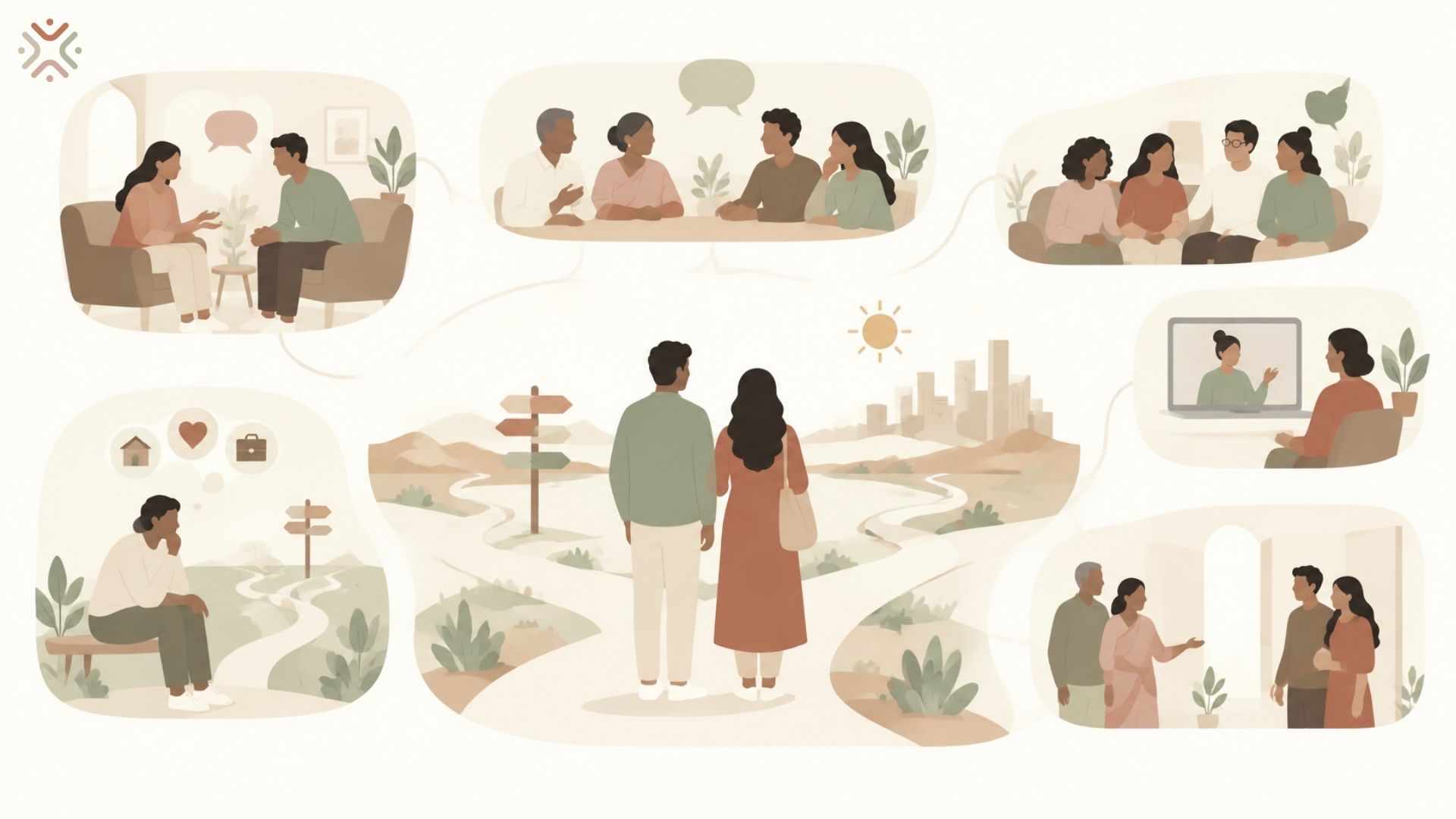
Dating can feel exciting, confusing, private and emotionally risky at the same time. For some South Asian adults living in the UK and Western Europe, relationship decisions may involve personal preferences alongside family relationships, faith, culture, practical considerations and hopes for the future.
Some people may experience tension between family expectations and the dating norms around them; others may experience support, shared decision-making or no conflict at all. Experiences vary widely across individuals, families, communities, religions, regions and generations.
South Asian adults have diverse religious, linguistic, regional, caste, class, migration and family histories. An adult from an Indian Hindu family in London, a Pakistani Muslim family in Birmingham, a Bangladeshi family in East London, a Sri Lankan Tamil family in Germany or a mixed-background family in Ireland may have very different experiences and priorities.
For some people, family involvement is a welcome part of finding a partner. For others, differences in expectations can create uncertainty about relationships, marriage or personal choices.
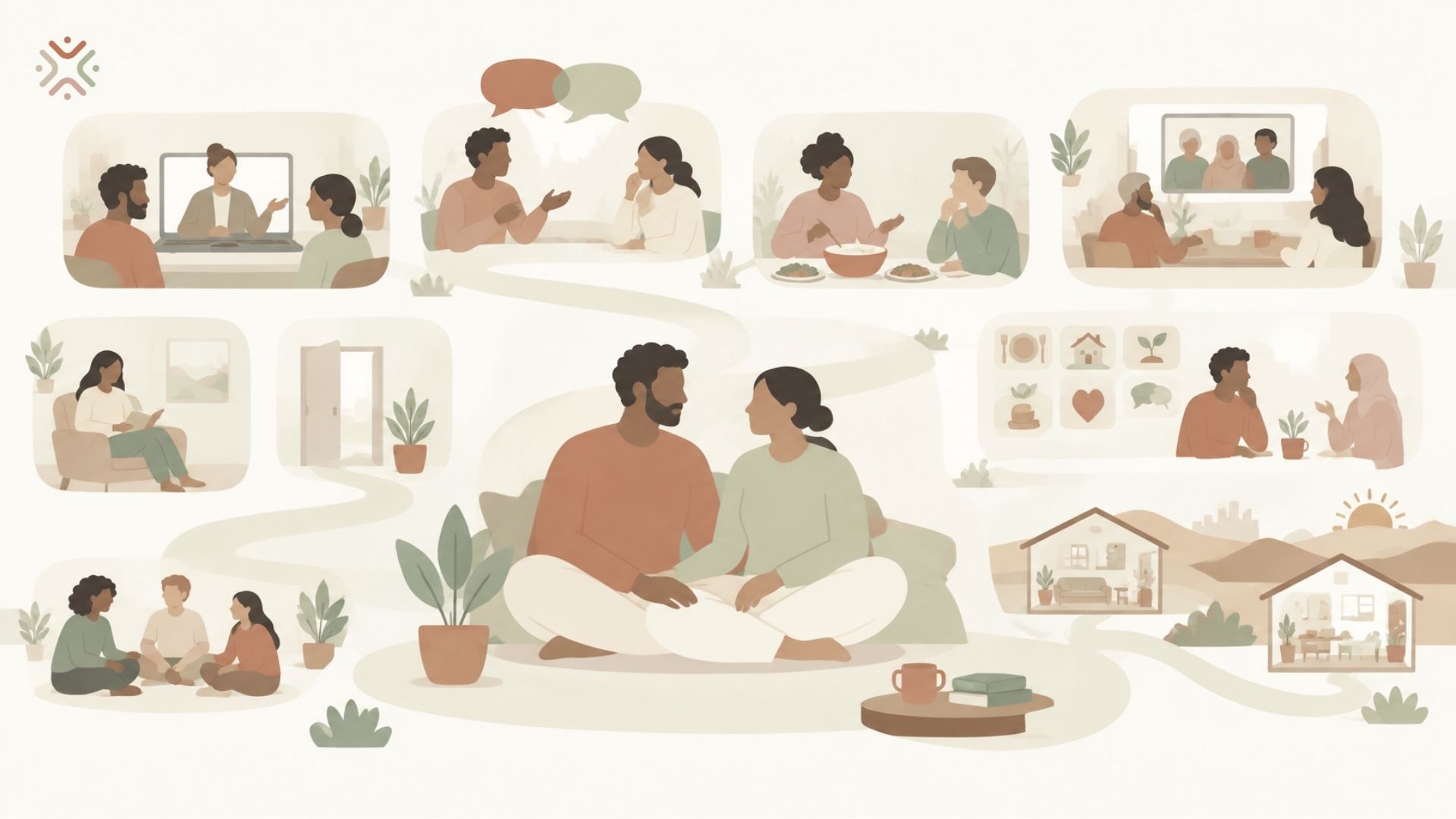
Culturally sensitive online therapy can provide a private space to consider these questions without treating family relationships, religion or cultural identity as problems.
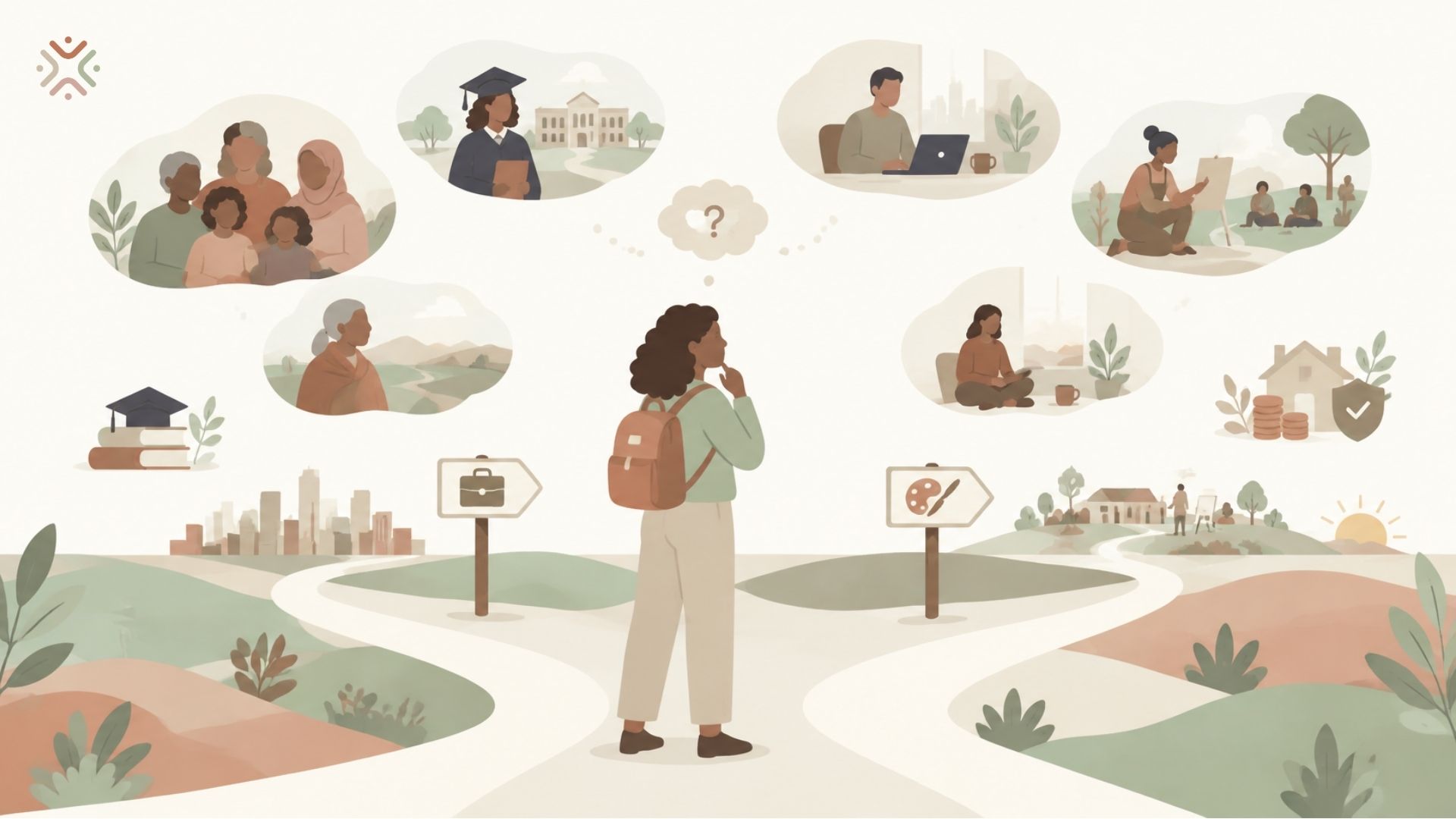
Why dating can feel complicated when family expectations are involved
Dating is not understood in the same way by everyone. Some people see it as an opportunity to explore compatibility, while others approach relationships primarily with long-term commitment in mind.
Family relationships may influence these preferences, but so can individual values, previous experiences, religious beliefs and practical circumstances.
Dating may not feel separate from marriage
For some South Asian adults, dating is closely connected to the possibility of engagement or marriage.
Someone may prefer not to begin a relationship unless they see long-term potential. Another person may want more time to understand compatibility before considering marriage.
Both approaches can reflect personal values rather than external pressure.
However, differences in expectations may become difficult when someone feels that a relationship must progress more quickly than they would prefer.
For some people, this can create tension between different relationship norms. Friends, peers, local dating culture, family expectations and personal values may place different emphasis on exploration, privacy, commitment, suitability or long-term stability.
A useful starting point is understanding what commitment means to you and whether the person you are dating shares those expectations.
Family approval may feel emotionally important
Wanting family approval does not mean someone is unable to make independent decisions.
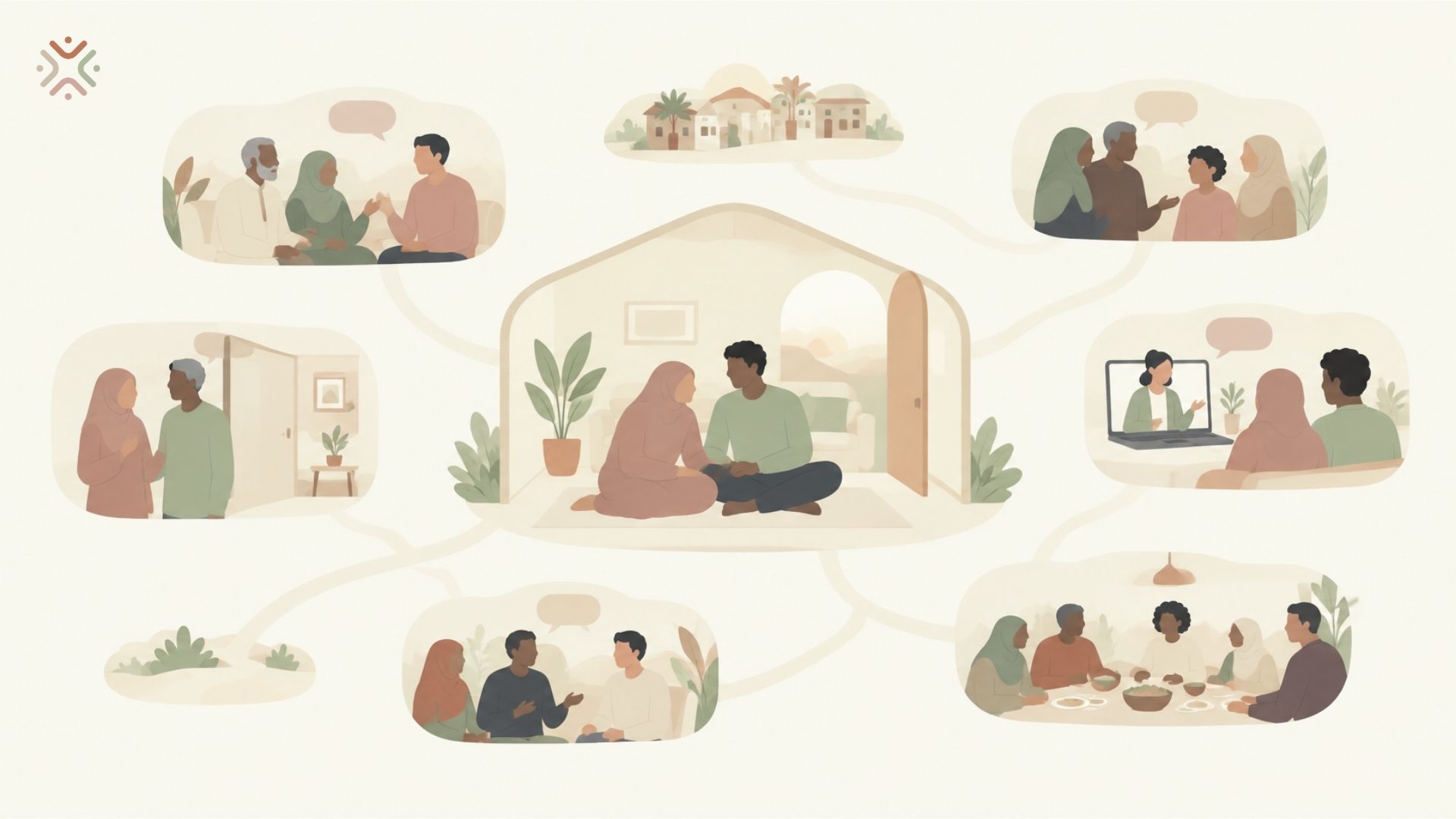
For many people, maintaining positive relationships with parents and relatives is an important part of life. They may want their partner to feel welcome at family gatherings or hope that both families will build a good relationship.
Family involvement can provide reassurance, advice and practical support.
Disagreement may become distressing, however, when someone feels repeatedly questioned or believes their preferences are not being heard.
You may wonder whether your family will accept someone from a different religious, linguistic or socioeconomic background. You may also worry about how relatives will respond to the timing or seriousness of your relationship.
These concerns deserve consideration, but they do not necessarily mean conflict is inevitable.
Feeling responsible for other people's reactions
Relationship decisions can sometimes create a sense of responsibility toward several people.
You may care about your parents' feelings while also wanting to be considerate toward someone you are dating. If expectations differ, you may feel unsure how to respond without disappointing anyone.
This can become emotionally tiring when you spend more time anticipating reactions than considering your own preferences.
It may help to distinguish between being considerate of other people's feelings and feeling responsible for managing every reaction.
If these expectations create recurring guilt, cultural values and inner conflict may be useful themes to explore.
Common pressures some South Asian adults experience when dating
Family and community involvement varies considerably. Some adults make relationship decisions with little involvement from relatives. Others prefer to seek advice or include family members in introductions.
Difficulties are more likely to arise when expectations differ or someone's freedom to decide is restricted.
Expectations about a suitable partner
Some families place importance on shared religion, language, ethnicity, caste, class, education or family background.
Others focus primarily on compatibility, personal character, financial stability or whether the partners share similar long-term goals.
Some parents or relatives may have concerns about compatibility, discrimination, financial security, cultural continuity, religious difference or whether their adult child will be supported in the long term.
These concerns may be expressed with care, disagreement, repeated questioning or, in some situations, pressure. The impact depends on the relationship, the behaviour involved and whether the adult child can make choices freely and safely.
The distinction matters.
A parent expressing a preference is not the same as someone threatening consequences unless a particular partner is chosen.
Similarly, arranged introductions that allow both adults to decide freely should not be confused with forced marriage.
When expectations differ, it may help to consider which concerns are relevant to the relationship and which reflect preferences you do not necessarily share.
Dating apps and privacy
Dating apps may offer opportunities to meet people beyond existing social networks. They can also introduce questions about privacy, intentions and how much personal information to share.
Some South Asian adults may worry about being recognised by acquaintances or relatives. Others may have no concerns about using dating apps.
Preferences also vary regarding whether dating should begin through introductions, online platforms, friendships or other social settings.
None of these approaches is inherently more appropriate.
The important considerations include personal comfort, informed choice, privacy and whether the dating process aligns with your values.
A small qualitative study involving second-generation Indian and Pakistani adults in the UK explored how some participants experienced tensions between online dating and cultural expectations. These findings describe the experiences of a particular sample; they do not establish that dating apps cause cultural conflict for South Asian adults generally.
If privacy is important to you, confidentiality in online therapy may also be worth considering.
Questions about marriage timelines
Questions about marriage can arise at family gatherings, celebrations or conversations about the future.
Some people welcome these discussions. Others may find repeated questions intrusive, particularly when they are single, uncertain about a relationship or not ready for marriage.
You may want time to explore compatibility without committing to a timeline. Alternatively, you may already have clear marriage plans but prefer to discuss them privately.
There is no single appropriate age or timeline for marriage.
A useful boundary may simply involve deciding which aspects of your relationship you are comfortable discussing and with whom.
When dating pressure affects mental wellbeing
Relationship uncertainty does not automatically indicate a mental health problem.
However, persistent worry, guilt or conflict can become distressing when it affects sleep, concentration, relationships or daily functioning.
The impact depends on the person's experiences and circumstances rather than their cultural background alone.
Anxiety and overthinking
Dating involves uncertainty, particularly when people are still learning about compatibility and future expectations.
You may find yourself repeatedly considering whether a relationship will last, how relatives might respond or whether you are making the right decision.
Some reflection is useful. But when the same questions return without leading to new information, the process may become exhausting.
For example, someone might repeatedly reconsider a relationship because they are trying to anticipate every possible family reaction.
Individual support may help distinguish practical concerns from patterns of repetitive worry.
For people experiencing persistent anxiety, overthinking and emotional wellbeing may be relevant.
Guilt and self-doubt
Guilt may arise when personal preferences differ from expectations expressed by people close to you.
You may feel uncomfortable keeping a relationship private or declining an introduction suggested by relatives. You may also feel uncertain about dating someone whose background differs from your family's preferences.
These feelings do not automatically mean your family is restrictive or that your choices are wrong.
They may reflect a genuine disagreement about values, concern about relationships or uncertainty about possible consequences.
It can help to consider whether guilt reflects something important to your own beliefs or whether it is connected to expectations you feel unable to question.
If guilt makes it difficult to acknowledge your needs, the relationship between gratitude and emotional distress may offer additional context.
Identity and belonging
For some adults, dating brings cultural identity into focus.
You may feel connected to your family's language, faith and traditions while also holding different views about relationships.
Alternatively, your personal preferences may closely match those of your family.
Neither experience should be assumed based on whether someone is a first-generation migrant, a second-generation adult or a member of a particular community.
Identity can involve several overlapping influences rather than a simple choice between two cultures.
For people exploring these experiences, identity and belonging may be part of a wider conversation about relationships and personal values.
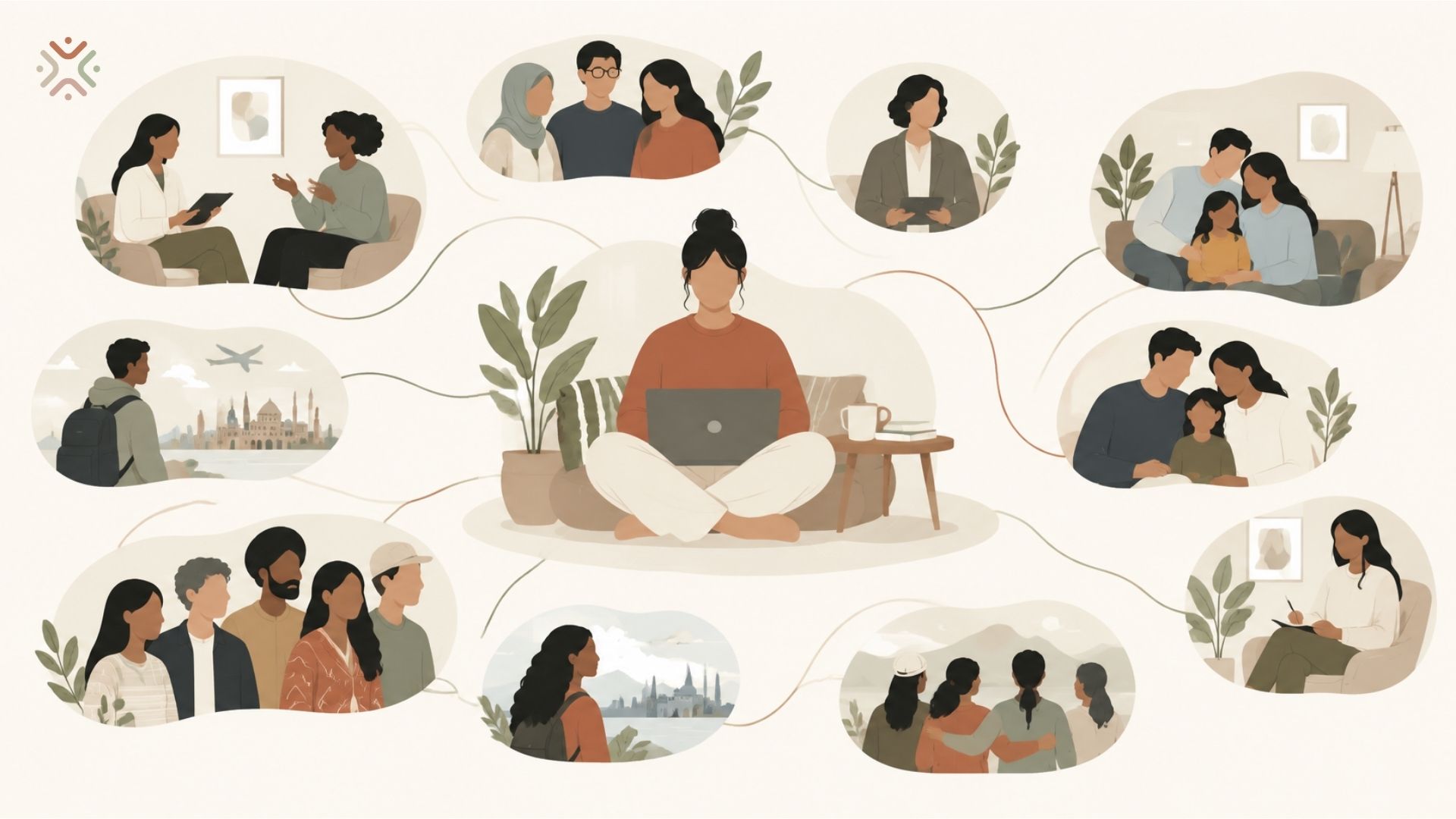
How online therapy can support dating and relationship decisions
Online therapy does not tell you whom to date, whether to tell your family or what kind of relationship to choose.
It may help you understand the emotional pressure around these decisions, clarify your values and consider what support, boundaries or next steps may be useful.
A culturally responsive therapist should not assume that South Asian family relationships are restrictive or that individual independence is the only healthy outcome.
They should also avoid dismissing genuine distress as simply part of someone's culture.
Clarifying personal values
Family relationships, faith, cultural continuity and personal autonomy may all be meaningful parts of someone's life.
Therapy can offer a setting to consider how these values influence dating decisions.
For example, you may want to explore what commitment means to you, which family traditions you hope to maintain or how important shared religious beliefs are in a long-term relationship.
Other considerations may include financial stability, future children, communication styles and the level of family involvement you would welcome.
There may not be a single correct answer.
The purpose is to consider your preferences and circumstances without being directed toward a predetermined decision.
Building boundaries around dating conversations
Some adults feel comfortable discussing dating openly with relatives. Others prefer to share information gradually or keep parts of their personal life private.
When family questions become repetitive or intrusive, boundaries may be useful.
These examples are not rules. Whether, when and how to discuss dating with family depends on your circumstances, housing, finances, immigration status, practical dependence, family dynamics and safety. You do not have to disclose a relationship, confront relatives or make a major decision before you feel ready and have appropriate support.
Where it is safe to have a conversation, examples of respectful language include:
“I understand this matters to you, but I am not ready to discuss it yet.”
“I want to make this decision carefully, and I need some privacy.”
“I appreciate your concerns, and I would like time to consider what matters to me.”
“I am open to talking respectfully. If the conversation becomes hurtful or I do not feel safe continuing, I will need to pause and return to it later.”
The appropriate response depends on the circumstances.
These examples should not be used where asserting a boundary could trigger threats, violence or other retaliation.
For people navigating ordinary disagreements, family expectations and boundaries may provide a useful starting point.
Deciding what and when to share
There is no universal requirement to share details of a romantic relationship with family members.
Some people prefer early introductions. Others wait until a relationship becomes serious.
The decision may depend on personal values, religious beliefs, family relationships, practical circumstances and safety.
Before discussing a relationship, you may want to consider what information you feel comfortable sharing, whether the conversation is necessary at this stage and what reactions are realistically possible.
If you are financially dependent on relatives, share housing with them or have concerns about immigration-related consequences, these circumstances may affect how safely you can discuss your decisions.
Individual therapy can offer space to consider these factors without requiring immediate disclosure.
Thera's online individual therapy may be relevant for people seeking support with dating uncertainty, family expectations or emotional distress.
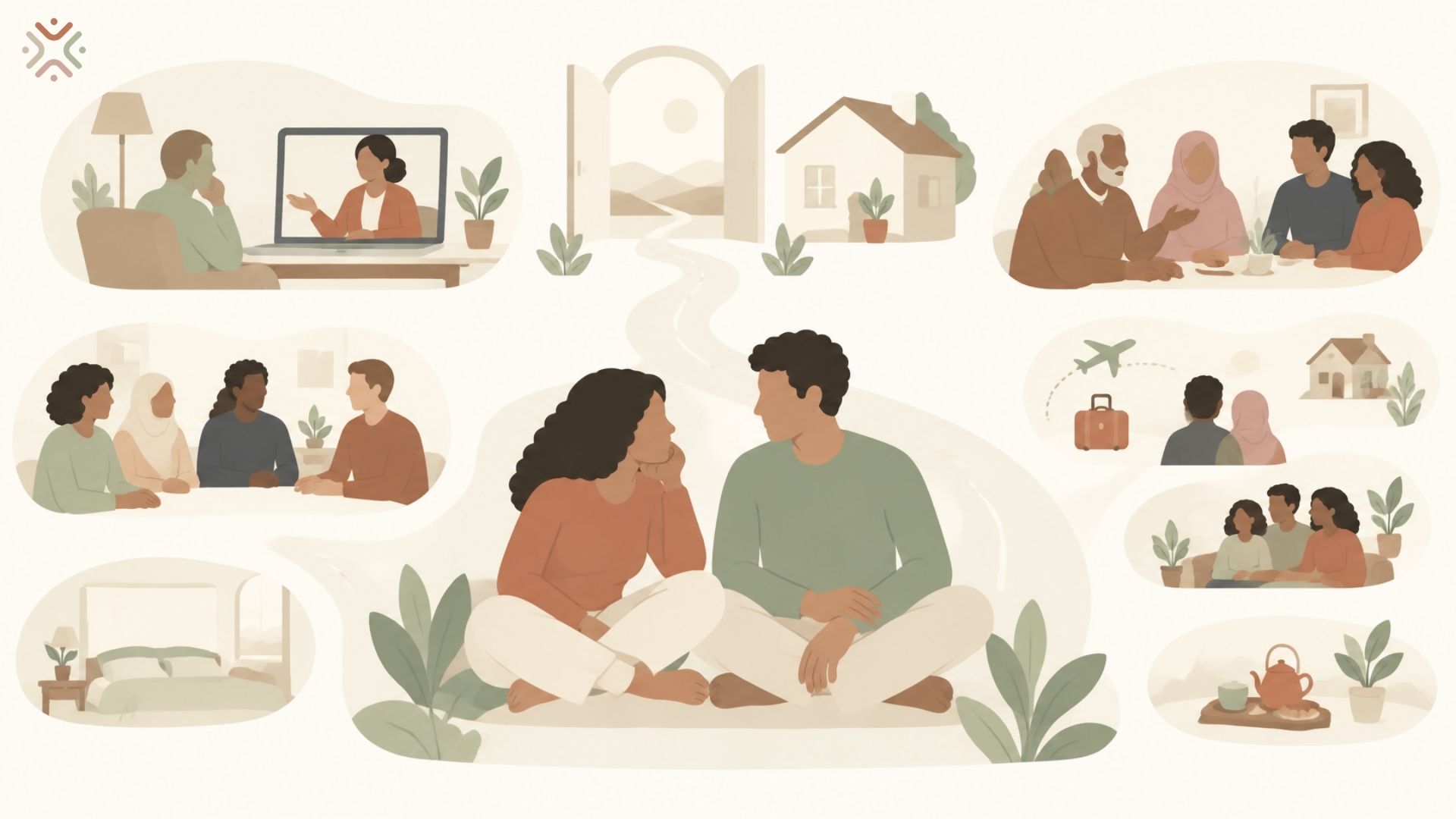
When couples therapy may be useful
Dating pressure sometimes affects both partners.
One person may prefer to keep the relationship private, while the other wants greater openness. Partners may also have different expectations about commitment, marriage, religion or extended family involvement.
Couples therapy may help partners discuss these issues when both people can participate freely and there is no coercive control, violence, intimidation, surveillance, fear or risk of retaliation for speaking honestly. Individual support may be safer when someone feels pressured, unsafe, unsure about the relationship or unable to speak openly in a joint session.
Discussing family expectations together
When both partners can communicate freely, it may be helpful to discuss family involvement before major decisions arise.
Topics might include when relatives will be introduced, how much information will remain private, which traditions matter and what each partner expects from the relationship.
Partners may also need to discuss practical issues such as finances, living arrangements, future children or religious expectations.
These conversations do not require both people to have identical backgrounds or beliefs.
What matters is whether differences can be discussed respectfully and decisions can be made without pressure.
When appropriate, online couples and family therapy can provide a structured setting for these discussions.
When privacy creates tension
Keeping a relationship private is not necessarily a sign of shame or lack of commitment.
Someone may value discretion for personal or religious reasons. They may also prefer to wait until they feel more certain about the relationship.
However, partners may experience privacy differently.
One person may feel comfortable waiting, while another feels excluded or uncertain about their place in the relationship.
Discussing the reasons behind these preferences can help clarify expectations without assuming that either partner is acting in bad faith.
Joint sessions should not be used to pressure someone into disclosure or continuing a relationship they do not freely choose.
When safety comes first
Family disagreement can be painful without being dangerous.
Relatives may express disappointment, offer unwanted advice or disagree with someone's dating decisions without attempting to control them.
However, some situations involve intimidation, coercion or serious threats.
These risks can occur across different religions, ethnicities and family backgrounds. They should not be presented as typical of South Asian families.
Recognising coercion and serious risk
If dating or relationship decisions involve threats, coercion, forced-marriage pressure, digital monitoring, restrictions on leaving home, financial control, threats of violence, blackmail, immigration-related threats or fear of serious harm, safety should come first.
Coercive control differs from ordinary disagreement because it involves behaviour that restricts a person's freedom, independence or ability to make decisions.
Similarly, an arranged introduction or marriage entered into with free consent is not the same as a forced marriage.
The essential distinction is whether someone can choose freely without threats, abuse or coercion.
Disclosure is not required before seeking help
You do not need to disclose a relationship, persuade relatives, attend couples or family therapy, or have a difficult conversation before you have a safety plan and appropriate support.
If speaking openly could place you at risk, specialist safeguarding advice may be more appropriate than attempting to resolve the situation through a family discussion.
Online therapy can support emotional processing and planning, but it is not a replacement for local emergency services, specialist domestic abuse services, forced-marriage support, legal advice or safeguarding services.
Where coercion or violence is present, joint sessions may increase risk if someone cannot speak freely.
Digital safety when seeking support
If you think someone may be monitoring your phone, messages, location, browser history or online appointments, use a safer device where possible and avoid leaving information that could increase risk.
Do not rely on private browsing alone to protect sensitive communication. Shared accounts, spyware and other monitoring methods may still expose your activity.
If you suspect monitoring, consider contacting a specialist support service from a device or location that the person concerned cannot access.
Avoid making sudden changes to monitored accounts if doing so could alert someone and increase danger.
Women's Aid offers additional guidance on covering your tracks online.
Where to find appropriate support
For readers in the UK
The Forced Marriage Unit provides guidance and support concerning forced marriage.
Contact details:
Telephone: +44 (0)20 7008 0151
Email: fmu@fcdo.gov.uk
Women's Aid also provides information about domestic abuse and coercive control.
If you are in immediate danger in the UK, call 999.
For readers elsewhere in Western Europe
Readers in Germany, Ireland, France, Belgium, Spain and other European countries should seek appropriate local domestic abuse, safeguarding, legal or emergency support.
Services, legal protections and available resources differ between countries.
UK-based organisations should not be treated as substitutes for local assistance.
In EU countries, 112 is the emergency number.
What research suggests
Research on immigrant and descendant families suggests that differences in cultural orientation or expectations between generations may be associated with family cohesion, conflict and autonomy in some contexts. These patterns vary by family, community, country, age, migration history and the measures used in a study. One U.S. study using national data examined these relationships across diverse immigrant-origin families, but its findings should not be treated as direct evidence about South Asian dating experiences in the UK or Western Europe.
Demographic research in the UK and Europe also suggests that partner choice among immigrants and their descendants can be shaped by multiple factors, including individual preferences, opportunities to meet partners, religion, education, social networks and family background. A qualitative study involving second-generation Indian and Pakistani adults in the UK explored acculturative stress in online dating, but its findings cannot be generalised to all South Asian adults. These studies describe patterns within particular populations; they do not predict what any individual person or family will value, accept or experience.
In practical terms, dating may involve personal preferences alongside family relationships, cultural values and social context. Culturally responsive therapy can offer a space to explore those influences without treating any identity or background as the problem.
Your relationship choices deserve consideration
Dating can involve many considerations: compatibility, personal values, family relationships, religious beliefs and future plans.
For some South Asian adults, these considerations fit together comfortably. Others may experience uncertainty or disagreement.
Neither experience should be assumed based on someone's ethnicity, religion or migration history.
You can value family involvement while maintaining personal preferences. You can appreciate advice without agreeing with every recommendation. You can also take time to consider a relationship without feeling required to make an immediate decision.
Where dating decisions are causing distress, confidential support may offer an opportunity to explore your circumstances without pressure to reach a particular conclusion.
You can explore more articles on relationships, identity and emotional wellbeing on the Thera blog.
If you have questions about accessing online therapy, you can arrange a free discovery call when it is safe and private for you to make contact.
Your dating life deserves space for personal choice, meaningful relationships and consideration of your own values, without assumptions about what your cultural background should mean for you.










 Previous article
